
Fundamentals of AWS for AI Applications
Core Services of AWS for AI
Amazon Web Services (AWS) offers a comprehensive suite of core services specifically designed to facilitate artificial intelligence (AI) applications, enabling IT professionals to architect robust solutions for business automation. One of the foundational services is Amazon SageMaker, which provides a fully managed environment for building, training, and deploying machine learning models at scale. With SageMaker, professionals can leverage built-in algorithms and frameworks, reducing the complexity of model development. This service empowers organizations to integrate machine learning into their applications seamlessly, making it easier to derive insights and automate processes.

Another crucial service in the AWS AI landscape is AWS Lambda, which enables serverless computing that scales automatically in response to events. This is particularly beneficial for AI applications that require real-time data processing and analysis. IT professionals can configure Lambda functions to trigger in response to changes in data, such as new inputs from IoT devices or updates in databases, allowing for instantaneous reactions. By utilizing AWS Lambda, organizations can automate workflows efficiently, minimizing downtime and enhancing overall productivity.
Amazon Rekognition is another powerful AI service that allows for image and video analysis. IT professionals can incorporate this service into applications to enable features such as facial recognition, object detection, and scene analysis. By leveraging Rekognition, businesses can automate tasks that involve visual data, such as security monitoring, customer engagement through personalized experiences, and content moderation. The ability to analyze visual content at scale positions organizations to drive innovative solutions tailored to their specific needs.
AWS Comprehend, which provides natural language processing capabilities, is essential for businesses looking to automate text analysis and derive meaningful insights from large volumes of unstructured data. IT professionals can use Comprehend to build applications that understand sentiment, extract key phrases, and categorize text data. This service enhances decision-making processes by transforming raw text into actionable intelligence, allowing organizations to automate customer service interactions, improve marketing strategies, and streamline compliance processes.
Finally, AWS offers a range of AI services for data integration and orchestration, such as Amazon Kinesis and AWS Glue. These services enable IT professionals to collect, process, and prepare data for machine learning applications efficiently. With Kinesis, organizations can analyze streaming data in real-time, while Glue automates the data preparation and transformation processes needed for AI projects. By utilizing these core services, IT professionals can ensure that their AI initiatives are not only effective but also scalable, paving the way for enhanced business automation and innovation in their respective fields.
Data Management with AWS
Data management is a cornerstone of effective business automation, particularly when leveraging cloud services like AWS. In the realm of artificial intelligence, the way organizations handle data determines not only the efficiency of their operations but also their capability to extract meaningful insights. AWS offers a suite of tools and services that empower IT professionals to manage data seamlessly, ensuring that it is accessible, secure, and optimized for AI applications. By strategically utilizing these services, businesses can enhance their data workflows and foster innovation.
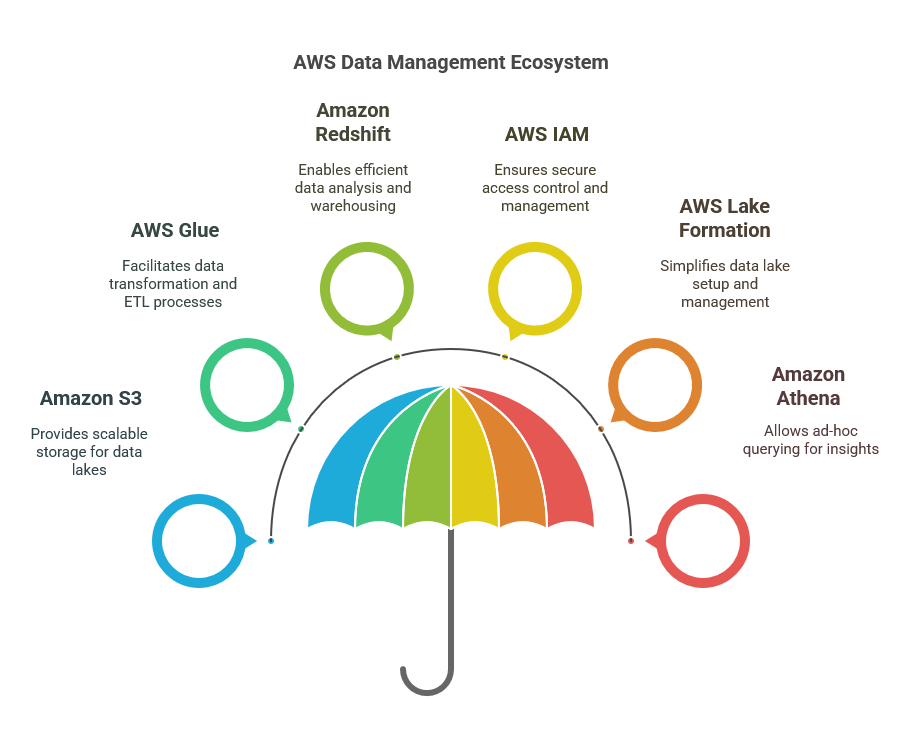
At the heart of AWS’s data management capabilities lies Amazon S3, a scalable object storage service that allows organizations to store and retrieve any amount of data from anywhere on the web. This flexibility enables IT professionals to implement robust data lakes, where vast amounts of unstructured data can be ingested and processed. By integrating machine learning models with data stored in S3, businesses can derive predictive analytics that drive decision-making. Furthermore, S3’s integration with other AWS services, such as AWS Glue and Amazon Redshift, enhances the ability to transform and analyze data efficiently, paving the way for more sophisticated AI applications.
Data security is a paramount concern for organizations, especially when handling sensitive information. AWS addresses this challenge through a combination of features and best practices that help IT professionals implement stringent security measures. Services like AWS Identity and Access Management (IAM) allow for fine-grained access control, ensuring that only authorized personnel can interact with specific datasets. Additionally, AWS provides encryption options for data at rest and in transit, helping to safeguard data integrity and confidentiality. By prioritizing security within their data management strategies, organizations can build trust with their stakeholders while maintaining compliance with industry regulations.
The integration of AWS with data analytics tools enhances the capability of businesses to derive insights from their data. Services such as Amazon Athena enable users to perform ad-hoc queries on data stored in S3 without the need for complex ETL processes. This not only accelerates the data analysis cycle but also empowers non-technical users to access insights, fostering a data-driven culture across the organization. Moreover, the use of AWS Lake Formation simplifies the process of setting up and managing data lakes, allowing IT professionals to focus on extracting value from data rather than wrestling with infrastructure challenges.
In conclusion, effective data management with AWS is integral to harnessing the power of AI for business automation. By leveraging AWS’s robust suite of tools, IT professionals can create a secure, scalable, and efficient data architecture that supports advanced analytics and machine learning initiatives. As the landscape of technology continues to evolve, embracing these data management practices will enable organizations to stay ahead of the curve, driving innovation and operational excellence in the age of AI.
Security and Compliance in AWS
Security and compliance are critical considerations in any cloud architecture, especially when leveraging platforms like AWS and Azure for business automation. As IT professionals, understanding the security frameworks and compliance requirements of these cloud environments is essential for safeguarding sensitive data and maintaining regulatory adherence. Both AWS and Azure offer robust security features and compliance certifications that can help organizations protect their assets while automating processes through AI. By prioritizing security in the design and implementation phases, IT architects can build resilient systems that not only support business goals but also instill confidence in stakeholders.
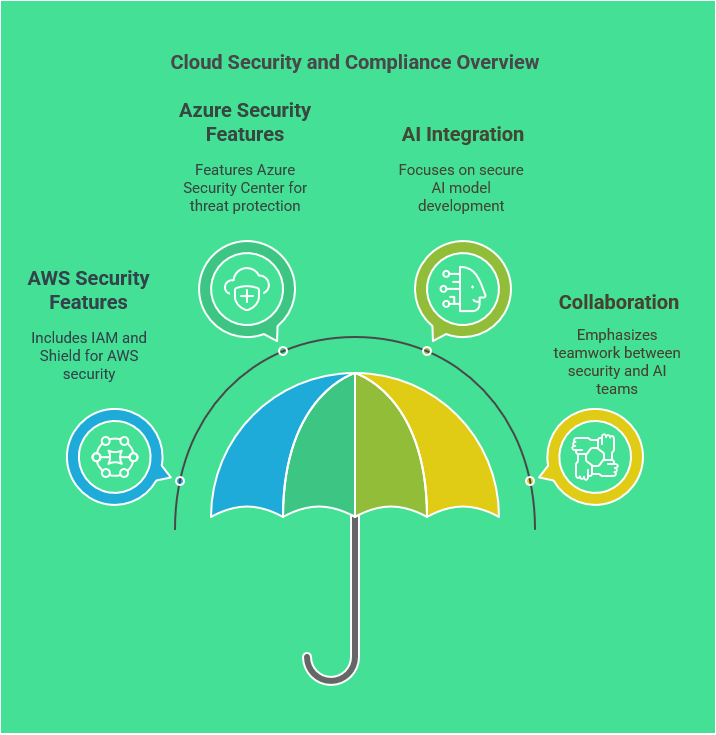
AWS employs a shared responsibility model, which delineates security responsibilities between AWS and the customer. AWS is responsible for securing the infrastructure, while customers must secure their applications and data within the cloud. This model empowers organizations to implement security measures tailored to their specific needs. IT professionals should leverage AWS services such as Identity and Access Management (IAM), which allows for granular control over user permissions, and AWS Shield, which provides protection against DDoS attacks. Understanding these tools enables architects to create more secure environments that mitigate risks associated with cloud deployments.
Azure also emphasizes a shared responsibility model, along with a comprehensive set of compliance certifications that align with global standards, such as GDPR and HIPAA. IT architects must familiarize themselves with Azure’s security offerings, such as Azure Security Center, which provides unified security management and threat protection across hybrid cloud workloads. By utilizing Azure’s built-in security tools, organizations can enhance their security posture and ensure compliance with industry regulations. This proactive approach not only protects sensitive information but also streamlines the compliance process, allowing businesses to focus on innovation and automation.
Integrating AI into business applications further complicates the security landscape, as it introduces unique challenges and considerations. IT professionals need to adopt a security-first mindset when developing AI models that interact with sensitive data. This includes implementing data encryption both in transit and at rest, as well as ensuring that AI algorithms are robust against adversarial attacks. By leveraging AWS and Azure’s AI capabilities, such as Amazon SageMaker and Azure Machine Learning, organizations can build intelligent applications while maintaining a strong security framework that addresses potential vulnerabilities.
Collaboration between security teams and AI architects is vital to creating a holistic approach to security and compliance within cloud environments. Regular audits, vulnerability assessments, and compliance checks should be integral parts of the development lifecycle. By fostering a culture of security awareness and continuous improvement, IT professionals can ensure that their cloud architectures not only support automation through AI but also uphold the highest standards of security and compliance. This commitment to security will ultimately drive business success and foster trust among customers and stakeholders.
 Building Cloud/DevOps/AI/ML/Gen AI Architects