
The New Reality: Navigating the Evolution of AI Product Management
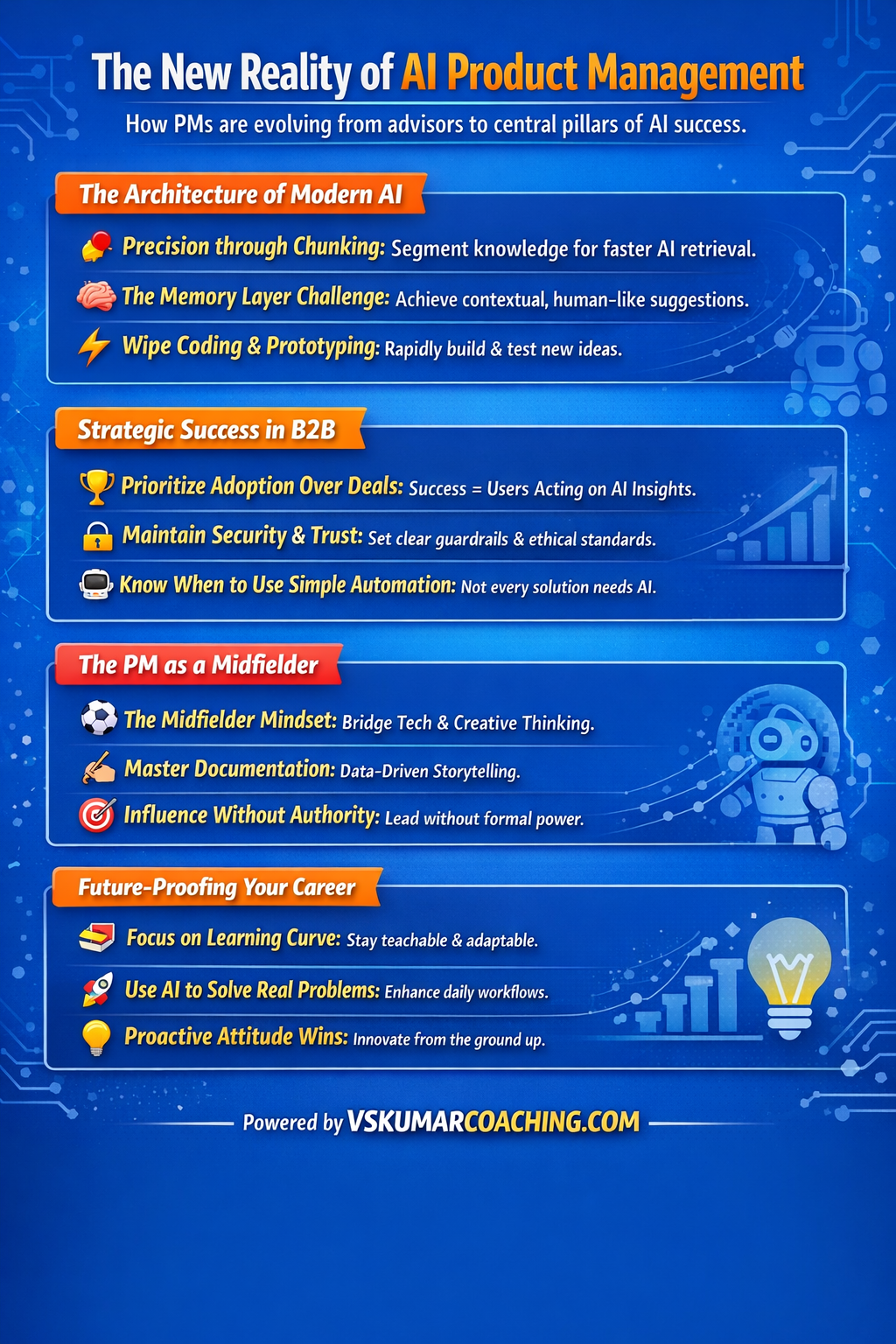
In the current technological landscape, the role of a Product Manager (PM) is undergoing a significant transformation, moving from a niche position to a central pillar of the AI revolution. For many, the journey into this field begins by moving away from consulting or pure development to seek direct ownership of a vision. Unlike roles where you merely provide recommendations, being a PM allows you to see the immediate impact of your decisions—where a detail as small as changing a color description can lead to a double-digit shift in sales and engagement.
The Architecture of Modern AI
While debate continues regarding whether AI is a “bubble,” the scale of current investment suggests it is a new reality similar to the dawn of the internet. Within this reality, several technical concepts are becoming essential for product leaders to master:
- Precision through Chunking: This involves dividing vast knowledge bases into specific segments so that an AI system can retrieve information without exhausting compute power. By creating this “working memory,” the system becomes faster and more efficient.
- The Memory Layer Challenge: A significant hurdle for current large language models is the lack of a perfected “memory layer”—the ability to maintain contextual and session-long awareness. Solving this is the key to creating agents that offer truly tailored, human-like suggestions based on a user’s specific history and preferences.
- Wipe Coding and Prototyping: The rise of “wipe coding” allows PMs to move faster than ever. Instead of waiting for extensive engineering resources, a PM can independently whip up a functional dashboard or design framework to test a hypothesis with an initial group of users before scaling.
Strategic Success in the B2B Space
In the enterprise sector, the stakes for AI are significantly higher than in consumer products, as a single error can compromise an entire enterprise account. To succeed, product leaders should follow these guiding principles:
- Prioritize Adoption Over the Deal: Winning a contract is a temporary victory; the true metric of success is whether the customer is actually acting on the AI’s suggestions. If they aren’t, it indicates a lack of trust in the system.
- Maintain Security and Trust: Because AI is still in an “innocent” or early stage, many users are naturally resistant. Establishing clear guardrails, accountability, and ethical standards is the only way to retain early adopters.
- Know When to Use Simple Automation: A mature AI leader recognizes that not every problem requires an AI model. Often, a simple automation is more effective and helps build trust by showing you aren’t just selling a buzzword.
The PM as the “Midfielder”
The modern PM must be both scientific and creative, mastering the art of influence without authority. A core superpower in this regard is writing and documentation, which allows a leader to refine their storytelling and ground their vision in data rather than just opinion.
A helpful way to visualize this role is through a sports analogy: the PM is like a midfielder. When the team is playing perfectly, the midfielder’s work might go unnoticed. However, if the connection between the defense and the attack fails, the entire team struggles, and the responsibility for the outcome often falls squarely on the midfielder’s shoulders.
Future-Proofing Your Career
For those looking to enter this space, the focus should be on the learning curve rather than the prestige of the role. In a field that requires constant unlearning and relearning, “teachability” and a proactive attitude are more valuable than a fixed set of technical skills. Ultimately, the most successful leaders will be those who use AI to improve their own daily workflows, proving they can solve problems from the ground up.
VSKUMARCOACHING.COM scale up product managers as on today’s needs.

 Building Cloud/DevOps/AI/ML/Gen AI Architects