Monthly Archives: November 2024

From Legacy to AI: A Stakeholder’s Guide to Modern Product Management

Transitioning from Legacy Product Management to AI Product Management: A Comprehensive Guide for Stakeholders

As the world of technology evolves, so does the role of product management. Transitioning from managing legacy products to handling AI products and services presents a unique set of challenges and opportunities for stakeholders. This blog explores the key differences in activities and provides insights on how to successfully navigate this transition.

1. Setting Strategic Vision and Goals

Legacy Role: In legacy product management, stakeholders focus on defining business goals, setting product strategy, and ensuring alignment with overall company objectives. AI Product Role: When managing AI products, stakeholders need to establish an AI-focused vision that aligns with business goals. This involves understanding how AI can solve strategic problems and drive innovation.

2. Market Research and Competitive Analysis

Legacy Role: Stakeholders conduct market research, analyze competitors, and gather customer insights to inform product decisions. AI Product Role: For AI products, it’s crucial to focus on AI market trends, assess competitor AI capabilities, and identify AI-driven market opportunities. Understanding how AI can enhance product offerings is key.

3. Product Development Oversight

Legacy Role: Overseeing product development processes, ensuring timelines are met, and maintaining product quality are standard activities. AI Product Role: In the AI realm, stakeholders must supervise the development of AI models, ensure robust integration with existing systems, and focus on the scalability and performance of AI solutions.

4. Collaboration with Cross-Functional Teams

Legacy Role: Facilitating communication between different departments, such as engineering, design, and marketing, is essential. AI Product Role: AI product management requires promoting collaboration between data scientists, AI engineers, and other teams, ensuring alignment on AI projects and goals.

5. Feature Prioritization and Road mapping

Legacy Role: Setting priorities for product features based on business impact and user feedback is a common practice. AI Product Role: For AI products, stakeholders must prioritize features based on their technical feasibility and potential impact. Creating an AI-specific roadmap is vital for successful implementation.

6. Performance Monitoring and Feedback

Legacy Role: Monitoring product performance, collecting user feedback, and making data-driven decisions are standard activities. AI Product Role: Stakeholders should track AI model performance using AI-specific KPIs, gather user feedback on AI features, and address concerns related to AI bias and transparency.

7. Ethical Considerations and Compliance

Legacy Role: Ensuring products comply with industry regulations and ethical standards is a key responsibility. AI Product Role: Developing ethical AI guidelines, ensuring transparency and fairness in AI models, and monitoring compliance with AI regulations are essential tasks for stakeholders.

8. Continuous Learning and Adaptation

Legacy Role: Staying updated with industry trends, attending conferences, and networking are important for legacy product managers. AI Product Role: Engaging in AI-specific learning, participating in AI conferences, joining AI-focused professional networks, and staying abreast of advancements in AI technology are crucial for AI product management.

9. Risk Management

Legacy Role: Identifying and mitigating risks associated with product development and launch is a standard activity. AI Product Role: Understanding risks unique to AI, such as model drift and bias, and developing strategies to mitigate these risks are critical for stakeholders.

10. Vision Communication and Stakeholder Engagement

Legacy Role: Communicating the product vision to internal and external stakeholders and ensuring stakeholder buy-in is vital. AI Product Role: Articulating the value of AI solutions, educating stakeholders on AI capabilities, and ensuring alignment with AI-driven goals are important responsibilities for AI product managers.

Key Questions for Upskilling

To help stakeholders scale up and transition into AI product management roles, consider the following questions:

  1. How do you define the product vision and strategy for AI solutions?
  2. Can you describe your approach to collaborating with cross-functional teams to develop and launch AI products?
  3. What methods do you use to conduct market research and identify opportunities for new AI products?
  4. How do you ensure the scalability and performance of AI products, especially as they evolve and handle increasing loads?
  5. What key metrics do you monitor to assess the performance and impact of AI products after launch?
  6. Can you share an example of a successful AI product you have managed? What were the key challenges and how did you overcome them?
  7. How do you prioritize features and enhancements for AI products to align with the overall product strategy and business goals?
  8. What strategies do you use to stay updated with the latest trends and advancements in AI technology?
  9. How do you handle feedback from users and stakeholders to continuously improve AI products?
  10. What frameworks or methodologies do you follow for product management in the AI domain, and how do you tailor them to the unique challenges of AI projects?

Conclusion

Transitioning from legacy product management to AI product management requires stakeholders to adapt their activities and develop new skills. By understanding the differences in these roles and focusing on continuous learning and adaptation, stakeholders can successfully navigate the transition and drive innovation in the AI landscape.

For more information on AI CXO roles:
Transitioning from a Legacy Product Role to an AI Product Manager Role

Transitioning from a Legacy Product Role to an AI Product Manager Role

Transitioning from a legacy product role to an AI Product Manager role is an exciting and rewarding journey. This process involves leveraging your existing skills while acquiring new ones tailored to the AI landscape. Here’s a detailed guide on how to make this transition smoothly, combined with key questions to help you scale up:

Understand AI Fundamentals:

  • Advise: Start by gaining a strong foundation in AI and machine learning concepts. Familiarize yourself with terms like neural networks, natural language processing, and computer vision. Online courses, webinars, and certification programs can be incredibly useful.
  • Action: Enroll in courses on platforms like Coursera, edX, or Udacity that cover AI basics and advanced topics.
  • Key Question: How do you define the product vision and strategy for AI solutions?

Develop Technical Proficiency:

  • Advise: While you don’t need to be a coding expert, having a working knowledge of programming languages like Python, as well as tools like TensorFlow and PyTorch, will help you better understand and communicate with your technical team.
  • Action: Take introductory programming and AI-specific courses. Try building simple AI models or participate in AI hackathons to gain practical experience.
  • Key Question: Can you describe your approach to collaborating with cross-functional teams, including engineers, data scientists, and designers, to develop and launch AI products?

Market Research and Analysis:

  • Advise: Conduct thorough market research to identify opportunities for AI products. Understanding the competitive landscape, customer needs, and industry trends is crucial.
  • Action: Leverage tools like market research reports, industry publications, and customer feedback to gather insights. Practice analyzing data to identify market gaps and opportunities.
  • Key Question: What methods do you use to conduct market research and identify opportunities for new AI products?

Product Vision and Strategy:

  • Advise: Define a clear product vision and strategy for AI solutions. Align this vision with your organization’s overall goals and ensure it addresses real customer problems.
  • Action: Develop a strategic roadmap that outlines your AI product’s goals, key features, and timelines. Communicate this vision effectively to stakeholders.
  • Key Question: How do you ensure the scalability and performance of AI products, especially as they evolve and handle increasing loads?

Collaboration with Cross-Functional Teams:

  • Advise: Successful AI product management requires collaboration with diverse teams, including data scientists, engineers, and designers. Foster a culture of open communication and teamwork.
  • Action: Practice leading cross-functional meetings, and work on projects that require collaboration between different departments. This will help you build strong interpersonal skills.
  • Key Question: What key metrics do you monitor to assess the performance and impact of AI products after launch?

Focus on Scalability and Performance:

  • Advise: Ensure that your AI products are scalable and perform efficiently. Scalability is essential for handling growing user bases and data volumes.
  • Action: Work closely with your technical team to design and implement scalable architectures. Regularly review performance metrics and optimize your AI models.
  • Key Question: Can you share an example of a successful AI product you have managed? What were the key challenges and how did you overcome them?

Monitor Product Performance:

  • Advise: Continuously monitor the performance and impact of your AI products. Use key performance indicators (KPIs) and customer feedback to make data-driven decisions.
  • Action: Set up analytics dashboards to track important metrics. Conduct regular reviews and updates to ensure your AI products meet user expectations.
  • Key Question: How do you prioritize features and enhancements for AI products to align with the overall product strategy and business goals?

Stay Updated with AI Trends:

  • Advise: AI is a rapidly evolving field, and staying current with the latest advancements is vital. Follow industry leaders, join AI communities, and attend relevant conferences.
  • Action: Subscribe to AI newsletters, join professional organizations like the Association for the Advancement of Artificial Intelligence (AAAI), and participate in forums like AI conferences and meetups.
  • Key Question: What strategies do you use to stay updated with the latest trends and advancements in AI technology?

Ethical Considerations:

  • Advise: Pay attention to ethical AI practices. Ensure your AI solutions are transparent, fair, and compliant with regulations.
  • Action: Develop a framework for ethical decision-making and regularly review your AI products for potential biases or ethical concerns.
  • Key Question: How do you handle feedback from users and stakeholders to continuously improve AI products?

Seek Mentorship and Networking:

Advise: Connect with experienced AI Product Managers and mentors who can provide guidance and share their insights. Networking can open doors to new opportunities and collaborations.

Action: Join professional networks, attend industry events, and seek out mentors who have successfully transitioned into AI roles.

Key Question: What frameworks or methodologies do you follow for product management in the AI domain, and how do you tailor them to the unique challenges of AI projects?

By following these steps and continually enhancing your skills, you’ll be well-prepared to transition from a legacy product role to a dynamic and impactful AI Product Manager role. Embrace the learning process, stay curious, and leverage every opportunity to grow in this exciting field.

Best of luck on your journey to becoming an AI Product Manager! If you need further assistance or have any questions, feel free to ask.

Also learn the AI roles from:

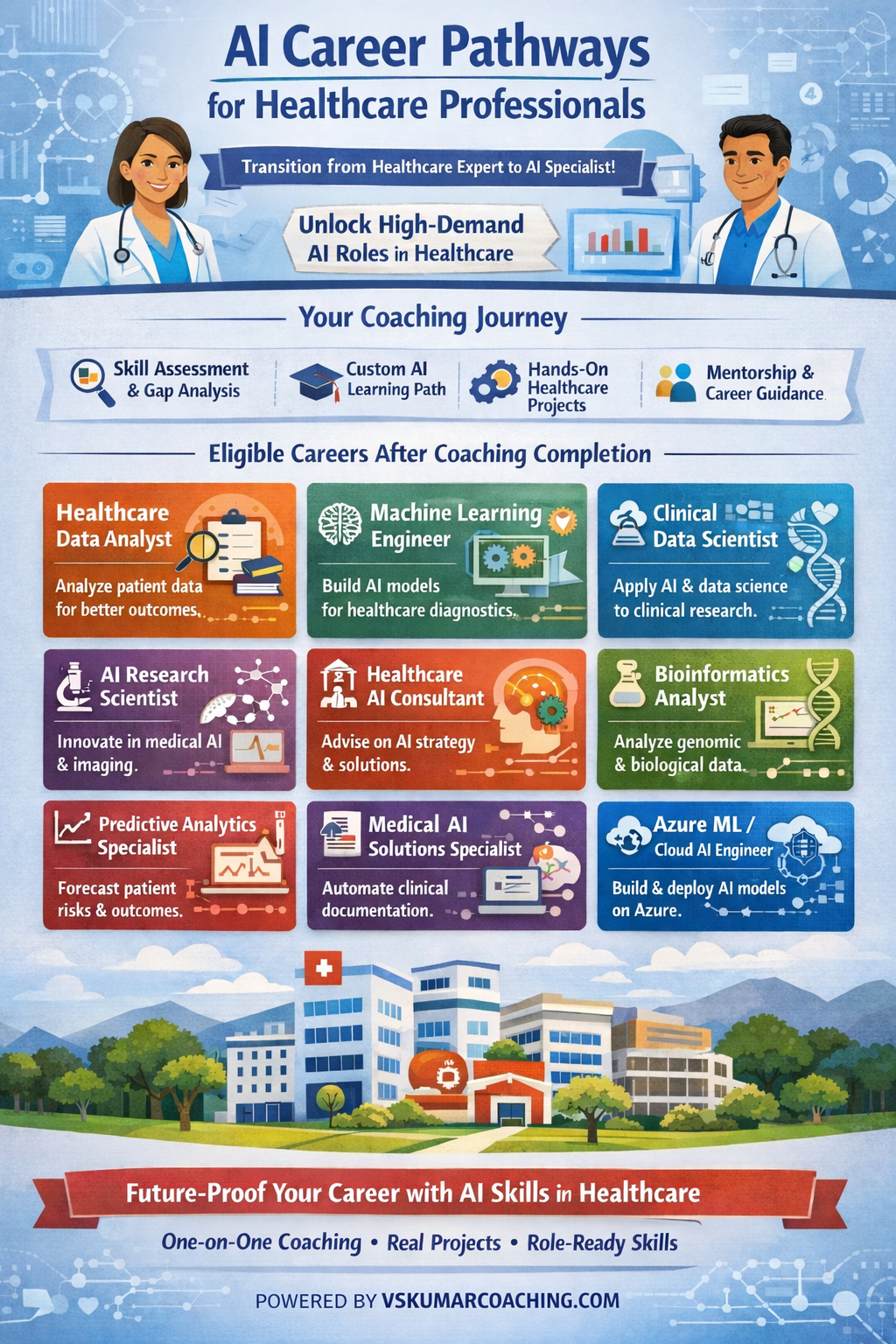
Individual AI Job Coaching for Healthcare Professionals Transitioning into AI Roles

Add for what roles they will be eligible after this coaching ?

Proposal: Individual AI Job Coaching for Healthcare Professionals Transitioning into AI Roles

Introduction

This proposal outlines a personalized approach to assist healthcare professionals in transitioning into AI roles. By leveraging their existing medical knowledge and acquiring new technical skills, individuals can successfully navigate the evolving AI job market. My coaching program offers tailored guidance, skill development, and practical experience to ensure a smooth and effective career change.

Personalized Assessment

  • Profile Evaluation: Conduct a thorough review of the individual’s current skills, experiences, and career goals.
  • Skill Gap Analysis: Identify gaps in technical and domain-specific skills required for AI roles.

Custom Learning Path

  • Curated Courses: Recommend specific online courses and certifications in AI, data science, and machine learning that align with their healthcare background.
  • Hands-on Projects: Assign real-world projects relevant to healthcare, such as predictive analytics for patient care or AI-based diagnostics.

Technical Skills Development

  • Programming and Tools: Teach essential programming languages (Python, R) and AI tools (TensorFlow, Keras, Azure ML).
  • Data Handling: Guide them through data collection, preprocessing, and analysis using healthcare datasets.

Azure ML and Generative AI POCs

  • Azure ML Studio: Introduce Azure Machine Learning Studio for building, training, and deploying machine learning models. Practical POC projects include:
    • Predictive Analytics: Developing models to predict patient outcomes or readmission rates.
    • Diagnostic Tools: Creating AI tools to assist in diagnosing medical conditions from imaging data.
  • Generative AI Projects: Implement Generative AI use-cases such as:
    • Patient Data Synthesis: Generating synthetic patient data to augment real datasets for better model training.
    • Text Generation: Using models like GPT-3 for generating medical reports or summarizing patient histories.

Practical Experience

  • Project Assignments: Provide practical projects to apply learned skills in real-world scenarios.

Mentoring and Support

  • Regular Check-ins: Conduct regular one-on-one sessions to monitor progress and address any challenges.
  • Tailored Feedback: Offer personalized feedback on projects and assignments to ensure continuous improvement.

Regulatory and Ethical Training

  • NHS Guidelines: Provide training on NHS regulations and ethical considerations in AI.
  • Patient Data Privacy: Educate on data privacy laws and the ethical use of AI in healthcare.

Continuous Learning

  • Reading Materials: Suggest key books, research papers, and journals on AI in healthcare.
  • Learning Resources: Provide access to additional learning materials and resources for further knowledge enhancement.

Career Progression Roadmap

  • Skill Assessment: Conduct regular assessments to track progress and refine learning plans.
  • Job Market Alignment: Align skills with current job market demands for AI roles in healthcare.
  • Interview Preparation: Offer mock interviews and resume building workshops tailored to AI roles.

Eligible Roles After Coaching

Upon completion of this coaching program, healthcare professionals will be eligible for various AI roles such as:

  • Healthcare Data Analyst: Analyzing patient data to improve healthcare outcomes.
  • Machine Learning Engineer: Developing and deploying machine learning models for healthcare applications.
  • AI Research Scientist: Conducting research to develop new AI technologies in the healthcare sector.
  • Clinical Data Scientist: Applying data science techniques to clinical data for insights and decision-making.
  • Healthcare AI Consultant: Advising healthcare organizations on implementing AI solutions.
  • Bioinformatics Analyst: Using AI to analyze biological data for research and clinical purposes.

Conclusion

My individual AI job coaching program provides healthcare professionals with the tools, knowledge, and support they need to transition into AI roles effectively. By customizing the coaching experience and incorporating Azure ML and Generative AI POCs, I ensure participants gain the practical and technical skills required to succeed in the evolving AI landscape.

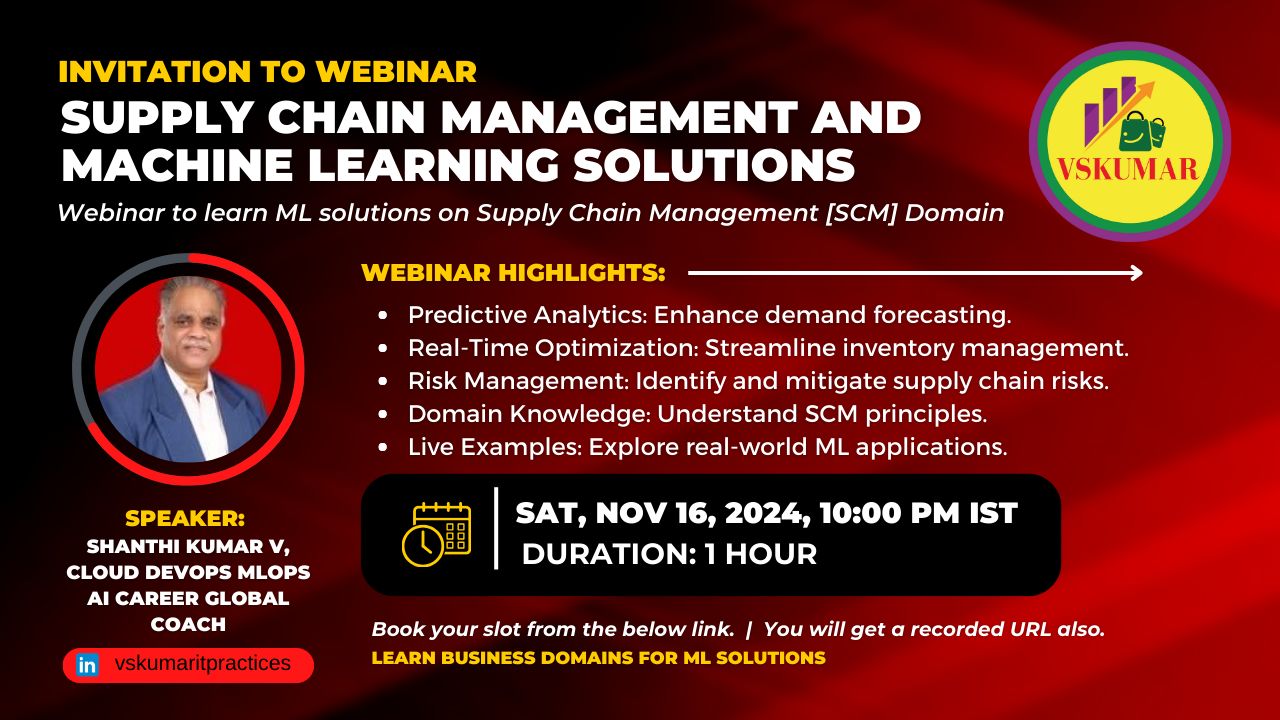
Webinar on Supply chain management and Machine Learning solutions

Webinar on Supply chain management and Machine Learning solutions
Webinar Highlights:

Predictive Analytics: Enhance demand forecasting.

Real-Time Optimization: Streamline inventory management.

Risk Management: Identify and mitigate supply chain risks.

Domain Knowledge: Understand SCM principles.

Live Examples: Explore real-world ML applications.

Career Transition: Learn how to move from SCM roles to ML roles.

Who Should Attend?

Supply Chain Professionals

Data Analysts

Logistics Managers

IT Specialists

Business Leaders

Benefits of Attending:

Insights from industry experts

Practical solutions to apply immediately

Networking with professionals

Enhance your career with ML skills

For further details and to register follow the below link:

Individual AI Job Coaching for Healthcare Professionals Transitioning into AI Roles

Proposal: Individual AI Job Coaching for Healthcare Professionals Transitioning into AI Roles

Introduction

This proposal outlines a personalized approach to assist healthcare professionals in transitioning into AI roles. By leveraging their existing medical knowledge and acquiring new technical skills, individuals can successfully navigate the evolving AI job market. My coaching program offers tailored guidance, skill development, and practical experience to ensure a smooth and effective career change.

Personalized Assessment

Custom Learning Path

  • Curated Courses: Recommend specific online courses and certifications in AI, data science, and machine learning that align with their healthcare background.
  • Hands-on Projects: Assign real-world projects relevant to healthcare, such as predictive analytics for patient care or AI-based diagnostics.

Technical Skills Development

  • Programming and Tools: Teach essential programming languages (Python, R) and AI tools (TensorFlow, Keras, Azure ML).
  • Data Handling: Guide them through data collection, preprocessing, and analysis using healthcare datasets.

Azure ML and Generative AI POCs

  • Azure ML Studio: Introduce Azure Machine Learning Studio for building, training, and deploying machine learning models. Practical POC projects include:
    • Predictive Analytics: Developing models to predict patient outcomes or readmission rates.
    • Diagnostic Tools: Creating AI tools to assist in diagnosing medical conditions from imaging data.
  • Generative AI Projects: Implement Generative AI use-cases such as:
    • Patient Data Synthesis: Generating synthetic patient data to augment real datasets for better model training.
    • Text Generation: Using models like GPT-3 for generating medical reports or summarizing patient histories.

Practical Experience

  • Project Assignments: Provide practical projects to apply learned skills in real-world scenarios.

Mentoring and Support

  • Regular Check-ins: Conduct regular one-on-one sessions to monitor progress and address any challenges.
  • Tailored Feedback: Offer personalized feedback on projects and assignments to ensure continuous improvement.

Regulatory and Ethical Training

  • NHS Guidelines: Provide training on NHS regulations and ethical considerations in AI.
  • Patient Data Privacy: Educate on data privacy laws and the ethical use of AI in healthcare.
  • HIPAA Compliance: Train on the Health Insurance Portability and Accountability Act (HIPAA) guidelines to ensure compliance with patient data privacy and security standards.

Continuous Learning

  • Reading Materials: Suggest key books, research papers, and journals on AI in healthcare.
  • Learning Resources: Provide access to additional learning materials and resources for further knowledge enhancement.

Career Progression Roadmap

  • Skill Assessment: Conduct regular assessments to track progress and refine learning plans.
  • Job Market Alignment: Align skills with current job market demands for AI roles in healthcare.
  • Interview Preparation: Offer mock interviews and resume building workshops tailored to AI roles.

Eligible Roles After Coaching

Upon completion of this coaching program, healthcare professionals will be eligible for various AI roles such as:

  • Healthcare Data Analyst: Analyzing patient data to improve healthcare outcomes.
  • Machine Learning Engineer: Developing and deploying machine learning models for healthcare applications.
  • AI Research Scientist: Conducting research to develop new AI technologies in the healthcare sector.
  • Clinical Data Scientist: Applying data science techniques to clinical data for insights and decision-making.
  • Healthcare AI Consultant: Advising healthcare organizations on implementing AI solutions to optimize operations and improve patient care.
  • Bioinformatics Analyst: Using AI to analyze biological data for research and clinical purposes.

Conclusion

My individual AI job coaching program provides healthcare professionals with the tools, knowledge, and support they need to transition into AI roles effectively. By customizing the coaching experience and incorporating Azure ML and Generative AI POCs, I ensure participants gain the practical and technical skills required to succeed in the evolving AI landscape.

The Role of an AIOps System Engineer

Role of an AIOps System Engineer

An AIOps System Engineer plays a crucial role in modern IT operations by leveraging artificial intelligence and machine learning to enhance efficiency and reliability. Here are the key responsibilities:

  1. Tool Integration: Integrating AIOps solutions with existing IT infrastructure to ensure seamless operation and data flow.
  2. Data Management: Ensuring the quality and availability of data for analysis, which is essential for accurate insights and decision-making.
  3. System Monitoring: Continuously monitoring system performance to identify areas for improvement and potential issues.
  4. Anomaly Detection: Utilizing machine learning algorithms to detect unusual patterns and potential issues within the IT infrastructure.
  5. Root Cause Analysis: Conducting thorough investigations to determine the root cause of incidents and implementing solutions to prevent recurrence.
  6. Automation Implementation: Automating routine tasks and processes to improve efficiency and reduce the likelihood of human error.
  7. Incident Management: Leading the response to critical incidents using AIOps tools and ensuring minimal disruption to services.
  8. Performance Optimization: Analyzing performance metrics to optimize resource allocation and enhance overall system performance.
  9. Collaboration: Working closely with other IT teams and stakeholders to implement data-driven solutions and improve operational workflows.
  10. Reporting and Documentation: Providing detailed reports on system performance, incident trends, and resolutions to support informed decision-making.

By fulfilling these responsibilities, an AIOps System Engineer helps organizations achieve greater operational efficiency, reduce costs, and improve overall IT service delivery. Does this align with what you were looking for?

AIOPS integration and the 15 scenarios of ScienceLogic SL1 COTS Product usage

Here are five questions that can be answered through the video on ScienceLogic SL1:

  1. What are the key features of ScienceLogic SL1 and how do they enhance IT operations?
  2. How does ScienceLogic SL1 provide real-time discovery and visibility across hybrid IT environments?
  3. How does AI-driven insights in ScienceLogic SL1 help in proactive IT operations management?
  4. What are the benefits of using ScienceLogic SL1 for automation and integration with other IT management tools?
  5. How can ScienceLogic SL1’s PowerPacks and PowerFlow be used to address specific IT management needs?
  6. What role does machine learning-based anomaly detection play in ScienceLogic SL1?
  7. How does ScienceLogic SL1 help in optimizing resource utilization in cloud environments?
  8. How does ScienceLogic SL1 ensure compliance and protect sensitive data in healthcare settings?
  9. What are some real-world examples of ScienceLogic SL1 being used to improve customer support operations?
  10. How can ScienceLogic SL1 support digital transformation initiatives in government agencies?

These questions will guide you through understanding the comprehensive capabilities and real-world applications of ScienceLogic SL1. Dive into the video for detailed insights and practical implementation strategies!

Visit for AIOPS coaching needs: