
Key Trends in AI Job Skills for 2025
Key Trends in AI Job Skills for 2025
The landscape of job skills related to artificial intelligence (AI) is rapidly evolving, with significant trends expected to shape the workforce in 2025. As organizations increasingly integrate AI into their operations, the demand for specific skills is set to rise dramatically. Here are the key trends and skills that will define AI job competencies in 2025.
Key Trends in AI Job Skills for 2025
1. Shift from Roles to Skills
Organizations are moving away from traditional job roles towards a skills-based hiring approach. This trend is driven by the need for flexibility and adaptability in an AI-driven environment. Companies are focusing on identifying and cultivating specific skills within their workforce rather than solely relying on external hiring[1][2]. This shift is particularly crucial as many businesses report skill shortages as a top concern[1].
2. Increased Demand for AI and Machine Learning Skills
AI and machine learning (ML) skills are among the most sought-after competencies. A significant number of employers (87%) consider AI experience valuable for job seekers, and many companies are willing to offer higher salaries to those with AI-related expertise[2][3]. The demand for roles such as machine learning engineers, data scientists, and AI application developers is expected to surge as businesses seek to implement AI solutions effectively[8].
3. Emphasis on Generative AI Proficiency
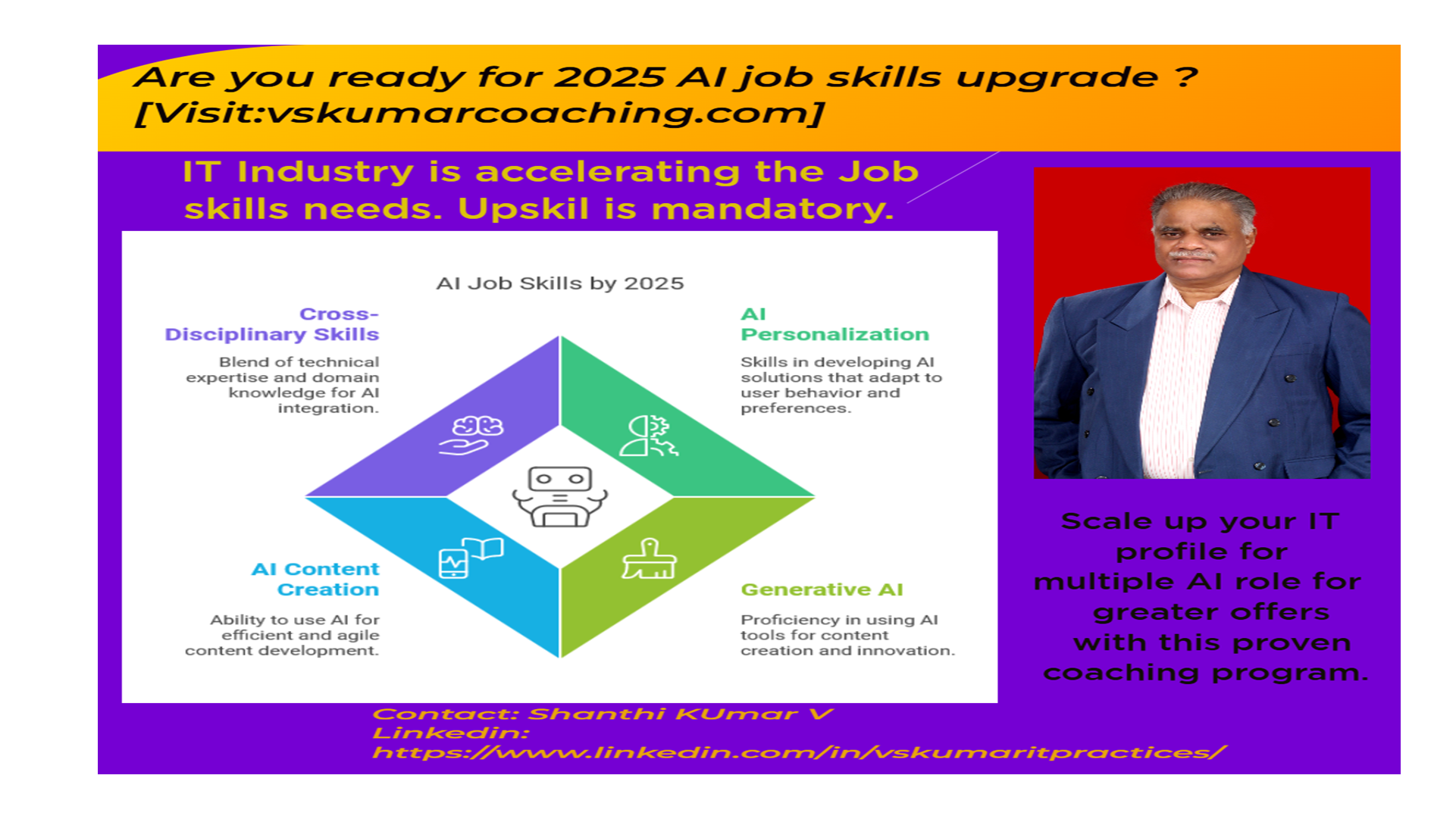
Generative AI, which includes technologies like ChatGPT, is becoming increasingly relevant across various sectors. Professionals skilled in generative AI modeling, data analysis, and related fields will be in high demand as organizations look to leverage these technologies for content creation and problem-solving[3][10]. The ability to craft effective prompts and fine-tune models will also be critical[10].
4. Focus on Ethical AI Development
As AI becomes more integrated into business processes, there will be a growing emphasis on responsible AI practices. This includes ensuring ethical use of data, mitigating biases in algorithms, and developing transparent AI systems. Roles such as AI ethics specialists will become essential to guide organizations in navigating these challenges[6][9].
5. Upskilling and Continuous Learning
With the rapid pace of technological advancement, continuous learning will be vital. Organizations are increasingly investing in training programs to help employees acquire necessary skills related to AI and ML[1][4]. This focus on upskilling reflects a broader recognition that adaptability is key in a changing job market.
Top In-Demand Skills for 2025
Based on current research and industry insights, here are the top skills professionals should focus on developing:
- Data Science and Analytics: Proficiency in data analysis and machine learning techniques.
- Generative AI: Skills in creating and implementing generative models for various applications.
- Coding and Software Development: Familiarity with programming languages (especially Python) and development frameworks that incorporate AI tools.
- AI Ethics: Understanding ethical implications of AI deployment and developing guidelines for responsible use.
- Cloud Computing: Knowledge of cloud platforms that support AI applications is increasingly important as businesses migrate to cloud-based solutions.
Summary Table of In-Demand Skills
| Skill Area | Description |
|---|---|
| Data Science | Expertise in data analysis, statistics, and ML techniques |
| Generative AI | Ability to create models that generate content or solutions |
| Software Development | Proficiency in coding, particularly with AI tools |
| Ethical AI | Knowledge of ethical guidelines surrounding AI usage |
| Cloud Computing | Skills related to deploying AI solutions on cloud platforms |
In summary, the future job market in 2025 will require professionals not only to possess technical skills but also to demonstrate adaptability, ethical awareness, and a commitment to continuous learning as they navigate the evolving landscape shaped by artificial intelligence.
Citations:
[1] https://www.mercer.com/en-au/insights/talent-and-transformation/attracting-and-retaining-talent/hr-trends-2025-embracing-ai-flexibility-and-a-skills-powered-future/
[2] https://www.techtarget.com/whatis/feature/Tech-job-market-statistics-and-outlook
[3] https://www.business-standard.com/education/news/top-5-in-demand-skills-every-professional-should-master-in-the-year-2025-nc-124111401612_1.html
[4] https://www.dice.com/career-advice/preparing-to-boost-your-ai-skills-in-2025
[5] https://www.sganalytics.com/blog/10-most-high-demand-skills-for-the-future/
[6] https://www.techtarget.com/whatis/feature/Top-AI-jobs
[7] https://emeritus.org/in/learn/ai-trends-2025/
[8] https://www.simplilearn.com/rise-of-ai-and-machine-learning-job-trends-article
[9] https://news.microsoft.com/source/features/ai/6-ai-trends-youll-see-more-of-in-2025/
[10] https://www.dice.com/career-advice/what-top-tech-skills-should-you-learn-for-2025
[11] https://www.synthesia.io/post/ai-trends
 Building Cloud/DevOps/AI/ML/Gen AI Architects