The role of a DevOps Engineer has indeed evolved significantly over the past year. Traditionally, the focus was on Cloud, DevOps, and Infrastructure as Code (IaC) skills. These core competencies were essential for automating the infrastructure, streamlining the deployment processes, and ensuring that systems could scale efficiently.
However, the landscape of technology is ever-changing, and the rise of Artificial Intelligence (AI), Machine Learning (ML), and Generative AI technologies is transforming the demands of the industry. Companies are now looking for DevOps Engineers who can also integrate these advanced technologies into their workflow. This shift reflects the growing importance of enhancing automation, improving efficiency, and enabling intelligent decision-making within the development and deployment processes.
The integration of AI/ML into DevOps practices, often referred to as “AIOps,” allows for smarter monitoring, predictive analytics, and automated resolutions. Meanwhile, Generative AI technologies can aid in creating new solutions, optimizing code, and even generating infrastructure configurations.
As DevOps Engineers adapt to these changes, the emphasis is shifting towards a more interdisciplinary approach, combining traditional DevOps skills with AI/ML expertise. This not only opens up new opportunities for innovation but also presents exciting challenges for those in the field.
In conclusion, the evolution of the DevOps Engineer role underscores the dynamic nature of the tech industry. Staying ahead of the curve means continuously learning and adapting to new technologies, ultimately driving the next wave of innovation.
A typical DevOps Engineer JD Discussion with ML & Gen AI Skills:
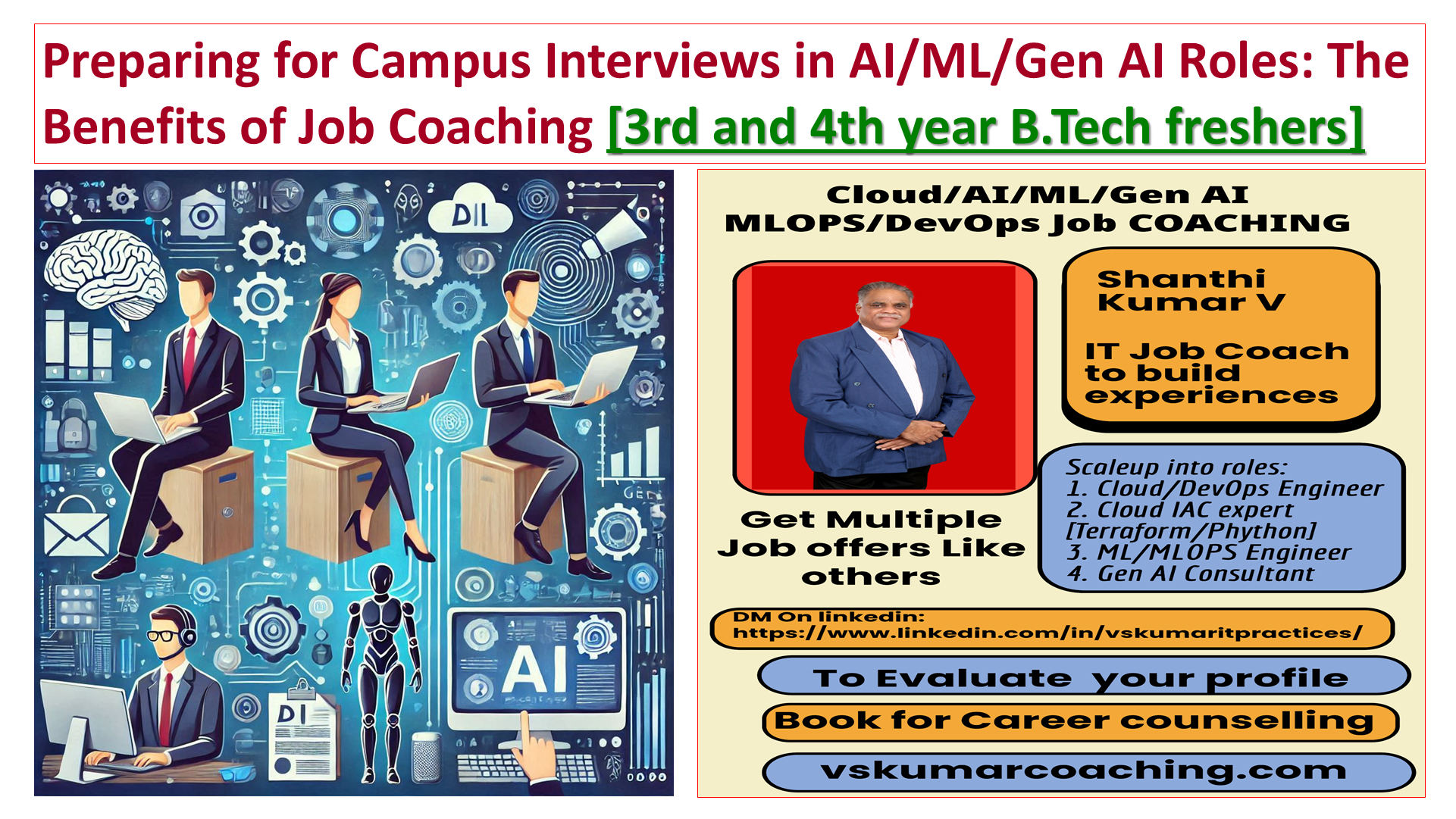
Preparing for Campus Interviews in AI/ML/Gen AI Roles: The Benefits of Job Coaching
Navigating the competitive landscape of campus interviews can be daunting, especially when vying for high-demand roles in AI, machine learning (ML), and generative AI (Gen AI). As a 3rd-year engineering graduate, it’s essential to be well-prepared and to stand out from the crowd. One of the most effective ways to achieve this is through job coaching programs. Here’s how job coaching can significantly enhance your chances of securing higher offers and setting the foundation for a successful career.
Targeted Skill Development
Job coaching programs provide tailored training in AI/ML/Gen AI technologies, ensuring you acquire the specific skills required for these roles. You’ll receive guidance on which programming languages, tools, and frameworks to focus on, such as Python, TensorFlow, and PyTorch. This targeted approach helps you build a strong foundation and stay ahead of the curve.
Practical Experience
Beyond theoretical knowledge, job coaching emphasizes hands-on experience. You’ll work on real-world projects, build machine learning models, and solve practical problems, enabling you to showcase your capabilities during interviews. Practical experience is invaluable in demonstrating your proficiency and readiness to tackle industry challenges.
Resume and Profile Optimization
Crafting an impressive resume and LinkedIn profile is crucial for catching the attention of recruiters. Coaches help you highlight your AI/ML/Gen AI skills and projects effectively, ensuring that your profile stands out and reflects your expertise. A well-optimized profile can make a significant difference in your job search.
Mock Interviews and Feedback
Job coaching programs offer mock interview sessions that simulate real campus interviews. These sessions provide constructive feedback on your performance, helping you improve your responses, body language, and confidence. Being well-prepared for interviews increases your chances of making a strong impression and securing job offers.
Industry Insights
Coaches provide valuable insights into industry trends, common interview questions, and what recruiters are looking for in candidates. This knowledge helps you prepare effectively and align your skills with market demands. Understanding the industry landscape gives you a competitive edge during interviews.
Networking Opportunities
Job coaching programs often have connections with industry professionals and recruiters. You’ll have opportunities to network, gain referrals, and learn from experts, increasing your visibility and job prospects. Building a strong professional network is essential for career growth and opening doors to new opportunities.
Confidence Building
Personalized support from coaches boosts your confidence, making you more prepared and self-assured during interviews. This confidence is essential for making a strong impression on interviewers and demonstrating your readiness for the role.
Strategic Career Planning
Coaches help you develop a long-term career plan, setting achievable goals and milestones. This strategic approach ensures that you continue to grow and advance in your career beyond just landing the first job offer. Having a clear career trajectory keeps you motivated and focused on continuous improvement.
Conclusion
As a 3rd-year engineering graduate preparing for campus interviews in AI/ML/Gen AI roles, job coaching can provide comprehensive support and guidance. By leveraging targeted skill development, practical experience, resume optimization, mock interviews, industry insights, networking opportunities, confidence building, and strategic career planning, you can enhance your chances of securing higher offers and setting a strong foundation for a successful and fulfilling career in the tech industry. Embrace the benefits of job coaching and take proactive steps to achieve your career goals. 🚀✨
Hira Gowda Patil, as MCA 3rd year student Joined in my Cloud/DevOps Coaching in 2021 to build the job experiences, soon after completion he got into Brillio as Cloud Engineer. He saved his career time with a strategic plan. See his profile. https://www.linkedin.com/in/hiragoud-patil-cloud-devops/, So if you want to save your Career time and get higher offer DM me on Linkedin.
Here are 20 questions to test your understanding and application after completing the “AI Career Advancement: Comprehensive Training in Generative AI and Machine Learning on Azure” course:
How do you configure and deploy a machine learning model using Azure Machine Learning Studio?
What are the key components of Azure Cognitive Services, and how can they be utilized in a real-world application?
Explain the process of implementing Natural Language Processing (NLP) using Azure services.
How do you set up and manage Azure Cognitive Search for an AI-based project?
Describe the steps involved in developing a conversational AI solution using Azure Bot Service.
What is MLOps, and how does it integrate with Azure Machine Learning for operationalizing machine learning models?
How can you leverage Azure Computer Vision for image recognition tasks?
What are the benefits of using transfer learning in generative AI models, and how can it be applied in Azure?
How do you implement speech recognition and synthesis using Azure Speech Services?
What are the best practices for securing Azure AI services and data?
How can you use Azure Knowledge Mining to extract insights from unstructured data?
Describe a scenario where you would use Azure Blob Storage in conjunction with machine learning.
What are the key differences between AI, machine learning, and generative AI?
How do you handle version control and continuous integration in an Azure MLOps pipeline?
Explain the concept of object detection and how it can be implemented using Azure Computer Vision.
How can you create and deploy a predictive analytics solution using Azure Machine Learning and Power BI?
What is the role of Azure Container Instances in deploying machine learning models?
How do you integrate Azure Cognitive Services with a web application to enhance user experience?
What are the key considerations for optimizing the performance of AI models on Azure?
How can you use Azure DevOps to manage and deploy machine learning projects?
These questions will help you assess your knowledge and practical skills gained from the course, ensuring you are well-prepared for real-world applications and interviews.
30 Days to Mastering Machine Learning: A Comprehensive Learning Journey
Welcome to your 30-day Machine Learning (ML) adventure! Whether you are a seasoned IT professional or a curious newcomer, this learning plan is designed to provide a well-rounded and engaging experience, covering everything from foundational concepts to advanced techniques and real-world applications. Let’s dive into the highlights of this exciting journey:
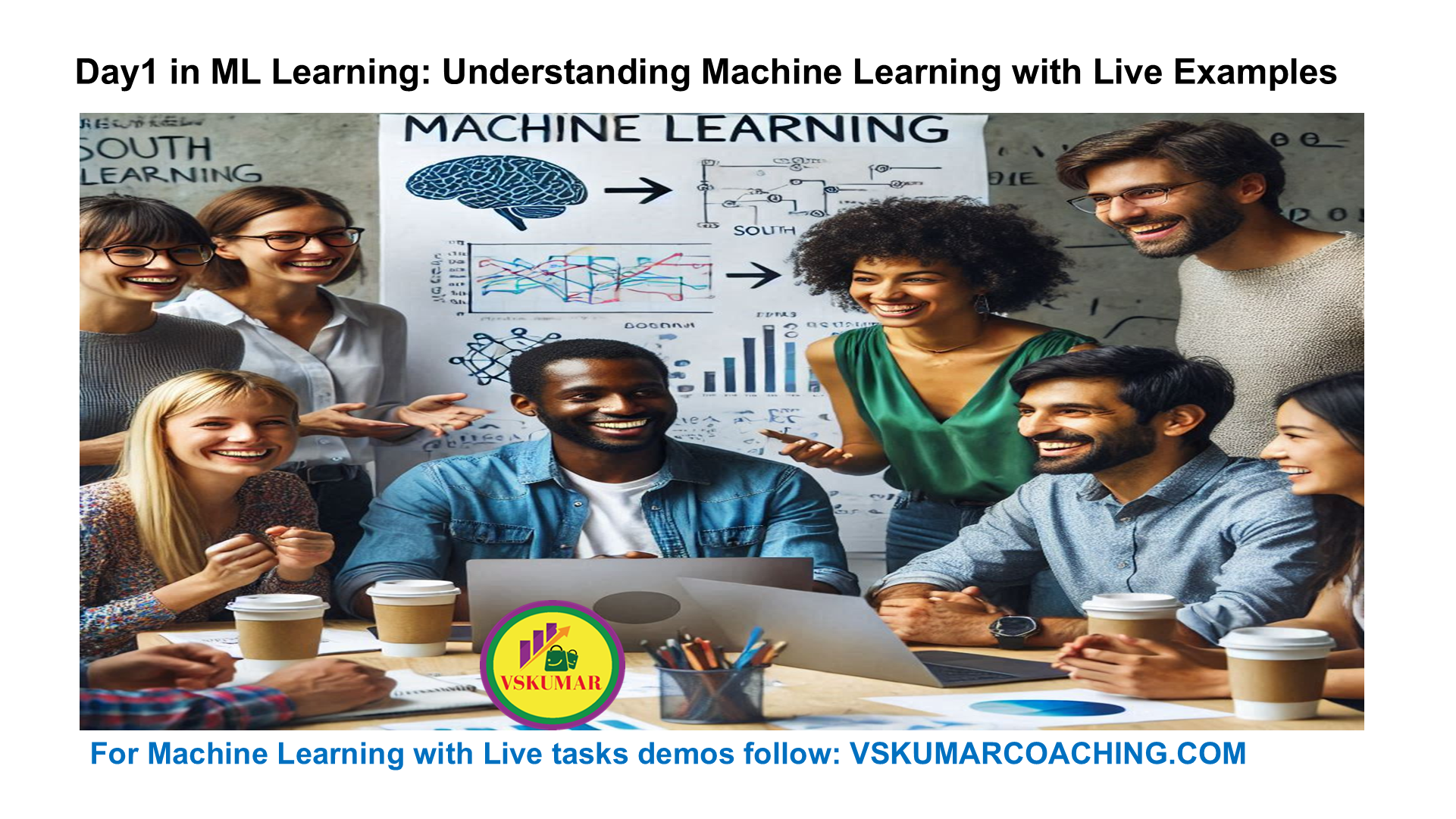
ML Day 1: Introduction to Machine Learning (ML) and its Importance in Modern IT o Focus: Basic overview of ML and its significance. o Purpose: Lay the foundation for understanding ML’s impact on IT. o Content Type: Educational and foundational.
ML Day 2: A Case Study of a Legacy IT Professional Transitioning to ML o Focus: Real-life example of a career transition. o Purpose: Inspire and provide insights through a relatable story. o Content Type: Narrative and practical.
ML Day 3: The Rising Demand for ML Skills in IT o Focus: Highlighting the increasing need for ML expertise. o Purpose: Emphasize career opportunities in ML. o Content Type: Informative and motivational.
ML Day 4: Meme: Challenges of Transitioning from Legacy IT to ML o Focus: Humorous take on the difficulties of transitioning. o Purpose: Engage and entertain while addressing real challenges. o Content Type: Light-hearted and relatable.
ML Day 5: Overview of Generative AI and its Applications o Focus: Introduction to Generative AI and its uses. o Purpose: Educate on a specific area of ML. o Content Type: Educational and technical.
ML Day 6: Interview with an Expert in Gen AI o Focus: Insights from a professional in the field. o Purpose: Provide expert perspectives and advice. o Content Type: Informative and conversational.
ML Day 7: Success Story of a Company Leveraging Gen AI for Business Growth o Focus: Real-world application and success of Gen AI. o Purpose: Showcase practical benefits and encourage adoption. o Content Type: Narrative and inspirational.
ML Day 8: Basic ML Algorithms Every IT Professional Should Know o Focus: Overview of essential ML algorithms. o Purpose: Equip readers with foundational knowledge. o Content Type: Educational and technical.
ML Day 9: A Day in the Life of an IT Professional Working with ML o Focus: Daily routine and tasks in an ML career. o Purpose: Provide a realistic view of working with ML. o Content Type: Narrative and practical.
ML Day 10: Effectiveness of ML Algorithms: Research Findings o Focus: Evidence-based insights on ML algorithm performance. o Purpose: Highlight the effectiveness and potential of ML. o Content Type: Research-based and informative.
ML Day 11: Fun Quiz: ML Terms and Concepts o Focus: Test knowledge of ML terminology. o Purpose: Engage and educate in a fun way. o Content Type: Interactive and educational.
ML Day 12: Upskilling in IT and the Importance of Continuous Learning o Focus: The need for ongoing education in IT. o Purpose: Encourage continuous learning and upskilling. o Content Type: Informative and motivational.
ML Day 13: Personal Story of Upskilling from an IT Professional o Focus: Personal experience of learning new skills. o Purpose: Inspire and provide relatable insights. o Content Type: Narrative and inspirational.
ML Day 14: Infographic: Benefits of Upskilling in the IT Industry o Focus: Visual representation of upskilling advantages. o Purpose: Quickly convey the benefits of continuous learning. o Content Type: Visual and informative.
ML Day 15: How to Get Started with ML and Gen AI o Focus: Practical steps to begin learning ML and Generative AI. o Purpose: Guide readers through the initial learning process. o Content Type: Educational and practical.
ML Day 16: Real-World Project Example Using ML o Focus: Case study of an ML project. o Purpose: Demonstrate practical applications of ML. o Content Type: Narrative and technical.
ML Day 17: The Career Impact of Learning ML o Focus: How ML skills can enhance a career. o Purpose: Motivate readers to learn ML. o Content Type: Informative and motivational.
ML Day 18: Lighthearted Comic Strip about Gen AI o Focus: Humorous depiction of Generative AI. o Purpose: Engage and entertain while educating. o Content Type: Light-hearted and visual.
ML Day 19: Detailed Guide on Popular ML Algorithms o Focus: In-depth look at widely-used ML algorithms. o Purpose: Provide comprehensive knowledge. o Content Type: Educational and technical.
ML Day 20: Profile of an Industry Leader in ML o Focus: Highlighting achievements of an ML expert. o Purpose: Inspire and provide role models. o Content Type: Narrative and inspirational.
ML Day 21: Whitepaper or Article Supporting the Use of Gen AI in IT o Focus: Detailed analysis and support for Gen AI in IT. o Purpose: Provide in-depth knowledge and evidence. o Content Type: Research-based and technical.
ML Day 22: Advanced ML Techniques and Tools o Focus: Exploring more complex ML methods. o Purpose: Educate on advanced topics. o Content Type: Educational and technical.
ML Day 23: Success Story of a Legacy IT Team Adopting Gen AI o Focus: Real-life example of a successful transition. o Purpose: Inspire and provide practical insights. o Content Type: Narrative and inspirational.
ML Day 24: Graphs Showing the ROI of Implementing ML Solutions o Focus: Visual representation of ML’s return on investment. o Purpose: Highlight financial benefits of ML. o Content Type: Visual and informative.
ML Day 25: Humorous Video Related to ML o Focus: Entertaining take on ML topics. o Purpose: Engage and entertain while educating. o Content Type: Light-hearted and visual.
ML Day 26: The Future of IT with ML and Gen AI o Focus: Predictions and future trends in IT. o Purpose: Provide insights into the future. o Content Type: Informative and forward-looking.
ML Day 27: Inspirational Talk or Webinar on Upskilling o Focus: Motivational content about learning new skills. o Purpose: Encourage continuous education. o Content Type: Inspirational and educational.
ML Day 28: Comparative Analysis Between Traditional IT and ML-Integrated IT o Focus: Comparison of traditional and ML-enhanced IT. o Purpose: Highlight the advantages of ML integration. o Content Type: Analytical and informative.
ML Day 29: Trivia about ML and Gen AI Advancements o Focus: Interesting facts about ML and Generative AI. o Purpose: Engage and educate in a fun way. o Content Type: Interactive and educational.
ML Day 30: Recap of the Month: Key Takeaways and Next Steps for Legacy IT Professionals o Focus: Summary of the 30-day course and future directions. o Purpose: Reinforce learning and encourage continued growth. o Content Type: Summary and motivational. This comprehensive plan covers foundational concepts, advanced techniques, and real-world applications, ensuring a well-rounded understanding of Machine Learning. Feel free to customize or expand on any day as needed! 😊



 Building Cloud/DevOps/AI/ML/Gen AI Architects