
AI Agents: Evolution from Service-Oriented Applications to Intelligent Assistants
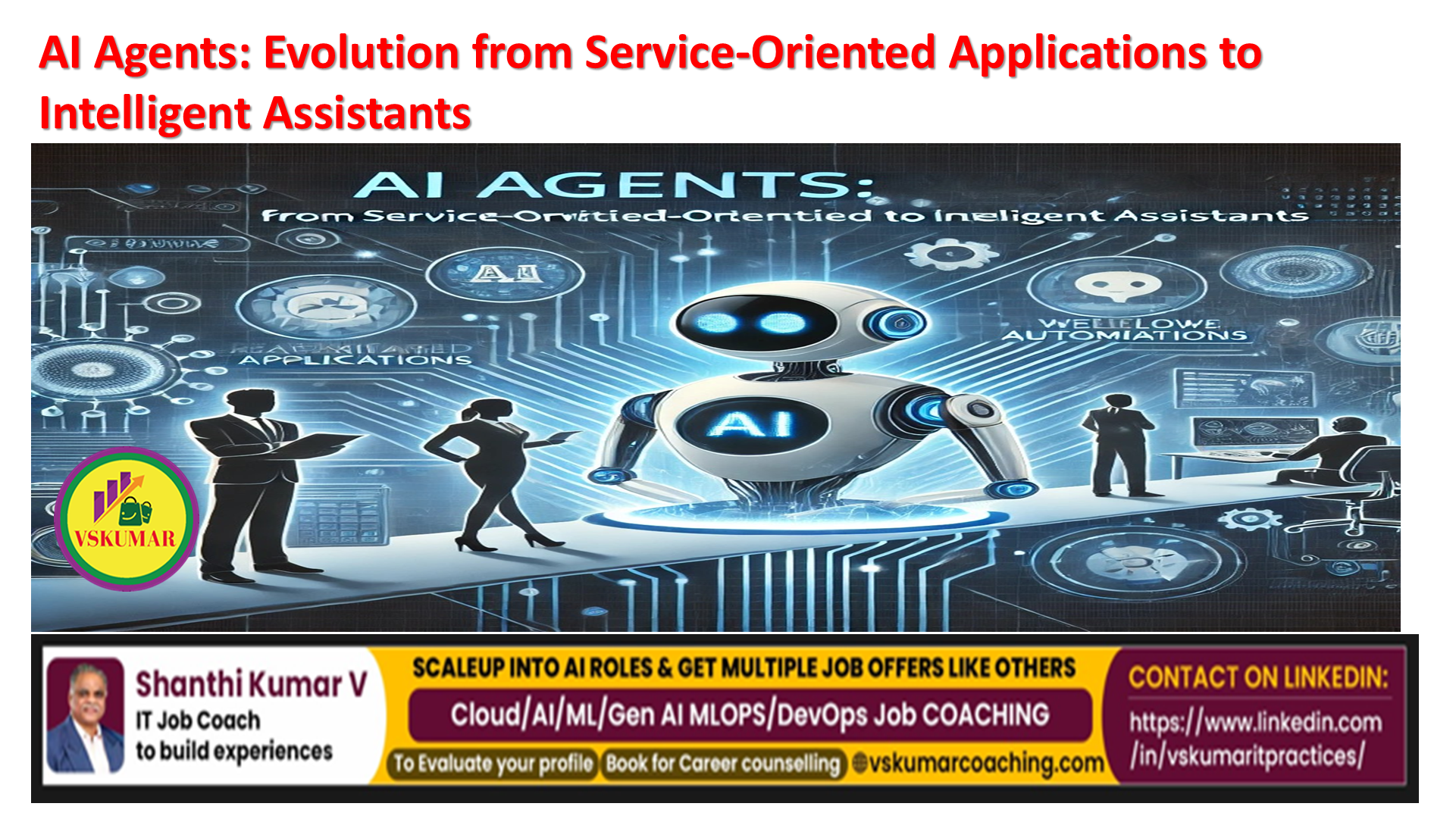
Artificial Intelligence (AI) has significantly reshaped the technological landscape, bringing forth a new era of intelligent agents. These AI agents, designed to perform tasks autonomously and interact with users in natural language, are a stark evolution from the traditional service-oriented applications (SOAs) of the past. This article explores how AI agents have revolutionized task management and compares this transformation to the earlier migration of service-oriented applications into intelligent assistants.
The Era of Service-Oriented Applications
Before the advent of AI agents, service-oriented applications played a pivotal role in business operations. These applications were designed to offer specific services through a network of interoperable components. Key characteristics of SOAs included:
- Modularity: Services were divided into discrete units that could be reused across different applications.
- Interoperability: These units could communicate with each other using standardized protocols.
- Scalability: Services could be scaled up or down based on demand.
- Loose Coupling: Components were designed to be independent, reducing dependencies and enhancing flexibility.
SOAs were instrumental in streamlining business processes, enabling organizations to deploy and manage services efficiently.
Transition to AI Agents
The transition from SOAs to AI agents marked a significant technological leap. AI agents are sophisticated programs capable of learning from data, making decisions, and performing tasks autonomously. Key differentiators between AI agents and traditional SOAs include:
- Intelligence: AI agents are equipped with machine learning algorithms, enabling them to learn from experience and improve their performance over time.
- Natural Language Processing (NLP): AI agents can understand and generate human language, facilitating more intuitive interactions with users.
- Autonomy: AI agents can perform tasks without human intervention, making them highly efficient in managing repetitive and complex activities.
- Context Awareness: These agents can understand the context of tasks and interactions, providing more relevant and personalized assistance.
Comparing SOAs and AI Agents
Task Automation
- Service-Oriented Applications: SOAs primarily focused on automating specific services, such as processing transactions, managing inventory, or handling customer queries through predefined workflows.
- AI Agents: AI agents take automation to the next level by not only performing predefined tasks but also learning from user interactions and data to optimize processes continuously. They can handle complex tasks that require understanding context, such as personalized customer support or predictive maintenance.
Interactivity and User Experience
- Service-Oriented Applications: User interactions with SOAs were typically limited to predefined inputs and outputs through graphical user interfaces (GUIs). These interactions were often rigid and lacked personalization.
- AI Agents: AI agents provide a more interactive and personalized user experience. Through NLP and machine learning, they can engage in natural language conversations, understand user preferences, and provide tailored responses. This enhances user satisfaction and engagement.
Integration and Flexibility
- Service-Oriented Applications: SOAs were designed with interoperability in mind, allowing different services to communicate using standardized protocols. However, integrating new services often required significant effort and customization.
- AI Agents: AI agents are designed to seamlessly integrate with various platforms and applications, leveraging APIs and other integration tools. They can dynamically adapt to different environments and requirements, offering greater flexibility and ease of deployment.
Decision-Making and Adaptability
- Service-Oriented Applications: SOAs relied on predefined rules and logic to make decisions, limiting their ability to adapt to changing conditions or new information.
- AI Agents: AI agents use advanced algorithms and data analytics to make informed decisions in real-time. They can adapt to new information, learn from outcomes, and continuously improve their performance, making them highly adaptable to changing business needs.
Real-world Implementations
- Customer Support: Many organizations have transitioned from using SOAs for customer support to deploying AI agents. These agents can handle customer inquiries 24/7, provide personalized responses, and escalate complex issues to human agents when necessary.
- IT Help Desk: Traditional IT help desks relied on SOAs to manage service requests and incidents. Today, AI agents can automate routine IT tasks, provide real-time support, and proactively identify and resolve issues before they impact users.
- Sales and Marketing: AI agents have transformed sales and marketing by automating lead generation, personalizing marketing campaigns, and analyzing customer data to provide actionable insights. This is a significant advancement from the rule-based marketing automation tools used in SOAs.
Conclusion
The evolution from service-oriented applications to AI agents represents a paradigm shift in how organizations manage tasks and interact with users. AI agents offer unprecedented levels of intelligence, interactivity, and adaptability, making them indispensable tools in modern business operations. By leveraging the capabilities of AI agents, organizations can enhance productivity, improve user experiences, and stay competitive in an increasingly digital world.
AI Management Practice 11: Customizable Agents: Elevating Productivity in Microsoft 365
Customizable agents in Microsoft 365 enhance productivity by providing real-time assistance with tasks like managing emails, scheduling meetings, and generating reports. They improve communication through tools like Microsoft Teams and offer language support, breaking down barriers in global teams. Tailored to organizational needs, these agents adapt to workflows, automate routine tasks, and provide data-driven insights. Real-world implementations include employee IT self-help, real-time customer support, and SharePoint integration, demonstrating their transformative impact on modern workplaces.
 Building Cloud/DevOps/AI/ML/Gen AI Architects