A New Year, A New AI Reality: Questions That Will Shape Your Career in 2026
Wishing you a purposeful, high-growth, and future-ready 2026.
The beginning of a new year is more than a calendar change. It’s a moment to reassess direction.
In 2026, that reflection matters more than usual.
Artificial Intelligence has moved beyond experimentation. It now quietly shapes how professionals are evaluated, trusted, and compensated. Careers are no longer defined by how hard we work—but by how much leverage we create.
Before chasing the next role, certification, or title, pause and ask the questions that truly matter.
The 2026 AI Career Reset: Questions Worth Answering
1. Is AI amplifying my role—or making it easier to replace?
Some roles grow stronger with AI. Others shrink. Understanding where yours sits is the first strategic step.
A Plain-English Guide to How Autonomous AI Systems Really Work
Most people hear words like Agentic AI, AI agents, or autonomous AI and imagine something mysterious or futuristic.
In reality, Agentic AI is not one magic technology. It is a carefully assembled system of components, each playing a specific role—just like departments in an organization.
This blog breaks down Agentic AI Components in a way any layperson can understand.
1. Foundational AI & Data Systems
The learning foundation
What it is
This is the basic intelligence layer where AI learns from data. It includes traditional machine learning techniques that help systems recognize patterns, make predictions, and improve with experience.
Key items explained
Machine Learning: Teaching computers using examples instead of hard rules.
Natural Language Processing (NLP): Helping AI understand and respond to human language.
Data Engineering: Preparing clean, usable data for AI to learn from.
Training & Evaluation Pipelines: Processes to teach AI and test if it learned correctly.
How it’s used
Fraud detection in banking
Resume screening in HR
Demand forecasting in retail
Business benefit
✅ Turns raw data into useful decisions ✅ Reduces manual analysis ✅ Forms the backbone of all advanced AI systems
2. Model & Intelligence Layer
The “brain” of the AI
What it is
This layer contains the actual AI models—the mathematical brains that think, reason, and generate outputs.
Key items explained
Large Language Models (LLMs): Models like ChatGPT that understand and generate text.
Deep Neural Networks: Systems inspired by the human brain, capable of complex reasoning.
Multimodal Models: AI that understands text, images, audio, and video together.
Transfer & Continual Learning: AI that improves over time without starting from scratch.
How it’s used
Chatbots that understand context
AI copilots for developers
Smart document analysis
Business benefit
✅ Enables human-like understanding ✅ Handles complex tasks at scale ✅ Learns faster with less data
3. Generative & Knowledge Systems
Where AI creates and retrieves knowledge
What it is
This is the layer where AI creates content and grounds its answers in real information, instead of guessing.
Key items explained
Prompt Engineering: Asking AI the right way to get better answers.
Retrieval-Augmented Generation (RAG): Letting AI fetch facts from documents or databases before responding.
Tool & Function Calling: Allowing AI to use software tools, APIs, or databases.
Hallucination Mitigation: Preventing AI from making things up.
Content Generation: Text, code, images, audio, and video.
How it’s used
Customer support knowledge bots
AI-powered research assistants
Marketing content creation
Business benefit
✅ Accurate, reliable responses ✅ Faster content creation ✅ Reduced dependency on human experts
4. Agent Runtime, Memory & Orchestration
How AI actually “does work”
What it is
This layer turns AI from a talking system into a working system. It allows AI to plan tasks, remember context, and take actions.
Key items explained
Task Planning: Breaking big goals into small steps.
Goal Decomposition: “What needs to be done first, next, and last?”
Tool Orchestration: Choosing and using the right tools automatically.
Memory Systems: Remembering past interactions or decisions.
Human-in-the-Loop: Humans approving or correcting AI when needed.
What fundamental components and architectural frameworks are essential for building intelligent data agents?
Building intelligent data agents requires a combination of specific technical components and a robust architectural framework designed to handle complex data tasks and derive actionable insights.
Here are 10 high-quality, thought-provoking questions aligned directly to this blog content [What fundamental components and architectural frameworks are essential for building intelligent data agents?]:
You can try them after reading it.
Why is effective data collection considered the foundation of intelligent data agents, and what risks arise if it is poorly implemented?
How do different machine learning algorithms (from regression to neural networks) influence the decision-making capability of a data agent?
What role does data cleaning and preprocessing play in preventing inaccurate or misleading AI insights?
How does the choice of programming languages and tooling impact the scalability and maintainability of intelligent data agents?
What are the key stages in a core workflow framework for data agents, and how do they ensure systematic data processing?
Why is architectural flexibility critical when data volume and complexity increase over time?
How do integration capabilities with ERP and CRM systems enhance the real-world effectiveness of data agents?
What testing and validation mechanisms are essential to ensure continuous accuracy and adaptability of AI agents?
What ethical risks—such as bias, privacy violations, or lack of transparency—must be addressed when building intelligent data agents?
How does the water filtration system analogy help explain the relationship between data collection, processing, machine learning, and architecture in intelligent data agents?
Fundamental Components
The sources identify several key elements that serve as the building blocks for effective AI data analysis agents:
Effective Data Collection: This is considered the foundation of any AI agent. It involves gathering structured and real-time data through techniques such as web scraping, utilizing APIs, and implementing sensors.
Machine Learning (ML) Algorithms: Acting as the “heart” of the agent, these algorithms—ranging from regression analysis to neural networks—are essential for making predictions and deriving insights from the collected data.
Data Processing and Cleaning: Before analysis can occur, data must be cleaned to remove inaccuracies and transformed into a usable format. This step is critical for ensuring that the agent produces reliable results.
Advanced Tooling: Choosing the correct programming languages and software platforms is vital, as these choices directly impact the productivity and effectiveness of the development process.
Architectural Frameworks
A well-designed architecture provides the structure necessary for the agent to function within a data-driven environment. Essential architectural considerations include:
Core Workflow Framework: The architecture must establish a clear pipeline for data ingestion, processing, and output. This framework ensures the agent can handle complex tasks systematically.
Flexibility and Scalability: As data volumes grow, the architecture must be designed to handle increased loads without compromising performance. Scalability is a significant concern for maintaining efficiency in data processing.
Integration Capabilities: Modern architectures should prioritize seamless integration with existing systems, such as Enterprise Resource Planning (ERP) software and Customer Relationship Management (CRM) tools. This fosters data sharing and enriches the overall analysis.
Testing and Validation Mechanisms: To ensure accuracy and reliability, the framework must include stages for cross-validation and A/B testing, alongside continuous monitoring to help the agent adapt to new data.
Ethical and Operational Essentials
Beyond technical components, building an intelligent agent requires addressing operational hurdles. Developers must prioritize ethical considerations, such as ensuring data privacy, avoiding bias, and maintaining transparency. Furthermore, identifying common pitfalls early—such as inadequate data preparation or overfitting models—is essential for a successful project outcome.
Analogy: Building an intelligent data agent is much like constructing a high-tech filtration system for a city’s water supply. The data collection is the network of pipes drawing in raw water; the cleaning and processing represent the initial filters that remove debris; the machine learning algorithms are the chemical sensors that identify the water’s quality; and the architectural framework is the plant’s overall design that ensures the system can scale up to meet the needs of a growing population while integrating with the city’s existing infrastructure.
How do AI agents enhance organizational decision-making and efficiency?
AI agents significantly enhance organizational decision-making and efficiency by automating the transformation of raw data into actionable intelligence. According to the sources, these agents are revolutionizing how organizations interpret and utilize information in a data-driven world.
Enhancing Decision-Making
AI agents improve the quality and speed of organizational decisions through several mechanisms:
• Accuracy and Timeliness: By providing timely and accurate insights, these agents reduce human error, ensuring that leadership bases their strategies on reliable data.
• Actionable Recommendations: Beyond mere analysis, agents extract valuable insights to provide actionable recommendations, allowing organizations to make data-driven decisions faster and more accurately.
• Predictive Analytics: Advanced algorithms enable predictive analytics, which helps organizations anticipate customer behavior and optimize operational strategies before market shifts occur.
• Informed Business Intelligence: Integration with existing enterprise systems, such as ERP and CRM software, fosters seamless data sharing,. This integration enriches the analysis, providing a deeper level of business intelligence that empowers organizations to maintain a competitive advantage.
Increasing Operational Efficiency
Efficiency is gained by streamlining complex workflows and maximizing the utility of resources:
• Automated Data Processing: AI agents automate data processing tasks that would otherwise require significant manual labor, freeing up human personnel for more strategic work.
• Scalability: Well-designed agents can handle increased data volumes without a compromise in performance. This scalability is essential for maintaining efficient data processing as an organization grows..
• Optimized Strategies: The versatility of these agents across sectors—such as finance, healthcare, and marketing—allows for the optimization of operational strategies tailored to specific industry needs.
• Continuous Improvement: Through stages like cross-validation, A/B testing, and continuous monitoring, agents adapt to new data, ensuring the organization’s efficiency does not degrade over time as the data landscape changes.
Analogy: Using AI agents in an organization is like upgrading from a manual telescope to an automated satellite system.
While a telescope requires a person to manually search the sky and interpret what they see, a satellite system automatically scans vast areas, filters out atmospheric noise, and sends back high-resolution maps and alerts. This allows the organization to see further, react to changes instantly, and navigate with a level of precision that manual observation could never achieve.
The rapid evolution of artificial intelligence poses a significant threat to traditional technology careers, primarily because legacy IT roles are becoming obsolete as the global industry shifts. Staying stagnant in these roles is no longer a viable option, as professionals who fail to adapt risk becoming irrelevant in a market that demands AI-driven expertise.
The specific ways AI evolution threatens legacy roles include:
Career Stagnation and Growth Blockers: Professionals who do not upgrade their skill sets face “major blockers” in their professional journeys. Without proactive changes, an IT career may hit a “bug” that effectively stops all growth and prevents advancement into leadership positions.
Invisibility to Top Employers: Legacy IT experts often struggle to showcase how their experience translates to AI-powered business transformations. This results in resumes that fail to land interviews, as traditional skills no longer meet the requirements of top-tier companies looking for AI proficiency.
Difficulty Entering the AI Job Market: Many legacy professionals find themselves unable to transition into AI-specific roles due to a lack of provable work experience and a failure to redefine their professional profiles for the modern era.
The High Cost of Reactive Change: Waiting for a career setback before seeking new skills is considered a costly mistake. In the current environment, “prevention” through upskilling is necessary to remain competitive and future-proof a career before a crisis occurs.
To survive this shift, the sources emphasize that a career upgrade is now mission-critical, carrying even more urgency than high-priority “code red” projects professionals may have handled in the past.
Analogy Maintaining a legacy IT role without learning AI is like running an outdated operating system that no longer receives security patches. While it may work for a short time, eventually, the environment changes so much that the system becomes full of “bugs,” loses compatibility with new tools, and ultimately stops functioning altogether.
The New Reality: Navigating the Evolution of AI Product Management
In the current technological landscape, the role of a Product Manager (PM) is undergoing a significant transformation, moving from a niche position to a central pillar of the AI revolution. For many, the journey into this field begins by moving away from consulting or pure development to seek direct ownership of a vision. Unlike roles where you merely provide recommendations, being a PM allows you to see the immediate impact of your decisions—where a detail as small as changing a color description can lead to a double-digit shift in sales and engagement.
The Architecture of Modern AI
While debate continues regarding whether AI is a “bubble,” the scale of current investment suggests it is a new reality similar to the dawn of the internet. Within this reality, several technical concepts are becoming essential for product leaders to master:
Precision through Chunking: This involves dividing vast knowledge bases into specific segments so that an AI system can retrieve information without exhausting compute power. By creating this “working memory,” the system becomes faster and more efficient.
The Memory Layer Challenge: A significant hurdle for current large language models is the lack of a perfected “memory layer”—the ability to maintain contextual and session-long awareness. Solving this is the key to creating agents that offer truly tailored, human-like suggestions based on a user’s specific history and preferences.
Wipe Coding and Prototyping: The rise of “wipe coding” allows PMs to move faster than ever. Instead of waiting for extensive engineering resources, a PM can independently whip up a functional dashboard or design framework to test a hypothesis with an initial group of users before scaling.
Strategic Success in the B2B Space
In the enterprise sector, the stakes for AI are significantly higher than in consumer products, as a single error can compromise an entire enterprise account. To succeed, product leaders should follow these guiding principles:
Prioritize Adoption Over the Deal: Winning a contract is a temporary victory; the true metric of success is whether the customer is actually acting on the AI’s suggestions. If they aren’t, it indicates a lack of trust in the system.
Maintain Security and Trust: Because AI is still in an “innocent” or early stage, many users are naturally resistant. Establishing clear guardrails, accountability, and ethical standards is the only way to retain early adopters.
Know When to Use Simple Automation: A mature AI leader recognizes that not every problem requires an AI model. Often, a simple automation is more effective and helps build trust by showing you aren’t just selling a buzzword.
The PM as the “Midfielder”
The modern PM must be both scientific and creative, mastering the art of influence without authority. A core superpower in this regard is writing and documentation, which allows a leader to refine their storytelling and ground their vision in data rather than just opinion.
A helpful way to visualize this role is through a sports analogy: the PM is like a midfielder. When the team is playing perfectly, the midfielder’s work might go unnoticed. However, if the connection between the defense and the attack fails, the entire team struggles, and the responsibility for the outcome often falls squarely on the midfielder’s shoulders.
Future-Proofing Your Career
For those looking to enter this space, the focus should be on the learning curve rather than the prestige of the role. In a field that requires constant unlearning and relearning, “teachability” and a proactive attitude are more valuable than a fixed set of technical skills. Ultimately, the most successful leaders will be those who use AI to improve their own daily workflows, proving they can solve problems from the ground up.
VSKUMARCOACHING.COM scale up product managers as on today’s needs.
1. How do we scale AI across the enterprise without increasing regulatory, compliance, and reputational risk?
(MCP introduces governed, auditable AI contexts instead of ad-hoc prompts.)
2. How can we trust AI decisions when data, documents, and tools are spread across teams and systems?
(MCP unifies enterprise context with policy-bound access.)
3. What governance framework ensures AI outputs are explainable to auditors, regulators, and boards?
(MCP enforces Context Lineage (CL) and Policy-Based Reasoning (PBR).)
4. How do we prevent AI hallucinations from becoming business or legal liabilities?
(MCP restricts AI reasoning to approved, verified enterprise context.)
5. Can AI be enterprise-grade without slowing innovation and time-to-market?
(MCP standardizes context exchange—speed with control.)
6. How do we move AI from isolated pilots to organization-wide adoption safely?
(MCP acts as the integration layer between models, data, and governance.)
7. What does “AI-ready governance” look like before regulators define it for us?
(MCP becomes a proactive control mechanism.)
8. How do we ensure AI decisions align with company policies, ethics, and risk appetite?
(MCP embeds policy enforcement directly into AI context.)
9. What architectural foundation avoids future AI rework and vendor lock-in?
(MCP provides a model-agnostic, standardized protocol.)
10 How do we demonstrate measurable ROI from AI while maintaining trust and accountability?
(MCP enables scalable, auditable, and repeatable AI deployment.)
“This blog explains why MCP is emerging as the missing governance layer for enterprise AI — and how CXOs can adopt it before risk forces the decision.”
🚀 Model Context Protocol (MCP – Model Context Protocol): Turning Enterprise AI into Governed Business Systems
🧠 What Is MCP (Model Context Protocol)?
The Model Context Protocol (MCP – Model Context Protocol) is an open standard that defines how Artificial Intelligence (AI) systems securely and transparently interact with enterprise tools, data sources, and workflows. Instead of embedding business logic inside hidden prompts, MCP externalizes context, actions, and decisions as explicitly defined components.
In simple terms, MCP acts as a control layer for enterprise AI, ensuring models behave like governed systems—not unpredictable assistants.
🌟 Why MCP (Model Context Protocol) Is Becoming an Enterprise Standard
As AI (Artificial Intelligence) moves from experimentation into production systems, organizations face serious challenges around explainability, governance, and compliance. The Model Context Protocol (MCP) solves these challenges by enforcing structure, traceability, and operational discipline across AI-driven workflows.
✅ Key Benefits of MCP (Model Context Protocol)
Structured AI Execution (Artificial Intelligence Execution) AI systems operate through predefined workflows rather than improvising logic.
End-to-End Traceability Every decision can be traced back to specific tools, data sources, and prompts.
Reusable Enterprise Modules AI workflows become reusable building blocks instead of one-off scripts.
Reduced Operational Risk MCP constrains AI actions to approved enterprise boundaries.
Model and Vendor Independence Business logic is decoupled from specific Large Language Models (LLMs – Large Language Models).
📌 Enterprise Use Cases Driving MCP (Model Context Protocol) Adoption
🧩 Use Case 1: Enterprise Knowledge Governance (EKG – Enterprise Knowledge Governance)
Business Context Large enterprises manage thousands of internal documents such as policies, Standard Operating Procedures (SOPs – Standard Operating Procedures), and architectural guidelines across multiple platforms.
Problem Before MCP (Model Context Protocol) AI assistants retrieved information inconsistently, sometimes mixing outdated documents with current ones, with no visibility into source selection.
MCP Upgrade Decision The organization implemented MCP to expose document repositories as version-controlled resources, along with governed search and summarization tools.
Justification MCP ensured that AI responses were generated only from approved and current knowledge sources, with a full trace of document usage.
Outcome Employees received consistent, policy-aligned answers with audit-ready transparency.
🧩 Use Case 2: IT Incident Diagnosis & Resolution (ITSM – Information Technology Service Management)
Business Context IT teams rely on logs, alerts, monitoring dashboards, and runbooks to manage production incidents.
Problem Before MCP (Model Context Protocol) AI tools analyzed logs independently and suggested fixes without understanding system dependencies or escalation rules.
MCP Upgrade Decision Incident response workflows were rebuilt using MCP to expose log streams, diagnostic tools, dependency maps, and resolution runbooks as a single governed process.
Justification MCP allowed IT leaders to inspect how AI recommendations were produced and ensured alignment with approved ITSM (Information Technology Service Management) practices.
Outcome Incident resolution became faster, predictable, and fully auditable.
🧩 Use Case 3: Manufacturing Process Optimization (MPO – Manufacturing Process Optimization)
Business Context Manufacturing plants collect sensor data, quality metrics, and production statistics from Industrial Internet of Things (IIoT – Industrial Internet of Things) systems.
Problem Before MCP (Model Context Protocol) AI-driven insights varied across plants, creating inconsistencies in optimization recommendations.
MCP Upgrade Decision MCP was used to expose sensor feeds, analytics engines, and optimization models with standardized evaluation prompts.
Justification This ensured that all plants followed the same decision logic when improving efficiency or addressing defects.
Outcome Operational improvements became consistent, measurable, and defensible.
🧩 Use Case 4: Corporate Policy Compliance Management (CPCM – Corporate Policy Compliance Management)
Business Context Enterprises must continuously validate internal operations against regulatory and corporate policies.
Problem Before MCP (Model Context Protocol) Compliance checks were manual, inconsistent, and difficult to explain during audits.
MCP Upgrade Decision Compliance workflows were implemented through MCP by exposing policy rules, evidence sources, and validation tools.
Justification MCP produced machine-verifiable compliance decisions with a transparent reasoning trail.
Outcome Audit preparation time was reduced and compliance confidence increased.
🧩 Use Case 5: Strategic Vendor Evaluation (SVE – Strategic Vendor Evaluation)
Business Context Procurement teams assess vendors using performance metrics, risk indicators, and contractual obligations.
Problem Before MCP (Model Context Protocol) AI-generated vendor recommendations lacked transparency and varied across teams.
MCP Upgrade Decision Vendor evaluation logic was rebuilt on MCP using explicit scoring models, data connectors, and decision prompts.
Outcome Vendor decisions became consistent, data-driven, and leadership-approved.
✨ Closing Perspective
The Model Context Protocol (MCP) does not make AI smarter—it makes AI trustworthy.
By converting AI behavior into structured, inspectable workflows, MCP allows enterprises to scale Artificial Intelligence (AI) responsibly across critical systems.
For organizations focused on governance, auditability, and long-term AI adoption, MCP is no longer optional—it is foundational.
As more than 80% of enterprise e-commerce systems operate on cloud infrastructure, organizations have an unprecedented opportunity to prepare for quantum computing adoption in a structured, value-driven way. Using the Q-SCALE framework—Quantum-aware, Secure, Cloud-integrated, Algorithm-ready, Large-scale, Enterprise-governed—we can break this journey into practical phases, each with actionable steps and real-world examples.
🧭 Demystifies quantum computing by explaining it in simple, business-friendly e-commerce scenarios
🛒 Connects quantum ideas to real e-commerce problems like pricing, delivery, inventory, and promotions
Goal: Identify high-complexity e-commerce scenarios where quantum computing could add significant value.
How to Practice
Map all e-commerce operations and classify workloads by complexity and scale.
Identify optimization-heavy operations that cannot be efficiently solved by classical methods alone.
Examples
Dynamic Pricing Across Millions of SKUs (Stock Keeping Units): Using AI-driven pricing, highlight peak-sale scenarios where combinatorial pricing decisions explode in scale.
Global Delivery Route Optimization: Simulate delivery routing for peak festival days to identify extreme-scale scenarios suitable for quantum-inspired solutions.
Outcome: Enterprises understand where quantum computing can act as a selective accelerator without disrupting day-to-day operations.
Phase 2: Secure, Post-Quantum-Ready Foundations (S)
Goal: Build security frameworks that anticipate the demands of quantum computing.
How to Practice
Establish zero-trust architectures for sensitive e-commerce data like payments and customer information.
Build crypto-agile frameworks capable of integrating Post-Quantum Cryptography (PQC) once quantum computing becomes mainstream.
Examples
Payment & PII Protection: Encrypt sensitive data today using current standards, while ensuring the framework is PQC-ready for future migration.
Fraud Detection Systems: Design AI-driven fraud detection pipelines that can accommodate quantum-enhanced anomaly detection without redesigning the core system.
Outcome: Security becomes a foundational enabler, not a post-implementation patch, making the platform quantum-ready from day one.
Goal: Seamlessly integrate quantum computing as an extension of existing cloud infrastructure.
How to Practice
Build orchestration layers to dynamically route workloads across CPUs, GPUs, and future quantum resources.
Ensure all microservices and APIs are quantum-compatible by design, without rewriting existing business logic.
Examples
AI Recommendation Engines: Run AI models on GPUs and reserve quantum computation for extreme personalization optimization during peak traffic.
Inventory Optimization: Classical cloud computes normal inventory predictions while quantum simulation handles multi-warehouse allocation in high-demand scenarios.
Outcome: Quantum resources are plugged in as cloud accelerators, preserving current operations while extending computational capabilities.
Phase 4: Algorithm & Talent Readiness (A)
Goal: Develop problem-solving frameworks and skills to leverage quantum-inspired solutions.
How to Practice
Train teams in hybrid classical-quantum algorithms and quantum-inspired heuristics.
Reformulate business challenges into mathematical models that can scale to quantum computation when needed.
Examples
Promotion Optimization: Use hybrid algorithms to balance promotional campaigns with inventory and pricing constraints.
Checkout Conversion Optimization: Train teams to model customer behavior patterns and simulate extreme-scale scenarios with quantum-inspired algorithms.
Outcome: Talent and algorithms are ready for quantum adoption, independent of hardware availability.
Phase 5: Large-Scale Classical Compatibility (L)
Goal: Ensure classical systems remain stable and performant while integrating quantum computing selectively.
How to Practice
Benchmark millions of users and billions of transactions to ensure reliability.
Design quantum integration only for peak-scale operations, keeping the majority of workloads classical.
Examples
Festival Sale Traffic Handling: Keep standard operations on classical systems and trigger quantum-based route optimization for delivery logistics only.
Outcome: Enterprises maintain high reliability and SLA adherence, while quantum is invoked only when necessary.
Phase 6: Enterprise Value Governance (E)
Goal: Govern quantum usage with clear ROI, cost, and compliance frameworks.
How to Practice
Implement dashboards that track cost vs benefit for quantum workloads.
Define ROI thresholds and compliance approvals to ensure value-driven quantum adoption.
Examples
Cost-Benefit Analysis for Delivery Optimization: Only trigger quantum computations when expected cost savings exceed operational thresholds.
Regulatory Compliance Checks: Use governance frameworks to approve quantum simulations for inventory or pricing adjustments across regions.
Outcome: Quantum adoption is board-safe and value-driven, mitigating risk and ensuring measurable business impact.
Conclusion
By practicing Q-SCALE phase-wise, e-commerce enterprises can evolve from cloud-native AI operations to quantum-ready platforms without disruption.
Key Takeaways:
Quantum is an accelerator, not a replacement for cloud or AI.
Security, orchestration, and governance are foundational enablers.
Talent and algorithm readiness are critical for adoption success.
Business value remains the ultimate driver for quantum deployment.
This structured approach transforms the abstract concept of quantum computing into practical, actionable steps that CXOs, enterprise architects, and IT teams can implement today.
From Cloud Foundations to AI Careers: How AWS is Powering the Next Wave of Roles
AWS’s vast legacy application base is now fueling a surge in AI conversion projects. Organizations are increasingly seeking professionals who can modernize and embed AI into existing AWS workloads. While Azure continues to lead in AI-native adoption, AWS is rapidly catching up with impactful automation, human-value scaling teams, and adaptability that is reshaping traditional roles.
Why Cloud Basics Matter in AI Transitions
Understanding cloud fundamentals is the key to stepping into AI-ready roles. As an AWS Cloud Practitioner, you already hold the foundational knowledge needed to thrive in this space. Entry-level AI roles don’t begin with coding—they start with system understanding. AI systems demand architects, not just data scientists. Architecture skills form the backbone of AI platforms, requiring scalable cloud designs and precise thinking. Architects bridge the gap between AI teams and business outcomes, making them indispensable in today’s AI-driven landscape.
Career Transformations in the AI Era
Across industries, professionals are evolving their careers by embedding AI into their existing skill sets:
DevOps professionals are transitioning into AI platform engineering roles, managing models and scaling operations.
Data engineers are moving into AI data engineering, focusing on feature engineering and real-time data pipelines.
Cloud architects are specializing in AI solutions, designing GPU fleets and workload strategies.
Backend engineers are shifting toward AI application engineering, integrating intelligence into customer-facing solutions.
Support engineers are becoming AI reliability experts, ensuring uptime and smooth inference operations.
System administrators are embracing AI Ops, automating remediation and driving proactive operations.
Network engineers are stepping into AI networking and security, safeguarding inference routing and data isolation.
QA engineers are evolving into AI validation roles, testing models for bias and reliability.
Security engineers are advancing into AI security architecture, protecting data privacy and model access.
Cost analysts are transforming into AI FinOps specialists, modeling GPU costs and controlling inference spend.
Each of these transitions demonstrates how traditional cloud and IT roles are being redefined by AI, often leading to significant salary growth and career advancement.
Watch this video to learn more examples:
Building Your Path Forward
The message is clear: AI careers are not reserved for coders. They are built on cloud fluency, architectural thinking, and the ability to align technology with business outcomes. By leveraging your existing cloud expertise, you can pivot into AI roles that are both future-proof and high-impact.
To accelerate this journey, programs like VSKumarCoaching.com provide hands-on experience with live tasks. Covering cloud, AI, DevOps, cybersecurity, and data analytics, these upskilling roadmaps are designed to help professionals secure new opportunities and thrive in the AI-driven job market with a proven profile.
Get your profile transformation Roadmap with a Counseling call.
This image provides a structured roadmap for learning how to build AI agents, divided into two main levels: “Basics of ML and GenAI” and “Deepdive into RAGs and AI Agents.” Here’s a blog post based on the steps outlined in the roadmap.
Your Ultimate Roadmap to Becoming an AI Agent Developer
The world of Artificial Intelligence is moving fast, shifting from simple chatbots to autonomous “AI Agents” that can plan, use tools, and solve complex problems. If you want to move from being a user to a builder, you need a structured path.
Here is a comprehensive roadmap to take you from the basics of code to deploying advanced multi-agent systems.
This is where the AI becomes an “Agent”—an entity that can make decisions.
Key Topics: Types of Agents, Design Patterns, Agent Memory, and Tools/MCP (Model Context Protocol).
8. AI Agent Frameworks
Don’t reinvent the wheel. Use frameworks to manage the complexity.
Key Topics: Orchestration, Planning, Feedback loops, and Streaming responses.
9. Multi-Agent Systems (MAS)
The future belongs to groups of agents working together (e.g., one agent writes code while another tests it).
Key Topics: Types of MAS, Communication Patterns, Hand-offs, and A2A (Agent-to-Agent) Protocols.
10. Evaluation and Observability
How do you know if your agent is actually good? You must measure its performance.
Key Topics: Performance Metrics, Logging, Latency tracking, and Stress testing.
Conclusion: Ready for Liftoff
Following this roadmap ensures you aren’t just copy-pasting code, but building a deep understanding of how intelligent systems function. Once you’ve mastered evaluation and observability, you are ready to build, deploy, and scale “cool AI agents” that can change the way we work.
Where are you on your journey? Start at Level 1 and keep building!
To truly level up this roadmap, let’s look at how these technical skills translate into real-world impact. Transitioning from “Standard Automation” (Level 1) to “Autonomous AI Agents” (Level 2) isn’t just a tech upgrade—it’s a massive shift in business economics.
Here are four live-example domains showcasing the “Before” vs. “After” of agent conversion.
1. Customer Experience & Support
The Use Case: Managing high-volume e-commerce inquiries (returns, tracking, product advice).
Current Issues (Without Agents): Relies on keyword-based chatbots that fail on nuance. Customers get stuck in “death loops” of irrelevant FAQs. Human staff spend 70% of their time on repetitive tickets like “Where is my order?”
After Agent Conversion: Agents use RAG to check real-time shipping APIs and internal inventory. They don’t just “answer”—they act by initiating a refund or re-routing a package autonomously.
Benefits & Savings: * 90% reduction in response time (from hours to seconds).
30% lower operational costs by deflective routine tickets.
Live Example:Camping World reduced wait times from hours to 33 seconds using agentic routing.
2. Healthcare Administration
The Use Case: Clinical documentation and patient triage.
Current Issues (Without Agents): Doctors spend 2+ hours daily on “pajama time” (manual data entry into EHR systems). Triage is handled by static forms that can’t detect the urgency of a patient’s tone or complex symptoms.
After Agent Conversion:Ambient Scribe Agents listen to consultations and update medical records in real-time. Triage Agents analyze patient history + current symptoms to prioritize emergency cases.
Benefits & Savings:
50% reduction in administrative burnout.
Increased Revenue: Faster throughput allows clinics to see 2–3 more patients per day.
Live Example:Annalise.ai acts as an agentic “spell-checker” for radiologists, flagging abnormalities in X-rays with higher precision than manual review.
3. Financial Services & Fraud
The Use Case: Real-time fraud detection and loan underwriting.
Current Issues (Without Agents): Rule-based systems trigger high “false positives,” blocking legitimate transactions. Loan approvals take 3–5 days due to manual verification of pay stubs and tax returns.
After Agent Conversion:Multi-Agent Systems coordinate: one agent verifies identity (KYC), another scans for spending anomalies, and a third calculates risk. Decisions happen in milliseconds.
Benefits & Savings:
Prevented Losses: The US Treasury recovered $4 Billion in 2024 by switching to ML-driven agentic processes.
Operational Speed: Loan “Time-to-Decision” drops from days to minutes.
Live Example:Mastercard/Visa use agents to analyze thousands of data points per transaction to stop fraud before the “swipe” is even completed.
4. Software Engineering (DevOps)
The Use Case: Automated bug fixing and system “self-healing.”
Current Issues (Without Agents): When a server crashes, on-call engineers are woken up at 3 AM to manually read logs and restart services. CI/CD pipelines break frequently due to minor UI changes.
After Agent Conversion:Self-healing Agents monitor logs, identify the root cause (e.g., a memory leak), write a temporary patch, and deploy it—notifying the team after the fix is live.
Benefits & Savings:
$150k+ Savings: Eliminates the need for a dedicated “Level 1” night-shift support team.
95% Maintenance Reduction: Agents “self-heal” test scripts when the UI changes, preventing pipeline stalls.
Live Example:testRigor uses agents to allow non-technical managers to create tests in plain English that automatically adapt to code changes.
AI Era Upskilling: Practical Courses That Transform Legacy IT Skills into Career Experience
🌐 Why These Courses Matter in the AI Era for Legacy IT Professionals
Legacy IT professionals are not obsolete — but skills must evolve. These courses act as a bridge from traditional IT roles to AI-enabled, future-proof roles.
From POCs to Production: How IT Professionals Can Prove AI Skills in the Agentic Era
The AI industry has entered a decisive phase.
In the Agentic AI era, careers are no longer built on certifications, buzzwords, or slide decks. They are built on demonstrated capability.
Enterprises today are not asking:
“Do you know AI?”
They are asking:
“What have you built, customized, integrated, and proven?”
This is why Proofs of Concept (POCs) have become the foundation of modern AI careers — and why POC-driven job coaching is now essential for IT professionals.
This article explains:
Why POCs matter more than resumes
How POC customization builds real-world credibility
How professionals can move from learning AI → proving AI → delivering AI
Why weekly, hands-on POCs are the fastest way to upskill for AI jobs
Why the AI Job Market Has Changed Forever
In traditional IT:
Knowledge was enough
Experience could be implied
Roles were static
In the AI era:
AI systems behave dynamically
Agents make decisions
Human judgment and governance matter
Production failures are expensive
As a result, companies want professionals who can:
Design AI solutions
Customize them for business
Integrate them with systems
Govern them responsibly
Scale them confidently
This cannot be validated through theory alone.
👉 POCs have become the proof of skill.
Stage 1: POC (Proof of Concept) — Where AI Skills Begin
A POC is not just a demo.
A well-designed POC shows:
You understand a business problem
You can translate it into an AI use case
You can make AI work, not just talk about it
What a Strong AI POC Demonstrates
Business problem–driven thinking
AI feasibility assessment
Core agent or model capability
Practical experimentation mindset
What It Proves to Employers
✔ You can build ✔ You can experiment ✔ You understand AI fundamentals
But here’s the truth:
POCs alone are no longer enough.
The Missing Link: POC Customisation (Where Most Professionals Fall Short)
Most IT professionals stop at:
Generic demos
Sample datasets
Prebuilt prompts
Toy examples
Enterprises don’t hire for that.
They hire for contextual intelligence.
Why POC Customisation Is the Real Differentiator
POC customization proves that you can:
Adapt AI to their business
Work with their constraints
Think beyond code into operations
This is where job readiness is truly built.
The 5 Critical POC Customisation Steps Every AI Professional Must Master
1. Business Context Mapping
Understand real workflows
Identify decision points
Align with KPIs and outcomes
This proves domain understanding, not just AI knowledge.
2. Data & System Alignment
Work with real data structures
Handle messy, incomplete data
Align with enterprise systems
This proves enterprise realism.
3. Agent Behavior Design
Customize prompts and tools
Define guardrails
Control decision boundaries
This proves agentic thinking, not chatbot usage.
4. Human-in-the-Loop Controls
Decide where humans approve
Decide where humans override
Decide where humans intervene
This proves responsibility and governance maturity.
5. Governance & Compliance Checks
Security considerations
Auditability
Policy alignment
This proves production readiness.
👉 Customized POCs signal real-world AI competence.
Stage 2: Pilot — Where Confidence Is Built
Once POCs are customized, the next step is Pilot deployment.
What Happens in the Pilot Stage
POCs are embedded into real workflows
AI capabilities are exposed via APIs
Users interact with agents
Performance is monitored and refined
What This Proves
✔ Integration capability ✔ Operational thinking ✔ User-centric AI design
Pilots transform learning into confidence.
Stage 3: Production — Where Careers Are Made
Production AI systems are:
Scalable
Governed
Secure
Predictable
At this stage, professionals prove they can:
Deliver AI as a service
Maintain reliability
Support enterprise scale
Production-Ready Professionals Can:
Own AI systems end-to-end
Support real users
Handle real failures
Improve continuously
This is where AI careers accelerate.
The Enterprise Reality: How Companies Evaluate AI Talent Today
They want: ✅ Builders ✅ Customizers ✅ Integrators ✅ Responsible AI professionals
Why Weekly POC-Driven Coaching Beats Traditional AI Training
Most AI courses teach:
Concepts
Tools
Certifications
But jobs require:
Experience
Evidence
Confidence
Weekly POC Coaching Delivers:
Continuous hands-on practice
Exposure to multiple use cases
Real-world problem solving
Portfolio-ready artifacts
This is how skills become employable capability.
How VSKUMARCOACHING.COM Helps IT Professionals Become AI-Ready
At VSKUMARCOACHING.COM, the focus is simple:
Upskill by building. Prove by doing. Grow by delivering.
What Makes This Coaching Different
Weekly customized AI POCs
Business-aligned use cases
Agentic AI focus
Human-in-the-loop design
Enterprise-ready mindset
This is job coaching through real experience, not theory.
Final Thought: In the AI Era, Proof Beats Promise
AI careers are no longer built on:
Claims
Slides
Certifications alone
They are built on:
POCs
Customization
Integration
Production thinking
“Don’t just show a demo — show how this becomes a reliable service in business.”
That’s how professionals get hired. That’s how careers grow. That’s how AI skills become valuable.
Powered by VSKUMARCOACHING.COM
Build the competencies of IT professionals with weekly customized POC demos across multiple use cases to gain real experience and prove enterprise-ready AI skills.
Perfect — I’ll now convert this chart + concept into a long-form, SEO-optimized blog article designed to:
Rank on Google for AI POCs, Agentic AI, IT upskilling, AI job readiness
Position VSKUMARCOACHING.COM as a credible Job Coaching & Experience-building brand
Attract IT professionals, architects, managers, and services leaders
Clearly explain why hands-on POCs are the new currency of AI careers
From POCs to Production: How IT Professionals Can Prove AI Skills in the Agentic Era
The AI industry has entered a decisive phase.
In the Agentic AI era, careers are no longer built on certifications, buzzwords, or slide decks. They are built on demonstrated capability.
Enterprises today are not asking:
“Do you know AI?”
They are asking:
“What have you built, customized, integrated, and proven?”
This is why Proofs of Concept (POCs) have become the foundation of modern AI careers — and why POC-driven job coaching is now essential for IT professionals.
This article explains:
Why POCs matter more than resumes
How POC customization builds real-world credibility
How professionals can move from learning AI → proving AI → delivering AI
Why weekly, hands-on POCs are the fastest way to upskill for AI jobs
Why the AI Job Market Has Changed Forever
In traditional IT:
Knowledge was enough
Experience could be implied
Roles were static
In the AI era:
AI systems behave dynamically
Agents make decisions
Human judgment and governance matter
Production failures are expensive
As a result, companies want professionals who can:
Design AI solutions
Customize them for business
Integrate them with systems
Govern them responsibly
Scale them confidently
This cannot be validated through theory alone.
👉 POCs have become the proof of skill.
Stage 1: POC (Proof of Concept) — Where AI Skills Begin
A POC is not just a demo.
A well-designed POC shows:
You understand a business problem
You can translate it into an AI use case
You can make AI work, not just talk about it
What a Strong AI POC Demonstrates
Business problem–driven thinking
AI feasibility assessment
Core agent or model capability
Practical experimentation mindset
What It Proves to Employers
✔ You can build ✔ You can experiment ✔ You understand AI fundamentals
But here’s the truth:
POCs alone are no longer enough.
The Missing Link: POC Customisation (Where Most Professionals Fall Short)
Most IT professionals stop at:
Generic demos
Sample datasets
Prebuilt prompts
Toy examples
Enterprises don’t hire for that.
They hire for contextual intelligence.
Why POC Customisation Is the Real Differentiator
POC customization proves that you can:
Adapt AI to their business
Work with their constraints
Think beyond code into operations
This is where job readiness is truly built.
The 5 Critical POC Customisation Steps Every AI Professional Must Master
1. Business Context Mapping
Understand real workflows
Identify decision points
Align with KPIs and outcomes
This proves domain understanding, not just AI knowledge.
2. Data & System Alignment
Work with real data structures
Handle messy, incomplete data
Align with enterprise systems
This proves enterprise realism.
3. Agent Behavior Design
Customize prompts and tools
Define guardrails
Control decision boundaries
This proves agentic thinking, not chatbot usage.
4. Human-in-the-Loop Controls
Decide where humans approve
Decide where humans override
Decide where humans intervene
This proves responsibility and governance maturity.
5. Governance & Compliance Checks
Security considerations
Auditability
Policy alignment
This proves production readiness.
👉 Customized POCs signal real-world AI competence.
Stage 2: Pilot — Where Confidence Is Built
Once POCs are customized, the next step is Pilot deployment.
What Happens in the Pilot Stage
POCs are embedded into real workflows
AI capabilities are exposed via APIs
Users interact with agents
Performance is monitored and refined
What This Proves
✔ Integration capability ✔ Operational thinking ✔ User-centric AI design
Pilots transform learning into confidence.
Stage 3: Production — Where Careers Are Made
Production AI systems are:
Scalable
Governed
Secure
Predictable
At this stage, professionals prove they can:
Deliver AI as a service
Maintain reliability
Support enterprise scale
Production-Ready Professionals Can:
Own AI systems end-to-end
Support real users
Handle real failures
Improve continuously
This is where AI careers accelerate.
The Enterprise Reality: How Companies Evaluate AI Talent Today
They want: ✅ Builders ✅ Customizers ✅ Integrators ✅ Responsible AI professionals
Why Weekly POC-Driven Coaching Beats Traditional AI Training
Most AI courses teach:
Concepts
Tools
Certifications
But jobs require:
Experience
Evidence
Confidence
Weekly POC Coaching Delivers:
Continuous hands-on practice
Exposure to multiple use cases
Real-world problem solving
Portfolio-ready artifacts
This is how skills become employable capability.
How VSKUMARCOACHING.COM Helps IT Professionals Become AI-Ready
At VSKUMARCOACHING.COM, the focus is simple:
Upskill by building. Prove by doing. Grow by delivering.
What Makes This Coaching Different
Weekly customized AI POCs
Business-aligned use cases
Agentic AI focus
Human-in-the-loop design
Enterprise-ready mindset
This is job coaching through real experience, not theory.
Final Thought: In the AI Era, Proof Beats Promise
AI careers are no longer built on:
Claims
Slides
Certifications alone
They are built on:
POCs
Customization
Integration
Production thinking
“Don’t just show a demo — show how this becomes a reliable service in business.”
That’s how professionals get hired. That’s how careers grow. That’s how AI skills become valuable.
Powered by VSKUMARCOACHING.COM
We Build the competencies of IT professionals through weekly, customized POC demos across multiple real-world use cases to gain hands-on experience and prove enterprise-ready AI skills.
Entry Criteria & Coaching Approach: Every professional profile is unique. Our first step is a mandatory profile counseling session to assess your current skills, career goals, and AI readiness. Based on this assessment, we design a personalized AI upskilling roadmap tailored to help you transition and scale into the right AI roles.
This paid consultation is mandatory for everyone and helps us accurately define:
Coaching duration
Learning depth
Hands-on POC scope
Overall engagement cost
This structured approach ensures clarity, commitment, and measurable career outcomes.
The recent advancement of powerful artificial intelligence (AI) has signaled a dramatic change in the corporate landscape, distinguishing itself greatly from the AI of the past. Previously, AI was often treated as a specialized discipline managed by teams of data scientists and machine learning engineers responsible for converting data into insights and actions. Today, organizations recognize that AI will fundamentally impact every corner of business, requiring a deep rethinking of organizational structure.
Many firms begin their journey by focusing on productivity—automating existing tasks using new tools. However, productivity has a limit, and businesses need to shift their focus to growth, which has no inherent limit. The goal should be to empower people to create the businesses of the future, moving beyond simply using technology to automate current practices. True enterprise transformation starts with the intent of the leadership, framing objectives around whether the company aims to simply use AI to do what it does today, or whether it intends to reinvent the entire way of working. This shift necessitates balancing investments across the tool set, the skill set, and the mindset.
The New Workforce and Agentic AI
This period of reinvention is radically restructuring the corporate career path. The traditional corporate ladder, where workers build experience and credibility before becoming a manager, is being kicked over. It is projected that people joining companies next year may be managers from day one, overseeing a workforce composed largely of agentic AI. These agents are designed to drive execution and perform the routine tasks or “toil” that people prefer not to do. Although these agents are extremely powerful, they are sometimes clumsy.
However, the agents are subject to the same “statistical sameness” if they are tasked with critical thinking, meaning the output will be predictable and similar to what other firms produce. To achieve market differentiation, the preferred sequence of work should involve human oversight, followed by the agent executing the work, and finally, a human concluding the process.
Raising the Ceiling with Human Skills
AI makes it easy to produce content that is “good,” thereby commoditizing the output and raising the floor of quality. However, to raise the ceiling and truly unlock AI’s potential, organizations need “AI and something”—specifically, human context.
The human skills critical for success are often summarized as the “big four”: creativity, critical thinking, systems thinking, and deep domain expertise. The role of the professional shifts from producing extensive content to becoming a creator who uses agents to handle the high volume of work. Furthermore, employees must develop strong delegation skills, which are necessary for providing agents with instructions and critically evaluating whether the resulting work was completed appropriately.
Strategic Transformation
For organizations beginning or accelerating their transformation, it is important to focus on a value-based story centered on growth. Instead of testing AI in underperforming areas or focusing experiments on back-office functions for cost reduction, strategic companies tackle challenging, existential business questions using AI. Leaders should articulate a clear, concise strategy for how AI will create value, setting the objectives for the necessary mindset, skill set, and tool set changes.
For large organizations with a long history, significant benefits can come from their scale, established customer reach, contracts, and internal data assets. This organizational nuance and internal data are particularly important for driving differentiation beyond what general-purpose AI models can achieve. Successfully navigating this transition involves creating a comprehensive “blueprint” for functions that operate natively with AI, including an intelligence layer and a control layer that governs the agents’ autonomy.
Leaders must champion this effort, prioritizing investments in upskilling the workforce. Providing employees with training in the context of their jobs and helping them integrate their deep domain expertise with AI ensures they feel they are in the driver’s seat of the change. In any technological revolution, an initial phase of fear is usually followed by a necessary phase of reinvention. Ultimately, just as past technological shifts created massive, new, trillion-dollar businesses, this technology will power a new economy, driven by people who learn how to scale their impact and creative thinking using AI.
The challenge of adapting a business model built on effort and billable hours to one focused on the value created by AI represents a fundamental change, requiring widespread change management among both the organization and its clients.
Here are 10 sharp, client-facing questions for IT Services Sales leaders, directly aligned to Agentic AI & Enterprise Reinvention: The New Operating Model for IT Services.
Each question is designed to surface verifiable proof of people skills, transformation readiness, and value maturity — not just AI tooling.
🔍 10 Strategic Questions IT Services Sales Should be asked by Clients
How has your leadership model changed with AI? Proof to look for: Named AI sponsors, decision rights, AI steering cadence, not just innovation labs.
Which roles now manage AI agents instead of doing manual execution? Proof to look for: Updated role charters, new KPIs, delegation playbooks, agent supervision metrics.
Can you show examples where human judgment overrides AI output? Proof to look for: Review checkpoints, human-in-the-loop workflows, escalation logs.
What people skills are you explicitly developing to work with AI? Proof to look for: Training programs on critical thinking, systems thinking, creativity, prompt delegation—not generic AI tool training.
Where has AI moved you from productivity to revenue or growth impact? Proof to look for: New offerings, faster GTM cycles, pricing model changes, client-facing use cases.
How do you differentiate your AI outcomes from competitors using the same models? Proof to look for: Use of proprietary data, domain playbooks, process nuance, contextual intelligence.
How do you measure value created by humans working with AI agents? Proof to look for: Value metrics beyond effort—decision speed, quality lift, innovation throughput.
What governance exists for agent autonomy and decision boundaries? Proof to look for: Control layers, approval thresholds, audit trails, agent risk classifications.
How are junior employees being prepared to lead AI-driven work early in their careers? Proof to look for: Early ownership models, shadow-agent programs, manager-from-day-one initiatives.
How has your client engagement model changed in an agentic world? Proof to look for: Outcome-based contracts, co-creation workshops, AI-enabled delivery transparency.
🎯 Why These Questions Matter for Sales
They separate AI theater from real transformation
They validate people + AI maturity, not tool adoption
They expose readiness for value-based pricing
They position sales as transformation advisors, not vendors
Below is a general, reusable advisory outline for the AI Agents Operational Architecture for Kubernetes (K8s) Clusters. This is written as guidance, not as a specific implementation — so it works for; frameworks and enterprise decks.
AI Agents Operational Architecture for Kubernetes (K8s) Clusters
General Guidance for Practical Adoption
1️⃣ Start With a Clear Purpose (Before Any Tooling)
Advice: Do not start by choosing an AI model or a Kubernetes tool.
Start by defining:
What operational problem needs automation?
What decisions are currently manual?
What risks must be controlled?
AI agents are operational assistants, not experiments.
2️⃣ Treat Agents as Controllers, Not Bots
Advice: Design every agent using the controller mindset:
Observe → Decide → Act → Learn
Observe real system signals
Decide within defined rules
Act through approved mechanisms
Learn from outcomes
Avoid agents that:
Act directly without governance
Bypass Kubernetes primitives
3️⃣ Use Single-Responsibility Agents
Advice: Each agent should do one job well.
Common operational agent categories:
Cluster health monitoring
Auto-scaling and cost optimization
Deployment and release management
Incident response and remediation
Security and compliance enforcement
This keeps behavior predictable and auditable.
4️⃣ Enforce Policy and Guardrails First
Advice: Never allow agents to operate without explicit boundaries.
Every architecture should include:
RBAC-based permissions
Policy engines (OPA / Kyverno)
Budget and risk limits
Human override options
Full audit logging
If guardrails are missing, do not enable automation.
5️⃣ Express Intent Using Kubernetes-Native Constructs
Advice: Use Custom Resource Definitions (CRDs) to define what agents should do.
Benefits:
Human-readable intent
Version-controlled changes
Native Kubernetes reconciliation
Clear separation of intent vs execution
This makes AI behavior infrastructure-native, not external.
6️⃣ Separate Decision-Making From Execution
Advice: Never let AI reasoning directly execute cluster actions.
Do not reinvent orchestration logic inside the agent.
8️⃣ Build Strong Observability and Feedback Loops
Advice: Agents are only as good as the signals they observe.
Ensure access to:
Metrics (CPU, memory, latency)
Logs and traces
Events and alerts
Action outcomes
Feedback loops allow agents to improve decisions over time.
9️⃣ Keep Humans in Control
Advice: AI agents should assist, not replace, human operators.
Best practices:
Start with recommendation mode
Move to auto-remediation gradually
Require approval for high-risk actions
Always provide explanations for decisions
Trust is built through transparency.
🔟 Adopt Incrementally, Not All at Once
Advice: Start small and expand.
Recommended approach:
Monitoring-only agents
Suggestive agents
Controlled auto-remediation
Predictive optimization
Self-optimizing operations
Each level must be stable before moving to the next.
Final Guidance
A well-designed AI agent architecture does not remove control — it improves it. Kubernetes provides the discipline. Agents provide intelligence. Governance provides safety.
Used together, this architecture enables scalable, responsible, and future-ready platform operations.
AI Agents Operational Architecture for Kubernetes (K8s) Clusters
1️⃣ Architecture Purpose (Top of Chart)
Objective: Design and operate AI Agents as governed controllers inside Kubernetes clusters to automate operational tasks safely, scalably, and audibly.
Core Principle: Agent-as-a-Controller
Every agent follows a closed loop:
Observe → Decide → Act → Learn
This ensures agents are:
Reactive to real-time signals
Bounded by policy
Continuously improving
2️⃣ Agent Capability Layer (Agent Types)
This layer shows what kinds of operational work agents perform.
Key Agent Types:
Cluster Health Agent Monitors node, pod, and cluster health.
Auto-Scaling & Cost Optimization Agent Balances performance and cost using workload signals.
Incident Response Agent Acts as the first responder during production incidents.
Security & Compliance Agent Enforces runtime security and policy compliance.
Each agent focuses on one responsibility and operates independently.
3️⃣ Policy & Guardrails Layer (Non-Negotiable)
This layer defines what agents are allowed to do.
Guardrails Include:
Kubernetes RBAC
OPA / Kyverno policies
Budget limits
Risk rules
Change windows
Governance Controls:
Every action is audited
Human override is always enabled
No unrestricted cluster access
This layer ensures controlled intelligence, not chaos.
4️⃣ Custom Resource Definitions (CRDs)
CRDs act as the intent contract between humans and agents.
Why CRDs Matter:
Humans declare what they want
Agents decide how to execute
Changes are versioned and auditable
CRDs convert AI behavior into Kubernetes-native workflows.
5️⃣ Agent Decision Engine
This is the brain of the system.
Characteristics:
Hybrid decision model
Rules for safety-critical logic
LLM reasoning for language and context
Uses historical context and feedback
Decisions are explainable
The agent never directly acts without passing through this engine.
6️⃣ Action Executor Layer
This layer handles execution, not intelligence.
What It Uses:
Kubernetes APIs
Helm charts
Argo workflows
Controlled CLI calls
Key Rule:
LLMs do not execute actions directly.
Execution is deterministic, auditable, and reversible.
7️⃣ Observability, Memory & Integrations
This layer feeds signals and feedback into the agent loop.
Inputs:
Metrics (Prometheus)
Logs (Loki)
Dashboards (Grafana)
Events & alerts
Message queues (Kafka / NATS)
Webhooks
Memory:
ConfigMaps
Vector databases (optional)
Historical actions and outcomes
This enables learning and optimization.
8️⃣ Kubernetes Cluster Context
This section shows where everything runs.
Supported Deployment Models:
Deployments (cluster-wide agents)
DaemonSets (node-level agents)
Jobs / Knative (event-driven agents)
Static pods (critical system agents)
Kubernetes ensures:
High availability
Auto-healing
Horizontal scaling
Isolation between agents
9️⃣ End-to-End Execution Flow
Signal detected (metric, log, event)
Agent observes the signal
Decision engine evaluates context and policy
Action executor performs safe operation
Outcome is monitored
Learning loop updates future behavior
🔟 Design Outcomes (Bottom of Chart)
This architecture delivers:
Clarity – clear responsibility per agent
Safety – strict guardrails and audit trails
Efficiency – faster operations with less manual effort
Control – human override always available
Governance – enterprise-ready by design
Final Message
This architecture transforms Kubernetes from a platform you operate manually into a system that assists, protects, and optimizes itself — under human control.
I wrote one article on its implementation for :
🛒 Designing AI Agents for E-Commerce Customer Review Automation Why Agents, Why Containers, Why Kubernetes (K8s) Clusters
Below are 10 interview-grade questions with detailed, practical answers designed to help professionals upgrade into AI roles ASAP, directly grounded in the 7 irreplaceable AI-age skills you shared. These are suitable for AI Engineer, AI Product Manager, AI Consultant, GenAI DevOps, AI Business Analyst, and AI Coach roles.
1. Why is problem framing more important than prompt engineering when moving into AI roles?
Answer: Problem framing is the foundation of every successful AI solution. Before writing prompts or selecting models, professionals must clearly define what problem is being solved, for whom, and how success will be measured. Poorly framed problems lead to impressive but useless AI outputs.
In AI roles, the value you bring is not model access but clarity of intent. AI tools can generate answers endlessly, but they cannot determine business relevance. This is why the World Economic Forum ranks analytical thinking and problem framing as the top skill through 2030.
For example, instead of asking an AI, “Improve this dashboard”, a strong AI professional reframes it as:
“Create a decision-focused dashboard for CXOs that highlights revenue leakage risks within 30 seconds of viewing.”
This clarity turns AI from a chatbot into a decision engine, which is what organizations pay for.
2. How does AI literacy differ from basic tool usage, and why does it accelerate career growth?
Answer: AI literacy goes beyond knowing how to use ChatGPT or Copilot. It includes understanding model strengths, limitations, hallucination risks, token behavior, context windows, and grounding techniques.
AI-literate professionals know:
When to use LLMs vs rules vs automation
How to structure prompts for accuracy and reuse
How to combine AI with human judgment
This is why LinkedIn lists AI literacy as the fastest-growing skill in 2025 and why AI-skilled roles pay ~28% more. Companies reward professionals who reduce AI risk while increasing AI output, not those who just generate text.
3. What does “workflow orchestration” mean in real-world AI jobs?
Answer: Workflow orchestration means designing chains of AI agents and tools that work together like a digital team. Instead of one AI doing everything, tasks are broken into roles—researcher, reviewer, strategist, executor.
For example:
Claude → Product Manager (requirements)
ChatGPT → Technical Designer
Gemini → Compliance & Bias Review
Automation → Deployment or Reporting
This allows one professional to deliver the output of a 5–10 person team, which is why founders and enterprises value this skill heavily. AI roles increasingly reward system thinkers, not individual task executors.
4. Why is verification and critical thinking a non-negotiable AI skill?
Answer: AI systems are often confidently wrong. Even enterprise-grade tools with citations can hallucinate or misinterpret data. In AI roles, your responsibility shifts from producing content to validating truth, bias, and risk.
Strong verification habits include:
Cross-checking answers across multiple models
Asking AI to self-rate confidence and assumptions
Reviewing outputs for bias, missing context, or legal risk
This skill protects organizations from compliance failures, reputational damage, and costly mistakes—making you indispensable, even as AI improves.
5. How does creative thinking differentiate humans from AI in professional settings?
Answer: AI excels at generating options; humans excel at choosing meaning. Creative thinking involves selecting what matters, connecting unrelated ideas, and designing emotional resonance.
In AI roles:
AI drafts content
Humans define narrative, insight, and originality
This “last 20%” is where differentiation happens. According to the World Economic Forum, demand for creative thinking will grow faster than analytical thinking, because creativity converts AI output into business impact.
6. What is repurposing and synthesis, and why is it called “unfair leverage”?
Answer: Repurposing is the ability to take one strong idea and convert it into multiple formats—blogs, reels, emails, decks, training modules—using AI.
For example:
One AI-assisted webinar → 10 LinkedIn posts, 5 short videos, 1 email sequence, 1 sales page.
AI roles increasingly value professionals who maximize reach with minimal effort, not those who keep recreating from scratch. This skill compounds visibility, authority, and income.
7. How does continuous learning protect AI professionals from obsolescence?
Answer: By 2030, 39% of current skills will be outdated. Continuous learning is the meta-skill that ensures relevance despite rapid AI evolution.
AI professionals must:
Learn from first principles
Rebuild skills as tools change
Avoid over-reliance on automation
Ironically, as AI makes things easier, discipline becomes more valuable. Those who maintain the ability to struggle, learn, and adapt will outpace those who rely blindly on tools.
8. How should professionals transition from traditional IT roles into AI roles quickly?
Answer: The fastest transition path is:
Keep your domain expertise (DevOps, QA, Finance, HR, Ops)
Layer AI skills on top (problem framing, workflows, verification)
Position yourself as an AI-enabled domain expert
AI does not replace specialists—it amplifies them. A DevOps engineer who understands AI workflows is far more valuable than a generic AI beginner.
9. What mindset shift is required to become “AI-irreplaceable”?
Answer: The key shift is moving from:
“I do tasks” to “I design outcomes using AI systems”
Irreplaceable professionals focus on:
Decision quality
Risk reduction
Speed + accuracy
Business relevance
They treat AI as a force multiplier, not a crutch.
10. What is the biggest mistake professionals make when adopting AI?
Answer: The biggest mistake is tool obsession without thinking depth. Many jump into prompts without understanding the problem, audience, or success criteria.
AI rewards clarity, not curiosity alone. Professionals who slow down to frame, verify, and synthesize outperform those who chase every new tool.
The future belongs to those who think better with AI, not those who simply use it.
India’s distinct AI innovation ecosystem is defined by a “twin engine” approach, fueled by vast domestic market opportunities, global innovation experience, and significant new injections of investment capital.
Strategic Advantages of the “Twin Engine” Model for Indian AI Startups
India’s innovation ecosystem consists of two primary engines:
Engine One: Innovating for India (The Domestic Market) This engine focuses on solving problems within the growing domestic economy. India is uniquely positioned as the only country globally where startups are emerging in virtually every sector, including consumer brands, healthcare, financial services, gaming, travel, and deep tech,.
Massive Market Scale: This engine focuses on a $4 trillion economy that is projected to grow toward $6 trillion and $8 trillion. This growth is supported by underlying consumption and purchasing power.
Digital Readiness: The current AI wave is occurring at a time when India has 900 million internet users and 100 unicorns, a significant advantage compared to the internet wave two decades ago.
AI Focus on Transformation, Not AGI: India’s specific AI needs do not require building expensive trillion-parameter frontier models. To transform the nation—such as educating 250 million students or providing world-class healthcare—India primarily needs high-quality 20 billion and 100 billion parameter models.
Cost-Effective Vertical AI: Indian companies can win in AI by building localized models that are a fraction of the cost of the best global models. For use cases like customer service, Indian-built voice models can address problems in every Indian language without needing the capacity to solve complex issues like cancer research; they only need to manage basic tasks like checking account balances,.
Engine Two: Innovating for the World (The Global Market) This engine leverages India’s established base of global technology expertise.
Global Scale: This engine aims at innovating for a $100 trillion global economy.
Historical Foundation: This engine began 45 years ago with IT services, resulting in two out of the top five, and five out of the top 10, global IT services companies being of Indian origin. This foundation has accelerated into waves like the SaaS movement and is now visible in sectors like global manufacturing and brands (e.g., Lenskart derives 40% of its revenue globally or from Asia).
Global Ambition: Deep tech companies in sectors like semiconductors are closing major funding rounds and are positioned to take on the biggest global opportunities.
Fueling the Ecosystem with Investment Capital
The sources indicate that while there has historically been a significant gap in R&D spending, this is beginning to be addressed, particularly by public sector initiatives,.
Area of Investment
Detail
Historical R&D Gap
India’s R&D spend as a percentage of GDP is 0.7%, substantially lower than China (2.5%), the US (3.5%), and others. Deep tech innovation requires dramatically more R&D investment.
New Public Sector Catalyst (RDI Fund)
The Honorable Prime Minister announced the RDI fund, a one lakh crore fund, with 20,000 crores already sanctioned in year one,. This fund will accelerate public sector R&D and provide capital via deep tech funds, direct investments into scaling incubators (like IIT Madras Research Park), and large private-sector joint R&D projects.
Existing Deep Tech Funding
Even before the RDI fund, and with R&D spending remaining low, India has seen impressive growth in deep tech sectors: the number of space tech startups grew from 2 to 220, and the India quantum mission (6,000 crores) is associated with over 100 quantum startups,,,.
AI Infrastructure
The government’s AI mission plans to address the compute constraint by securing 34,000 GPUs.
Growth Capital Gap
Currently, there is a gap in growth capital or acceleration capital for deep tech companies following initial government funding, which sometimes leads companies to seek capital outside India,. However, this is expected to change, and major funds are already increasing the percentage of deep tech companies presented to their Investment Committees,.
IT Admins in the AI Era: Evolve or Become Invisible
The rapid acceleration of technological change, spearheaded by Artificial Intelligence (AI), is redefining every professional landscape, and perhaps none more urgently than that of the system administrator. The choice is stark and critical: “EVOLVE OR BECOME INVISIBLE”. For admins accustomed to traditional roles, this is the moment to transform their skill sets and embrace the future of IT management.
The Invisibility Threat to Traditional Roles
The foundation of IT infrastructure has long rested on specialized administrative roles. While vital in the past, the functions of these roles are increasingly prone to automation and obsolescence in a world rapidly adopting AI.
The administrators most at risk of becoming “INVISIBLE” are those focused narrowly on the following traditional areas:
DBA (Database Administrator)
LINUX
WINDOWS
BACKUP
CLOUD
While foundational knowledge remains important, administrators operating solely within these silos must recognize the need to shift focus from routine maintenance and configuration toward higher-level strategic roles integrated with AI and automation.
Boosting ROI: The Future is in AI Era Roles
The AI Era doesn’t eliminate the need for administrators; rather, it elevates their required competencies. The future of administration lies in mastering roles that integrate intelligence and efficiency into operations.
The key AI Era Roles that promise relevance and increased value include:
AI AGENT
AI (General AI competencies)
AUTOMATION
For administrators, making this transition is not just about survival, but about significantly enhancing professional value. The sources indicate that if admins are coached with verified AI job tasks, it can boost greater ROI. This suggests that proficiency in AI-centric administration directly correlates with enhanced productivity and financial returns for both the individual and the organization.
Securing Your Future: The Need for Verifiable Experience
Transitioning to an AI Era role requires more than just self-study; it demands tangible, verifiable work experience. In a competitive job market where fabricated profiles are a concern, securing authentic experience is paramount.
To navigate this essential career shift successfully, administrators must actively seek ways to scale up for verifiable work experiences into AI Roles. This focused development protects professionals from the risk of “Fabricated profiles in the job market”.
For those ready to make the critical leap and secure their place as visible leaders in the digital landscape, the recommended next step is to connect with VSKUMARCOACHING.COM to begin the process of acquiring these certified AI role competencies.
The Seven Essential Skills That Make You Irreplaceable in the Age of AI 2026 and beyond
The widespread concern about AI replacing human workers is often misplaced; the real question is how professionals can become individuals that AI cannot replace. Evidence shows that individuals who learn how to work with AI are growing their careers faster than imagined. Postings requiring AI skills pay 28% more, equating to approximately $18,000 extra per year. To ensure you remain adaptable and in demand for the next decade, focusing on specific, non-expiring skills is essential.
These seven crucial skills define the future of work:
1. Problem Framing
Problem framing is fundamental because before you prompt an AI, you must clearly know the problem you are trying to solve. Many individuals struggle in their careers because they cannot verbalize the issue, and this same skill gap translates perfectly to AI usage. Instead of immediately opening an AI application (like ChatGPT or Claude) and asking it to “fix this” or “research that,” you must first identify what you are trying to achieve, who the output is for, and what success looks like for the task. The World Economic Forum ranks analytical thinking and problem framing as the number one skill globally through 2030.
2. Prompting and AI Literacy
Once the problem is understood, the next step is learning how to write prompts that yield clear, usable AI results. Prompting is no longer considered a “hack” but a form of necessary literacy. An AI tool acts as a new hire that has access to all the world’s knowledge, but you must tell it exactly what to do, which is accomplished through prompting. LinkedIn ranks AI literacy and prompt engineering as the fastest growing skill in 2025.
3. Workflow Orchestration
Strong specialists today are utilizing “chains of AI workflows” rather than relying on just one AI tool. This allows a single person to operate at the output level of a small team. Workflow orchestration demands a mindset shift from focusing on one-to-one tasks to thinking in terms of systems and roles. For instance, one founder organized AI into distinct roles, using a model like Claude to serve as a product manager, a lawyer, and a competitive intelligence partner. This strategic use of AI roles allows companies to operate very leanly.
4. Verification and Critical Thinking
This is potentially the most underrated skill, as your primary job becomes checking the AI’s output, especially since AI can be “confidently wrong”. Since even high-level AI systems—such as Microsoft Copilot, which grounds health answers in citations from institutions like Harvard Medical—cannot be fully relied upon, human judgment is essential.
Simple verification habits include:
• Fact-checking with a different AI model (e.g., taking a statistic from ChatGPT and asking Perplexity for sources).
• Asking the AI to rate its confidence level for key claims, which often leads the model to downgrade its own answers.
• Critiquing the response by pasting the output into a second model (like Claude or Gemini) and asking it to identify what is biased, incorrect, or missing.
5. Creative Thinking
Creative thinking represents the “last 20%” of a task that AI still cannot do well. While AI can generate infinite variations and raw material, humans must invent new angles, choose what is meaningful, connect unrelated ideas, and determine what will emotionally resonate with an audience. This skill provides a competitive advantage because it allows you to start from an AI-generated draft rather than a blank page, accelerating the work. AI assembles, but humans create. The World Economic Forum predicts that demand for creative thinking will grow even faster than analytical thinking in the next five years.
6. Repurposing and Synthesis
Also known as “repurposing and multi-format synthesis,” this skill involves taking a single strong idea and multiplying it into multiple formats. In the current environment of infinite content, the ability to turn one long-form video into several short-form videos, emails, and posts for different platforms provides “unfair leverage”. This strategy generates free exposure and views by maximizing the output from one good idea.
7. Continuous Learning and Adaptation
This is the meta skill that enables all the other six to be possible. The old model of education—learn for 20 years, work for 40—is obsolete, and professionals must now commit to learning continuously throughout their careers. It is crucial to retain the discipline of teaching yourself and learning from first principles. If AI makes everything too seamless and instantly available, you risk losing the muscle needed to push through difficult challenges.
By 2030, 39% of existing skills will be outdated, but millions of new opportunities will open up for those who proactively evolve with AI. The challenge is not avoiding replacement, but learning the skills that make you impossible to replace.
Most organizations do not fail at AI because their LLMs (Large Language Models) are weak. They fail because their AI platform architecture is fragmented, driving up TCO (Total Cost of Ownership) and blocking ROI (Return on Investment).
Different tools for models. Different tools for data. Different tools for security. Different tools for deployment.
Nothing integrates cleanly, forcing teams to rely on fragile glue code instead of IaC (Infrastructure as Code) and repeatable pipelines.
Rising OPEX (Operational Expenditure) for compute and data movement
Security gaps around IAM (Identity and Access Management) and PII (Personally Identifiable Information)
AI programs stuck in POC (Proof of Concept) mode, never reaching production
The Platform Shift: Treating AI as a First-Class System
Azure AI Foundry addresses this by treating AI as a PaaS (Platform as a Service), not a collection of tools.
Instead of stitching together 15–20 disconnected products, Azure provides an integrated environment where models, data, compute, security, and automation are designed to work together.
The key principle is simple but strategic:
LLMs are replaceable. Architecture is not.
This mindset enables enterprises to optimize for GRC (Governance, Risk & Compliance), MTTR (Mean Time to Resolution), and long-term scalability—without rewriting systems every time a better model appears.
1. Model Choice Without Lock-In (LLM, BYOM, MaaS)
Azure AI Foundry supports BYOM (Bring Your Own Model) and MaaS (Model as a Service) approaches simultaneously.
Enterprises can run:
Proprietary LLMs via managed APIs
OSS (Open Source Software) models such as Llama and Mistral
Specialized small language models like Phi
Enterprise Example
A regulated fintech starts with a commercial LLM for customer-facing workflows. To control cost and compliance, it later:
Uses OSS models for internal analytics
Deploys domain-tuned models for risk scoring
Keeps premium models only where accuracy directly impacts revenue
All models share the same API, monitoring, RBAC (Role-Based Access Control), and policy layer.
Impact: Model decisions become economic and regulatory choices—not technical constraints.
2. Data + Compute Built for AI Scale (DL, GPU, RTI, HPC)
AI workloads fail when data and compute are bolted together after the fact.
Azure AI Foundry integrates natively with DL (Data Lakes), Blob Storage, and Cosmos DB, while providing elastic GPU and HPC (High-Performance Computing) resources for both training and RTI (Real-Time Inference).
Enterprise Example
A global retailer trains demand-forecasting and personalization models using:
Historical data in a centralized DL
Real-time signals from operational databases
Scalable GPU clusters for peak training windows
Because compute scales independently, the organization avoids unnecessary CAPEX (Capital Expenditure) and reduces inference latency in production.
Impact: Faster experiments, lower data movement costs, and predictable performance at scale.
Azure AI Foundry embeds IAM, RBAC, policy enforcement, and monitoring into the platform, aligning AI workloads with enterprise SOC (Security Operations Center) and GRC standards.
Enterprise Example
A healthcare provider deploys AI for clinical summarization while:
Enforcing least-privilege access via RBAC
Logging all prompts and outputs for audit
Preventing exposure of PII through policy controls
AI systems pass compliance checks without slowing development.
Impact: AI moves from experimental to enterprise-approved.
4. Agent Building & Automation (AIOps, RAG, SRE)
Beyond copilots, Azure AI Foundry enables AIOps (AI for IT Operations) and multi-agent systems using RAG (Retrieval-Augmented Generation) and event-driven automation.
Enterprise Example
An SRE team deploys AI agents that:
Analyze alerts and logs
Retrieve knowledge from internal runbooks
Execute remediation via Functions and workflows
Escalate only unresolved incidents
MTTR drops, on-call fatigue reduces, and systems become more resilient.
5. Developer-First Ecosystem (SDK, IDE, DevEx)
Adoption fails when AI tools disrupt existing workflows.
Azure integrates directly with GitHub, VS Code (IDE), SDKs, CLI tools, and Copilot Studio, improving DevEx (Developer Experience) while maintaining enterprise controls.
Enterprise Example
Teams build, test, and deploy AI features using the same CI/CD pipelines they already trust—no new toolchains, no shadow IT.
Impact: AI becomes part of normal software delivery, not a side project.
Final Takeaway
Enterprises that scale AI successfully optimize for:
TCO, ROI, MTTR, and GRC
Platform consistency over model novelty
Architecture over experimentation
Azure AI Foundry reflects a clear industry shift:
AI is no longer a tool. It is enterprise infrastructure.
“Why AI Agents Are Failing in Production? – Root Causes” — written from a real-world enterprise / DevOps / AI leadership perspective, not theory.
1. Poor Problem Framing Before Agent Design
Most AI agents fail because they are built to demonstrate capability, not to solve a clearly defined business problem. Teams jump straight into tools and frameworks without answering:
What decision is the agent responsible for?
Who owns the outcome?
What does “success” mean in production?
Without crisp problem framing, agents generate outputs—but not outcomes.
2. Over-Reliance on Prompting Instead of System Design
Many teams treat AI agents as “smart prompts” rather than systems with roles, constraints, and boundaries. Prompt-heavy agents break easily when:
Context grows
Inputs vary
Edge cases appear
Production agents need architecture, memory strategies, guardrails, and fallbacks—not just clever prompts.
3. No Deterministic Control in Critical Workflows
AI agents are probabilistic by nature, but production systems demand predictability. Failures occur when agents are allowed to:
Execute irreversible actions
Make decisions without confidence thresholds
Act without human approval loops
Successful production agents mix AI reasoning with deterministic rules and approvals.
4. Weak or Missing Verification Layers
Agents often fail silently because their outputs are not verified. LLMs can be confidently wrong, yet production pipelines trust them blindly.
Common gaps include:
No secondary model validation
No fact or policy checks
No output confidence scoring
Verification is not optional—it is the agent’s safety net.
5. Lack of Observability and Telemetry
Teams deploy AI agents without visibility into:
Why a decision was made
Which prompt or context caused failure
Where hallucinations originated
Without logs, traces, and decision explainability, production debugging becomes guesswork—and trust collapses.
6. Context Window and Memory Mismanagement
AI agents fail when:
Important historical context is dropped
Memory grows uncontrolled
Irrelevant data pollutes reasoning
Production agents require curated memory, not infinite memory. What the agent remembers is more important than how much it remembers.
7. Ignoring Human-in-the-Loop Design
Many agent failures occur because humans are removed too early. Fully autonomous agents struggle with:
Ethical judgment
Business nuance
Ambiguous scenarios
Human-in-the-loop is not a weakness—it is a production maturity stage.
8. Data Quality and Real-World Drift
Agents trained or tested in clean environments fail in production due to:
Noisy inputs
Changing user behavior
Domain drift
If data pipelines are unstable, the smartest agent will still make poor decisions.
9. Misalignment Between Engineering and Business Ownership
AI agents often sit in a gray zone:
Engineers own the code
Business owns the outcome
No one owns failure
Production success requires clear accountability: who is responsible when the agent gets it wrong?
10. Treating AI Agents as Products Instead of Capabilities
Many organizations launch agents as “features” instead of evolving them as living systems.
AI agents require:
Continuous monitoring
Prompt and policy updates
Retraining and recalibration
Agents fail when teams expect “build once, deploy forever”.
AI agents don’t fail because AI is weak. They fail because production demands discipline, design, and responsibility—not demos.
Ace Machine Learning Interviews: A Guide for Candidates and Hiring Managers
🚀 Your Ultimate Guide to Machine Learning Interviews & ML Product Development!
Unlock the secrets to acing machine learning interviews with this comprehensive digital course, designed for both aspiring candidates and hiring managers. Beyond interview strategies, you’ll also explore ML product development solutions for real-world applications, making this program a complete toolkit for success in the AI-driven job market.
For Candidates
Technical Mastery: Deep dive into ML concepts, algorithms, and frameworks, including TensorFlow & PyTorch.
Behavioral Insights: Learn to articulate experiences effectively using the STAR method and handle key interview questions.
Practical Assessments: Prepare for case studies and real-world ML scenarios with expert tips on problem-solving.
Resume Crafting: Build a standout resume showcasing technical skills, projects, and achievements tailored for ML roles.
Mock Interviews: Gain hands-on practice with feedback to refine your answers and boost confidence.
For Hiring Managers
Role Clarity: Understand different ML roles, their responsibilities, and required technical skills.
Effective Interview Strategies: Design structured case studies and assess both technical and behavioral competencies.
Talent Pipeline Development: Discover networking strategies and best practices to attract top ML professionals.
NEW: ML Product Development Solutions 🎯
Learn how ML models are designed, tested, and deployed in real-world business scenarios:
Typical ML Model Review & Discussions – Explore Linear Regression models and their strategic applications.
Car Price Forecasting ML Model Design – Build predictive models, apply Exploratory Data Analysis (EDA), and leverage TensorFlow.
Testing ML Models with Python Scripts – Evaluate models like Linear Regression with hands-on testing techniques.
Credit Risk ML Model Planning – Understand critical steps in planning ML projects before implementation.
Loan & Credit Risk Assessment ML Solutions – Learn solution design methodologies for financial industry ML models.
ML QA Planning – Discover how to build structured QA plans for ML models and present them effectively to QA teams.
Key Features
✔ Interactive Learning – Videos, quizzes, and real-world project demos. ✔ Expert-Guided Lessons – Learn from industry professionals with ML & recruitment expertise. ✔ Comprehensive Interview Prep – Access 440 Q&A covering top ML algorithms with Python applications. ✔ ML Model Development Insights – End-to-end model planning, deployment, and evaluation. ✔ Continuous Learning Resources – Recommended books, online courses, webinars, and mentorship insights.
Why This Course?
Whether you’re an aspiring ML professional preparing for interviews or a hiring manager refining recruitment processes, this course offers the ultimate toolkit for success.
🎯 Take charge of your ML career or hiring strategy today! 📢 Enroll Now & Gain Exclusive Access to Bonus Content!
AWS Live Tasks Course: Hands-On Mastery for Job Interviews
In today’s competitive tech landscape, theoretical knowledge alone won’t get you hired. Employers want proof of hands-on expertise—real-world problem solving, cloud implementation, and confident communication. That’s exactly what the AWS Live Tasks Course: Hands-On Mastery for Job Interviews delivers.
This program is built for professionals who want to go beyond certifications and demonstrate practical AWS skills in interviews and on the job. Whether you’re a cloud engineer, DevOps practitioner, or transitioning IT professional, this course helps you build confidence through immersive, scenario-based learning.
What Makes This Course Different
🧪 Real-World AWS Scenarios
Work through live tasks that simulate actual cloud challenges.
Apply concepts in realistic environments to build muscle memory and confidence.
🎯 Interview-Focused Skill Building
Prepare for technical interviews with hands-on exercises.
Learn how to explain your solutions clearly and concisely under pressure.
💡 Practical Cloud Expertise
Strengthen your understanding of AWS services through direct application.
Move from “knowing” to “doing”—a key differentiator in job interviews.
🛠️ Career-Ready Confidence
Build a portfolio of solved tasks and implementation strategies.
Gain the confidence to tackle interview questions with clarity and precision.
Why It’s Worth Your Time
Upskilling now saves future costs—in time, effort, and missed opportunities.
Testimonials and counseling insights from past learners are available on Shanthi Kumar V’s LinkedIn profile: 👉 Copy this URL into your browser: https://www.linkedin.com/in/vskumaritpractices/
AI Coaching Programs for AWS, Azure, and GCP are also available here: 👉 Copy this URL into your browser: https://vskumarcoaching.com/
This program is your gateway to mastering AWS with confidence. Whether you’re preparing for interviews, strengthening your cloud expertise, or transitioning into AWS roles, the AWS Live Tasks Course equips you with the skills to thrive in today’s cloud-first IT world.
Ultimate AWS Toolkit: 1,000+ Solutions for Mastering Implementation Challenges with PDFs
Cloud implementation often comes with complex challenges that demand quick, reliable solutions. The Ultimate AWS Solutions Toolkit is designed to equip professionals with the skills, strategies, and resources necessary to tackle over 1,500 common AWS implementation challenges.
This comprehensive program provides actionable solutions across critical AWS services, empowering solution architects, developers, DevOps engineers, and IT professionals to master cloud architecture and management.
Key Features
📚 Extensive Coverage
Explore 1,500 curated challenges across AWS services such as Security, CloudWatch, Elastic Load Balancers (ELBs), RDS, architecture resilience, monitoring, data storage, and disaster recovery.
🛠️ Actionable Solutions
Each challenge is paired with a practical, step-by-step solution.
Learn best practices you can immediately apply to real-world projects.
🎯 Focused Learning Modules
Structured into easy-to-follow modules for efficient learning.
Tailored to specific roles, ensuring relevance and impact.
📖 Real-World Case Studies
Gain insights from scenarios faced by AWS professionals.
150 AWS issues & solutions for Solution Architects
Conclusion
The Ultimate AWS Solutions Toolkit is more than a course—it’s a powerful resource library that transforms the way professionals approach AWS challenges. With 1,500 solutions at your fingertips, you’ll elevate your AWS expertise, empower your team, and achieve greater efficiency, resilience, and success in cloud implementation.
Recent graduates can reskill for AI-transformed IT jobs by adopting AI literacy, which involves understanding AI basics, how AI tools work, and their limitations. They should develop critical thinking and problem-solving skills to complement AI technologies. Pursuing AI-related education through university programs, online courses, coding bootcamps, and certifications focused on AI, machine learning, and data science is crucial for gaining relevant technical expertise.talentsprint+1
In addition to technical skills, employers seek soft skills such as creativity, communication, adaptability, and continuous learning to manage and collaborate with AI systems effectively. Developing skills in programming languages like Python, R, and tools related to machine learning frameworks (e.g., TensorFlow, PyTorch) can prepare graduates for AI/ML engineering roles. Ethical AI use and governance are also becoming important competencies.simplilearn+2
Recent graduates are encouraged to build a portfolio of AI-related projects to showcase practical experience. Many organizations offer personalized, AI-driven learning and reskilling platforms that tailor content based on individual skill levels and career goals. Popular platforms for upskilling include LinkedIn Learning, Coursera, Udemy, and others that provide microlearning modules, mentorship, and peer learning communities to boost engagement and outcomes.blend-ed+2
Focusing on specific AI subfields such as machine learning, natural language processing (NLP), and computer vision will improve employability in industries where AI is heavily impactful, like IT, finance, healthcare, and e-commerce. Staying adaptable to evolving technologies with continuous learning is essential for long-term career resilience in the AI-driven job market.inttrvu+1
Entry-level jobs in IT are disappearing primarily because AI is automating the routine and repetitive tasks that these jobs used to handle. AI can now perform work such as basic coding, data entry, customer service, scheduling, and simple research, which traditionally served as stepping stones for new workers to gain experience.
The rise of AI has led companies, especially in the tech sector, to drastically reduce hiring for junior positions. Many large firms have cut new graduate hiring by more than 50% since 2019, preferring AI-driven solutions to meet business needs instead of investing in training junior talent. This has caused the average age of technical hires to increase, as companies favor experienced workers over entry-level employees.
Reports predict that up to 50% of entry-level white-collar jobs could be replaced by AI within the next 1 to 5 years, with significant disruptions in fields like software development, marketing, customer support, and sales. This trend is expected to cause a sharp rise in unemployment among recent graduates and new workers entering the IT and tech workforce.
AI is also reshaping the nature of entry-level roles rather than simply eliminating all of them. Some jobs now require new skills to work alongside AI tools, particularly roles involving engineering, cybersecurity, and financial auditing. However, the overall hiring for entry-level positions has declined, reflecting an occupational shift where junior tasks are increasingly taken over by AI systems or migrated to other job functions less exposed to automation.
In response, some organizations and educational institutions are emphasizing retraining and upskilling early-career professionals. They aim to equip them with new AI-related and cloud skills to succeed in this evolved job market where many traditional entry-level tasks have been transformed by AI.
The Components You Need to Build a Real AI System with use cases to practie
A production-grade AI system requires multiple interconnected layers—not just models and datasets. Below are the essential components, their purpose, typical tools used, and real-world use cases.
1. Data
Definition
The foundational input that AI systems learn from; collected from applications, sensors, logs, APIs, or human interaction.
Usage in AI Systems
Used to train, evaluate, test, and continuously improve AI models.

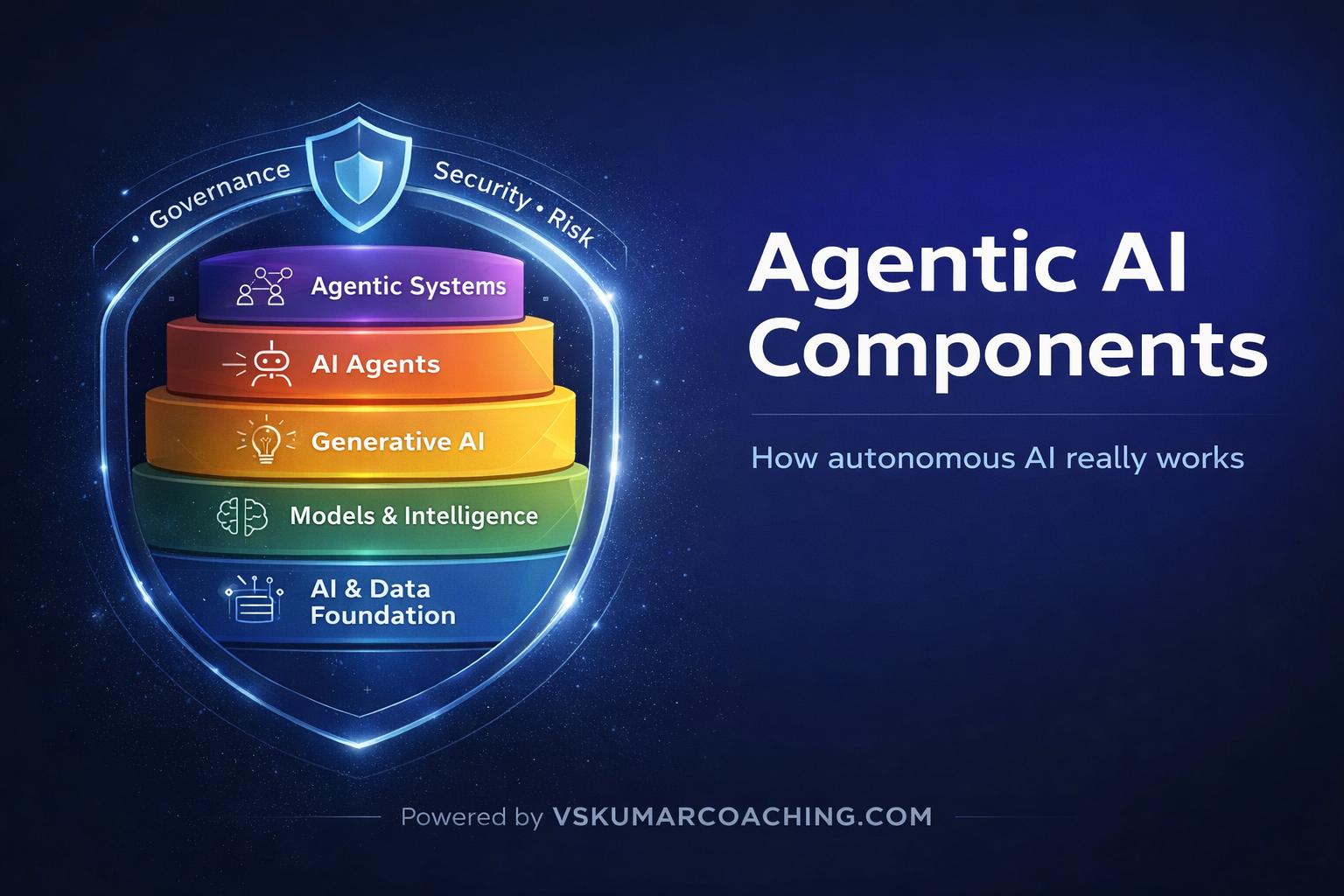
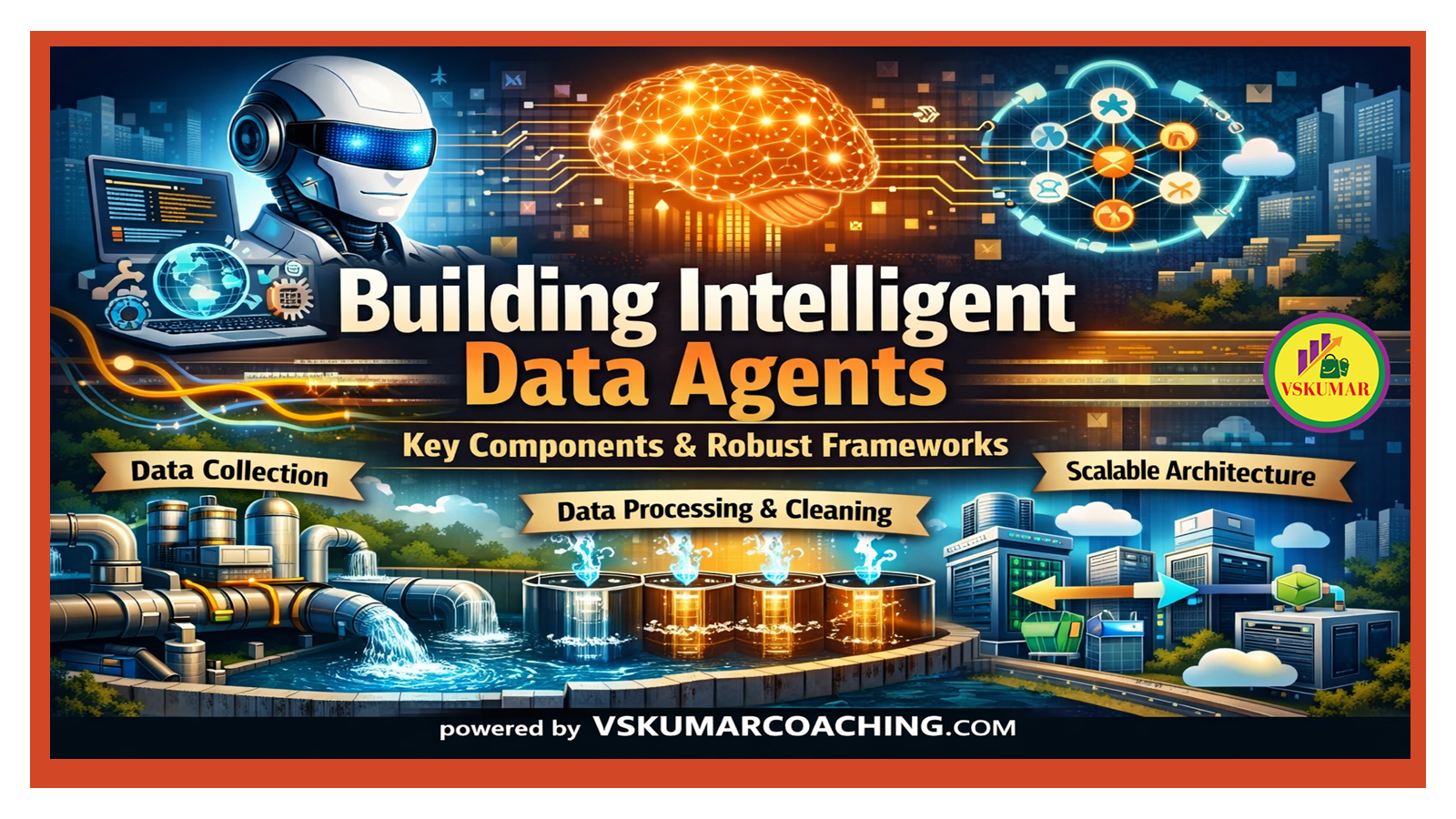

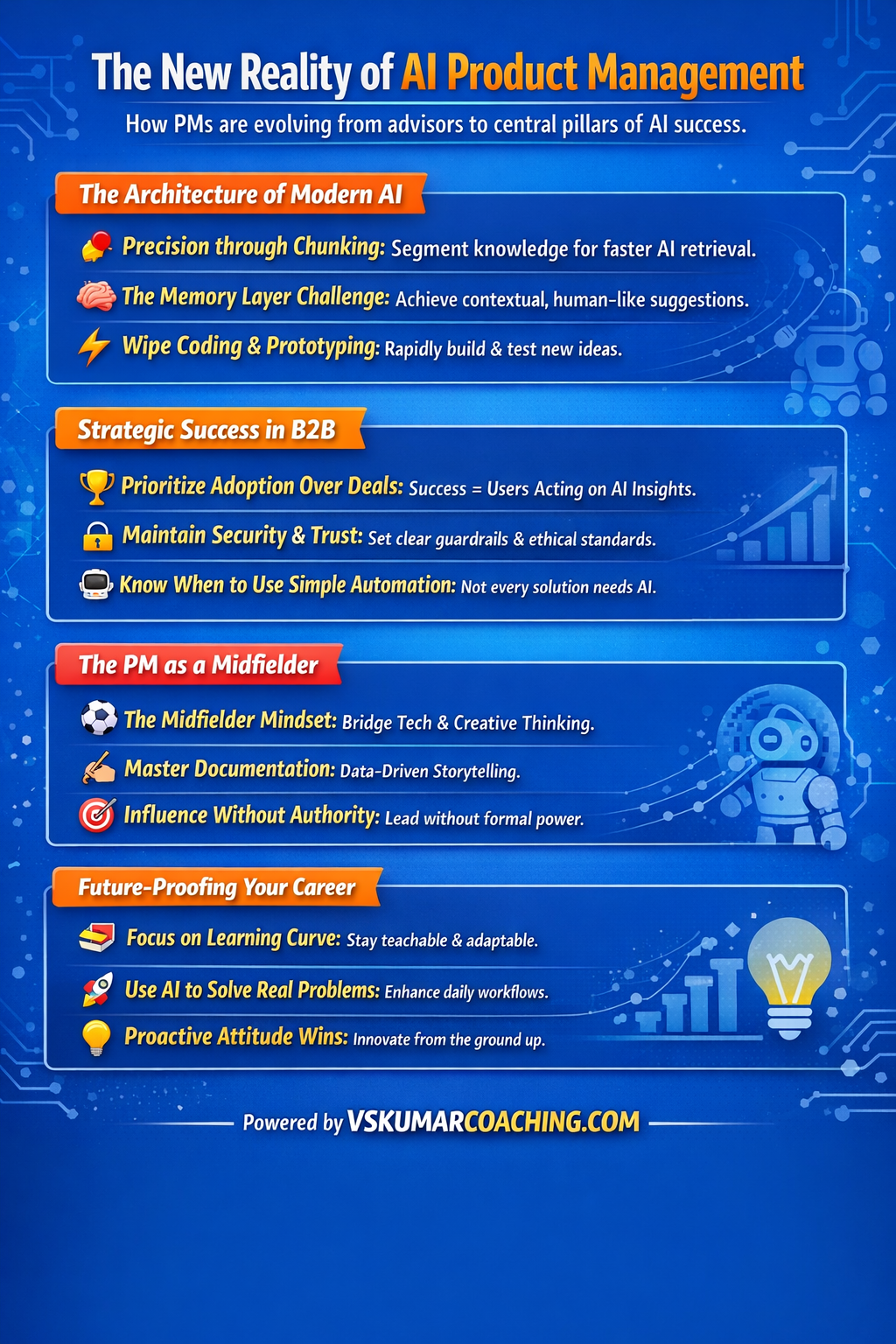






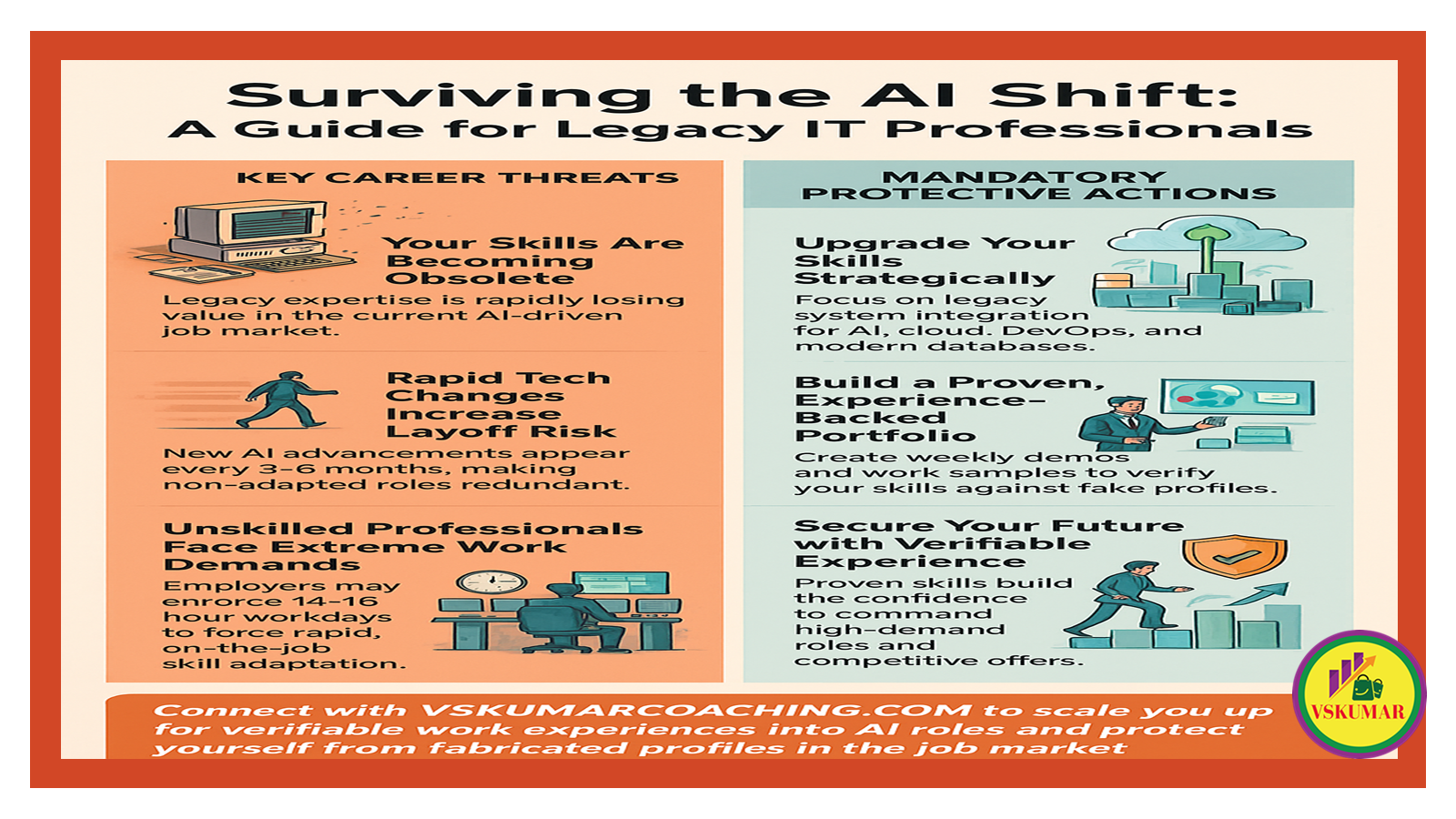
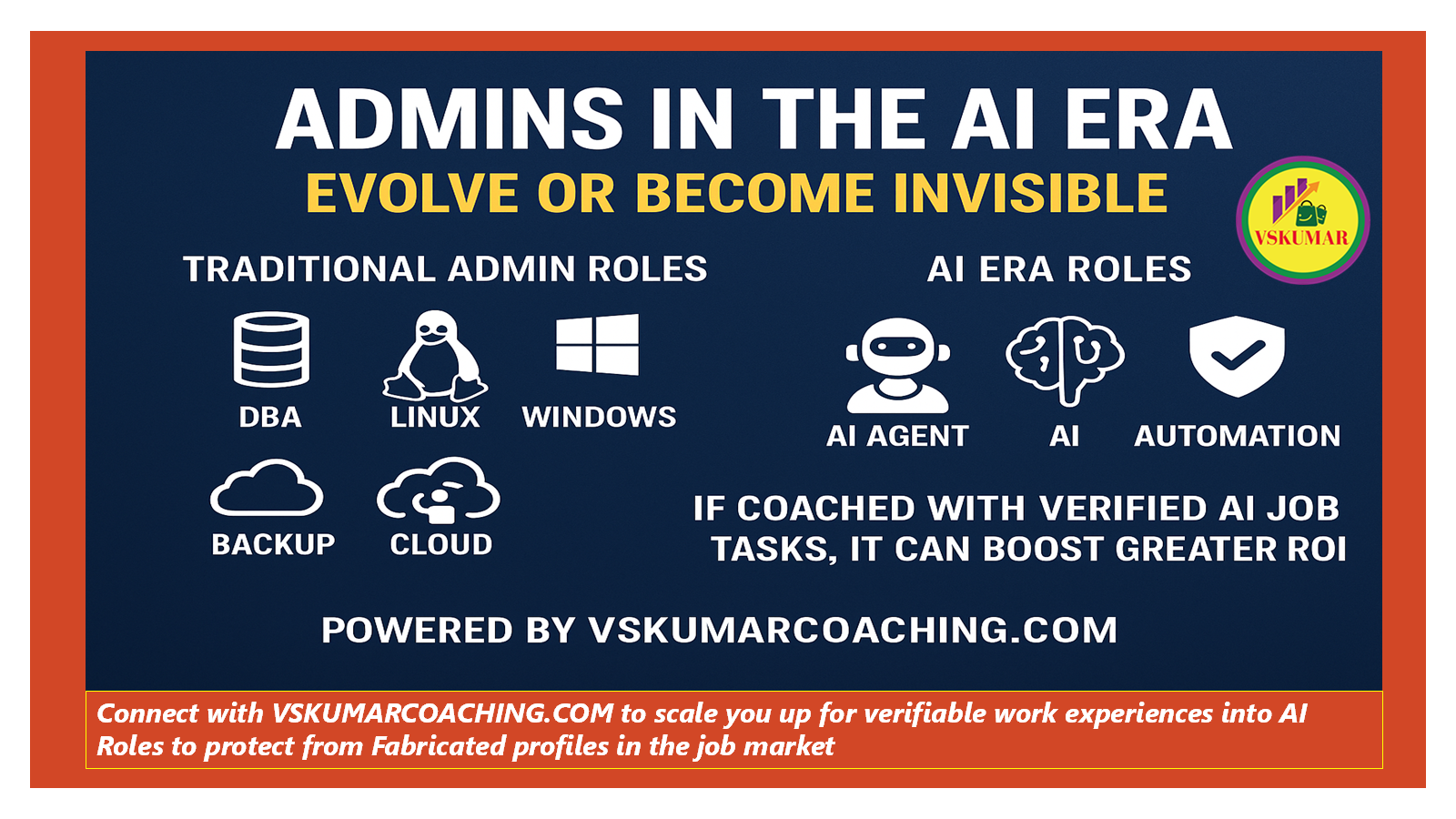

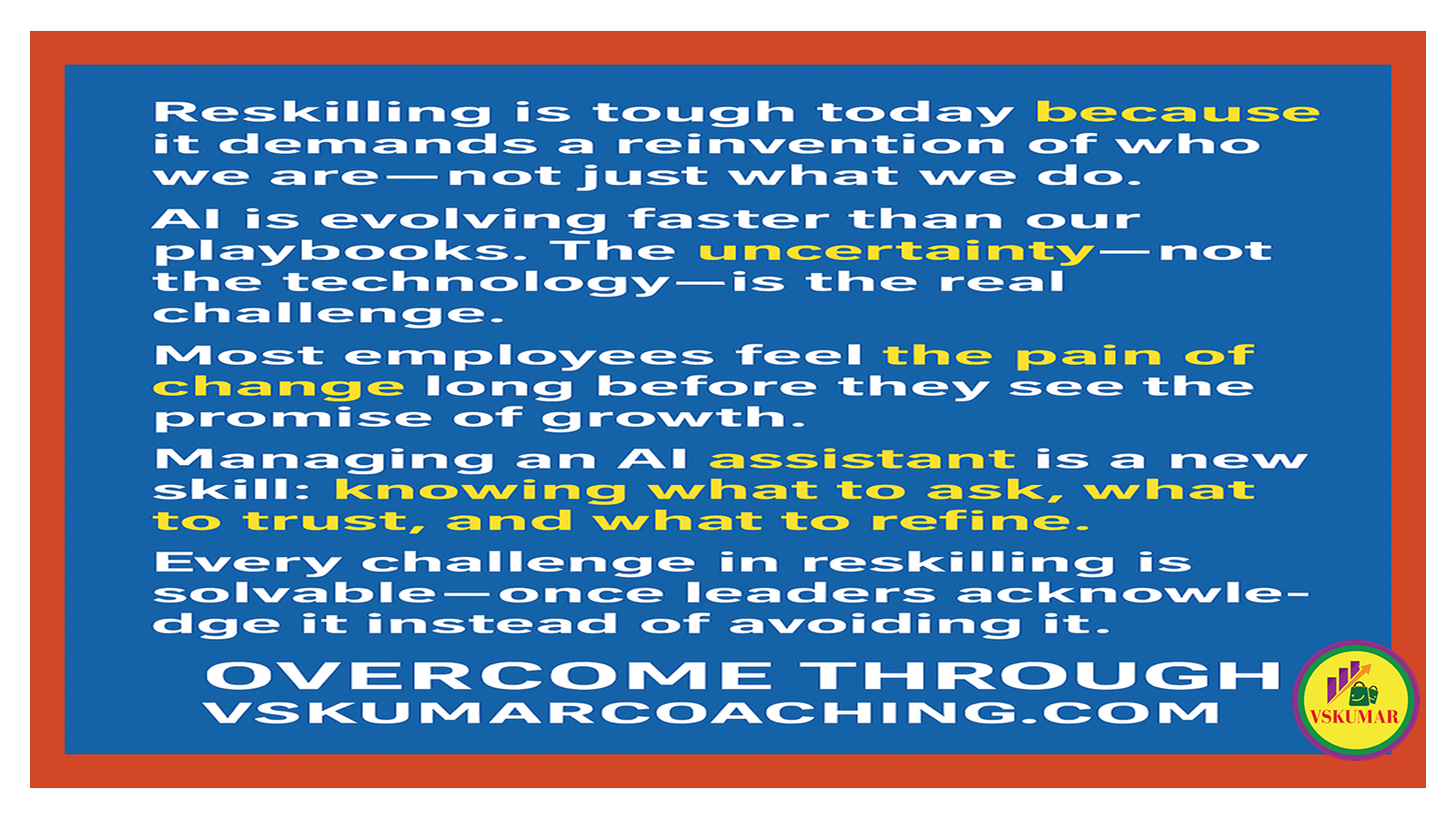
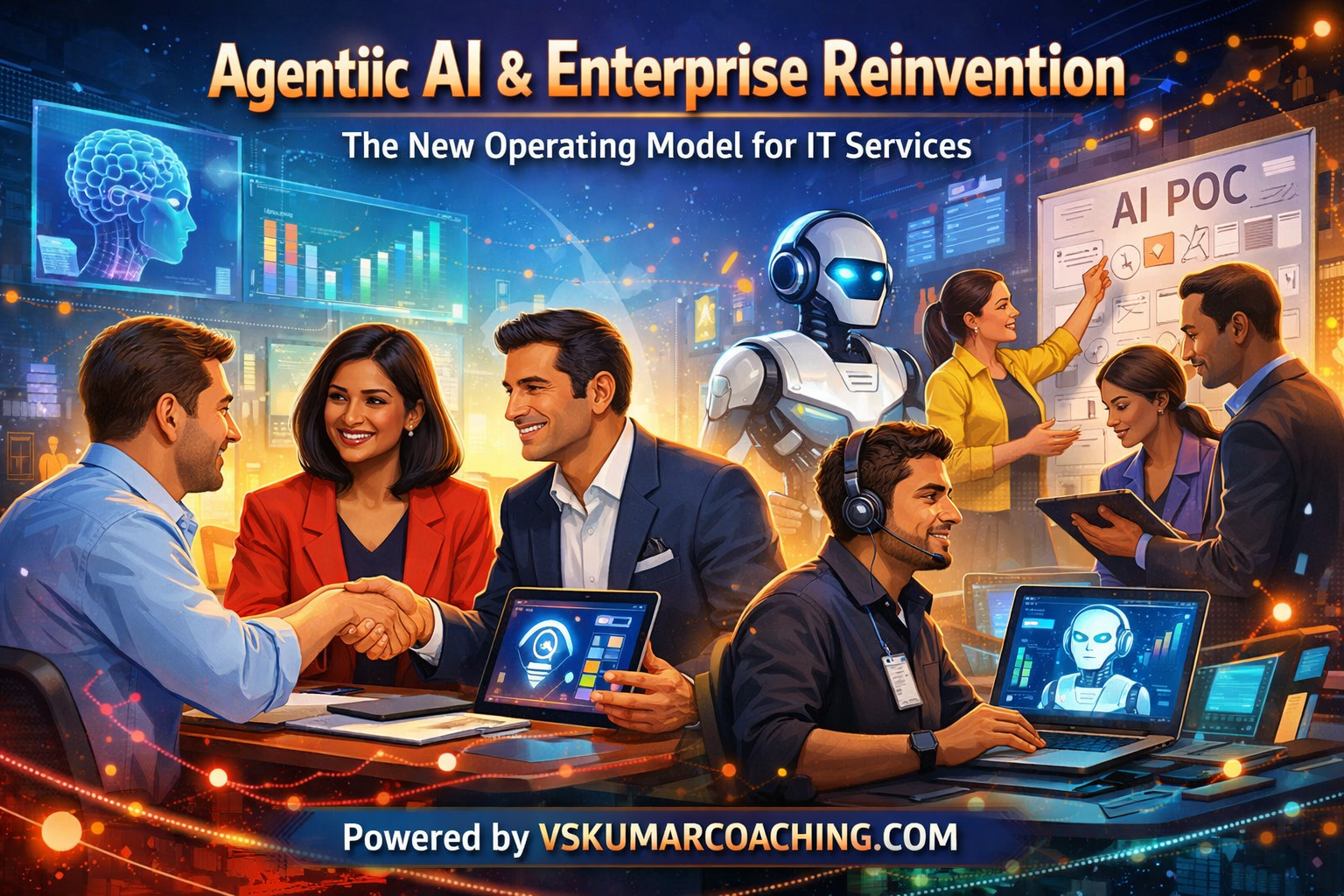
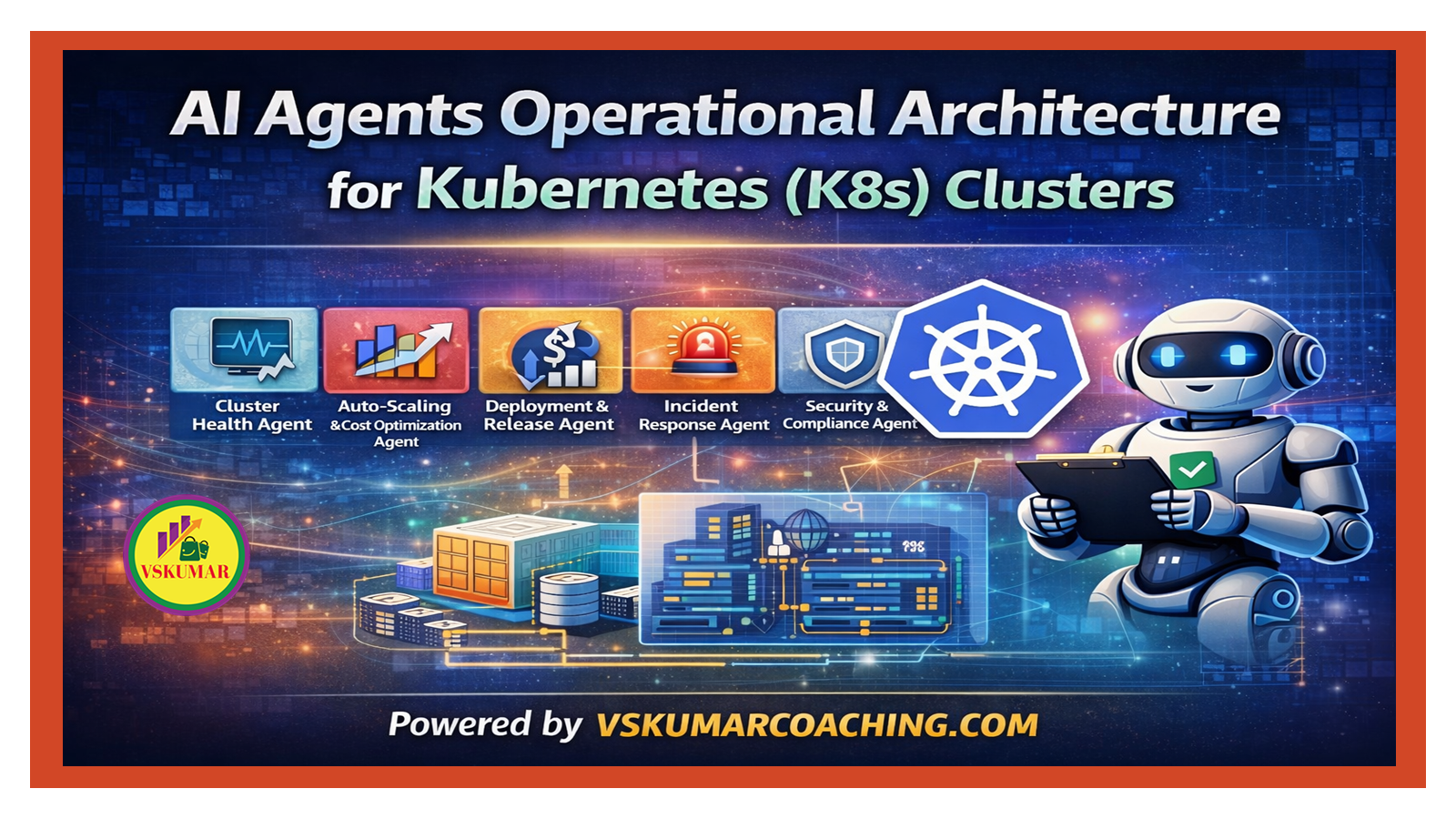

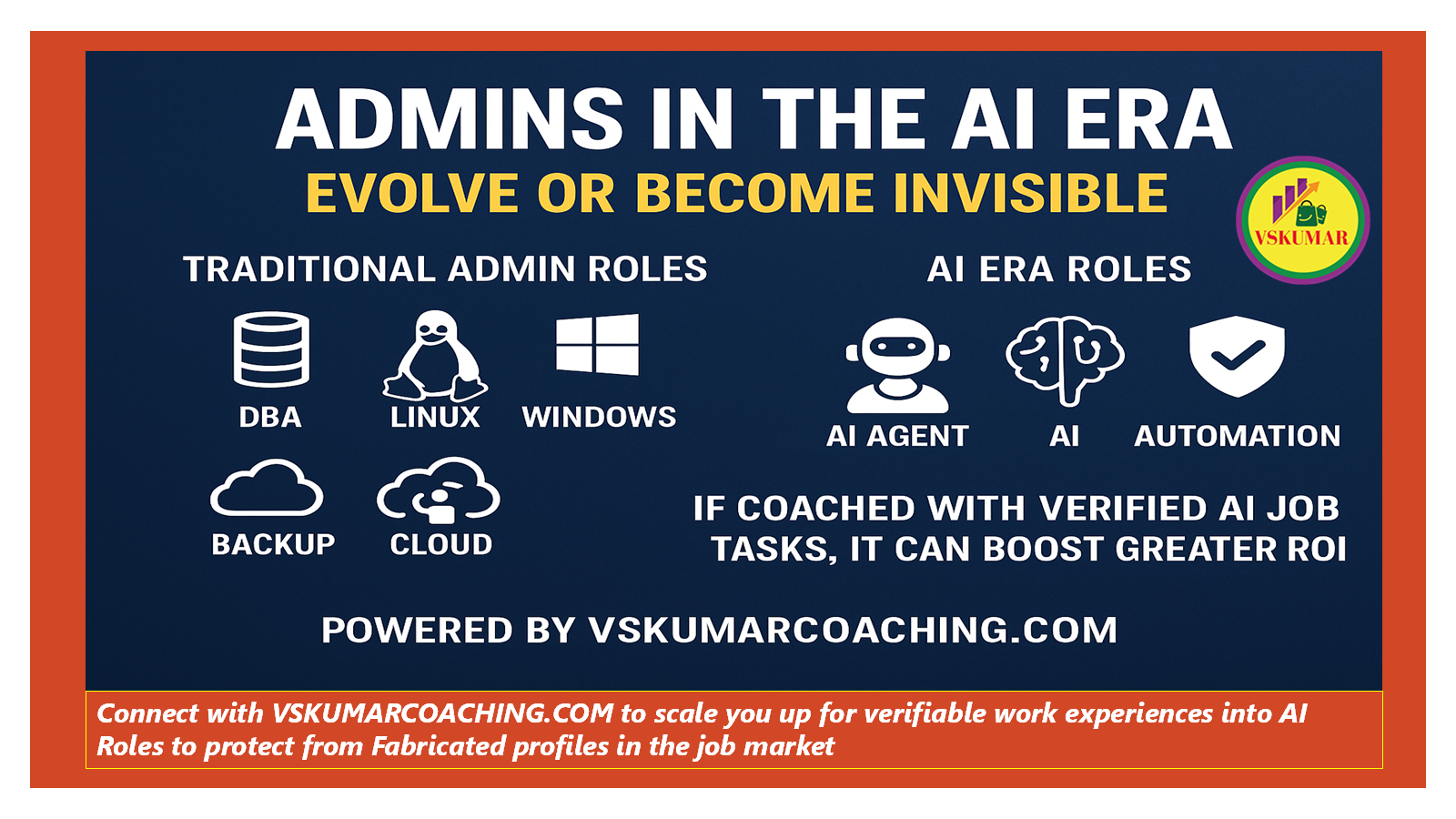


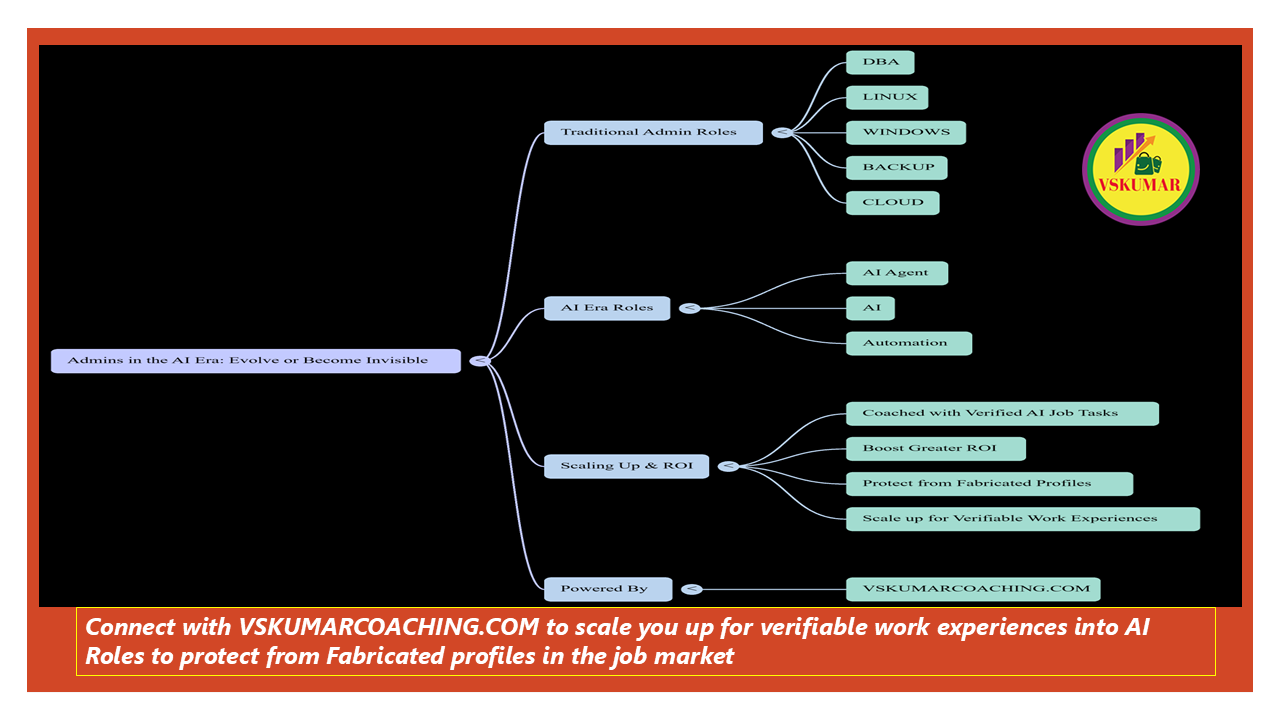
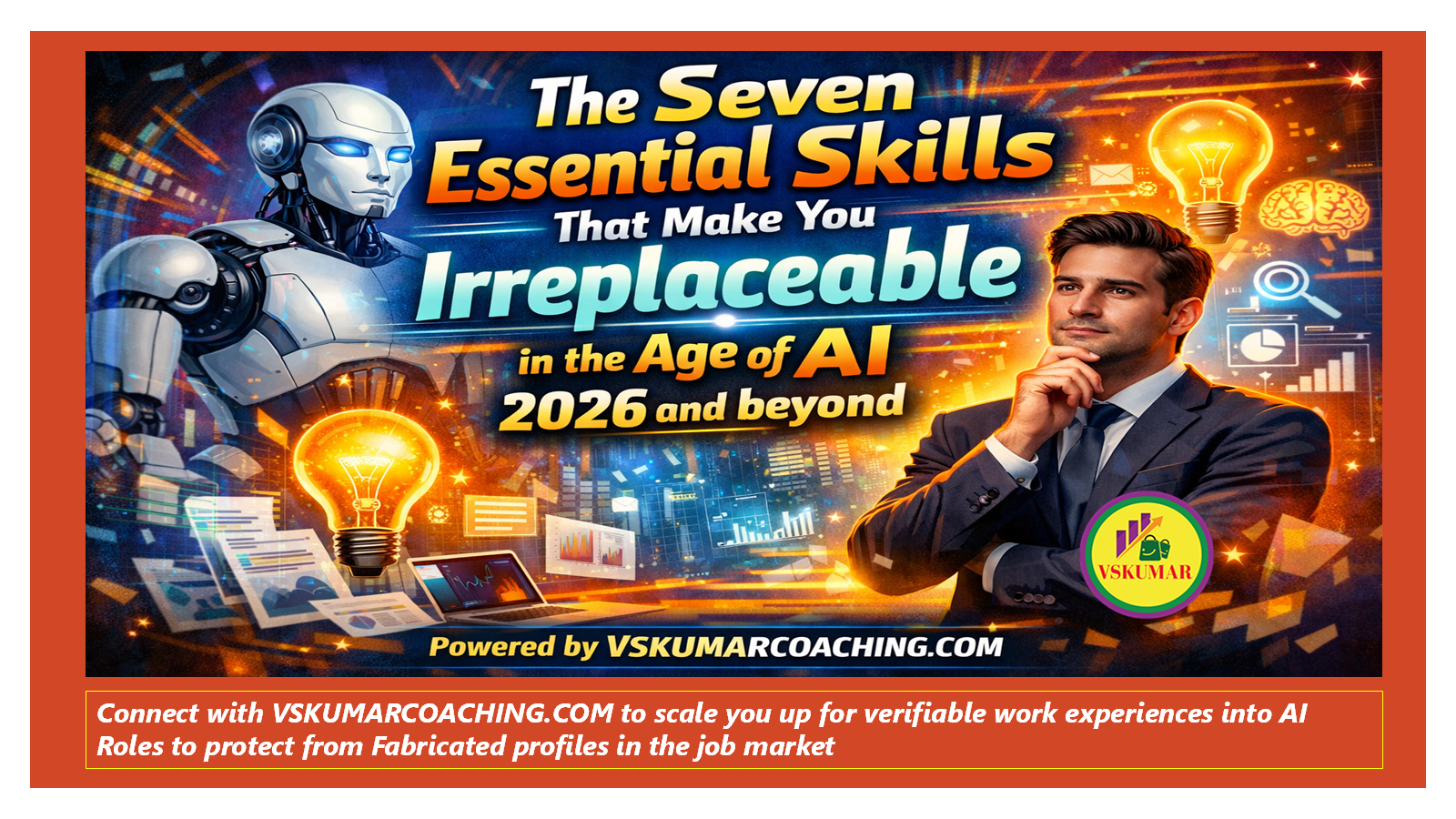
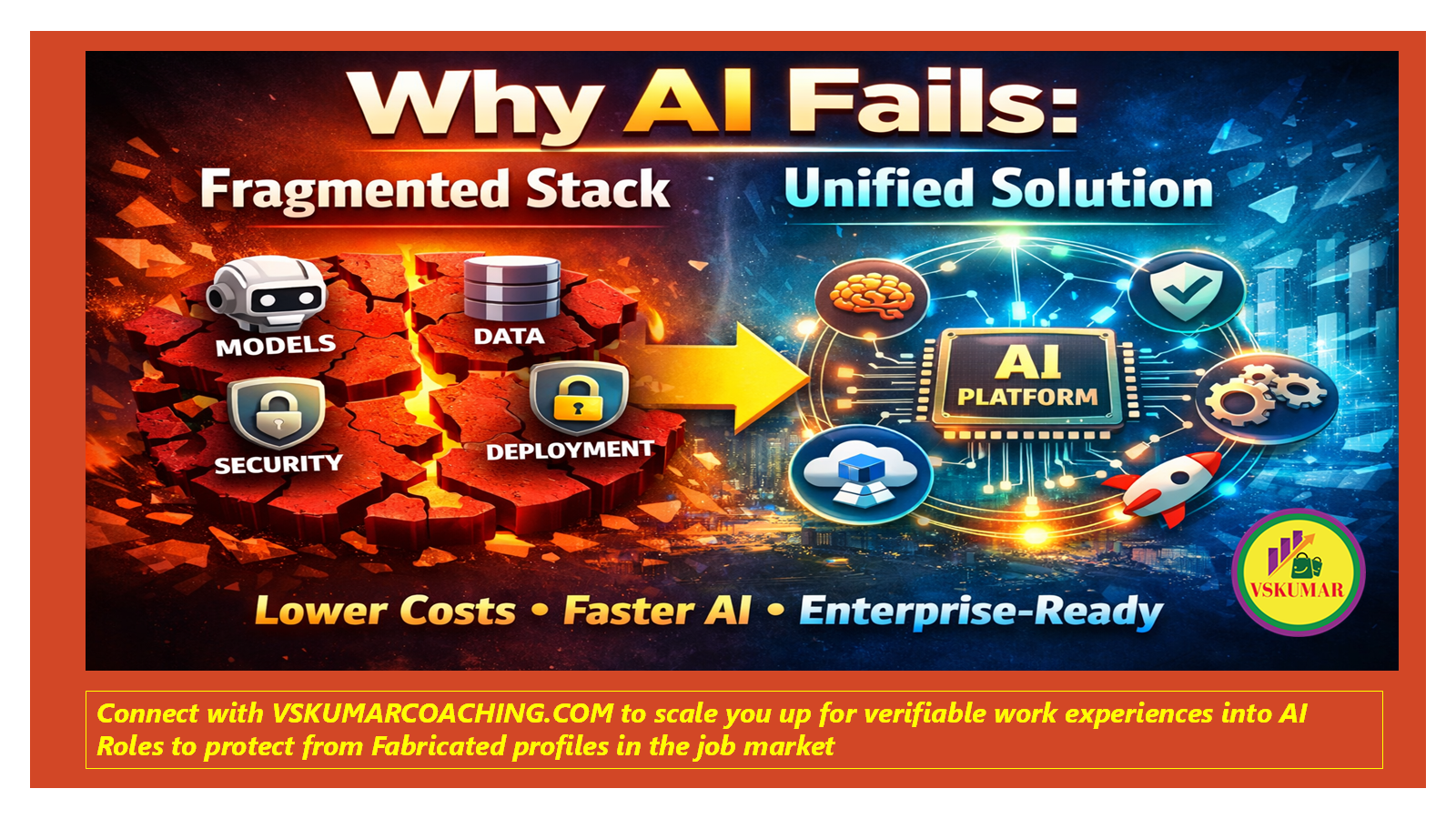
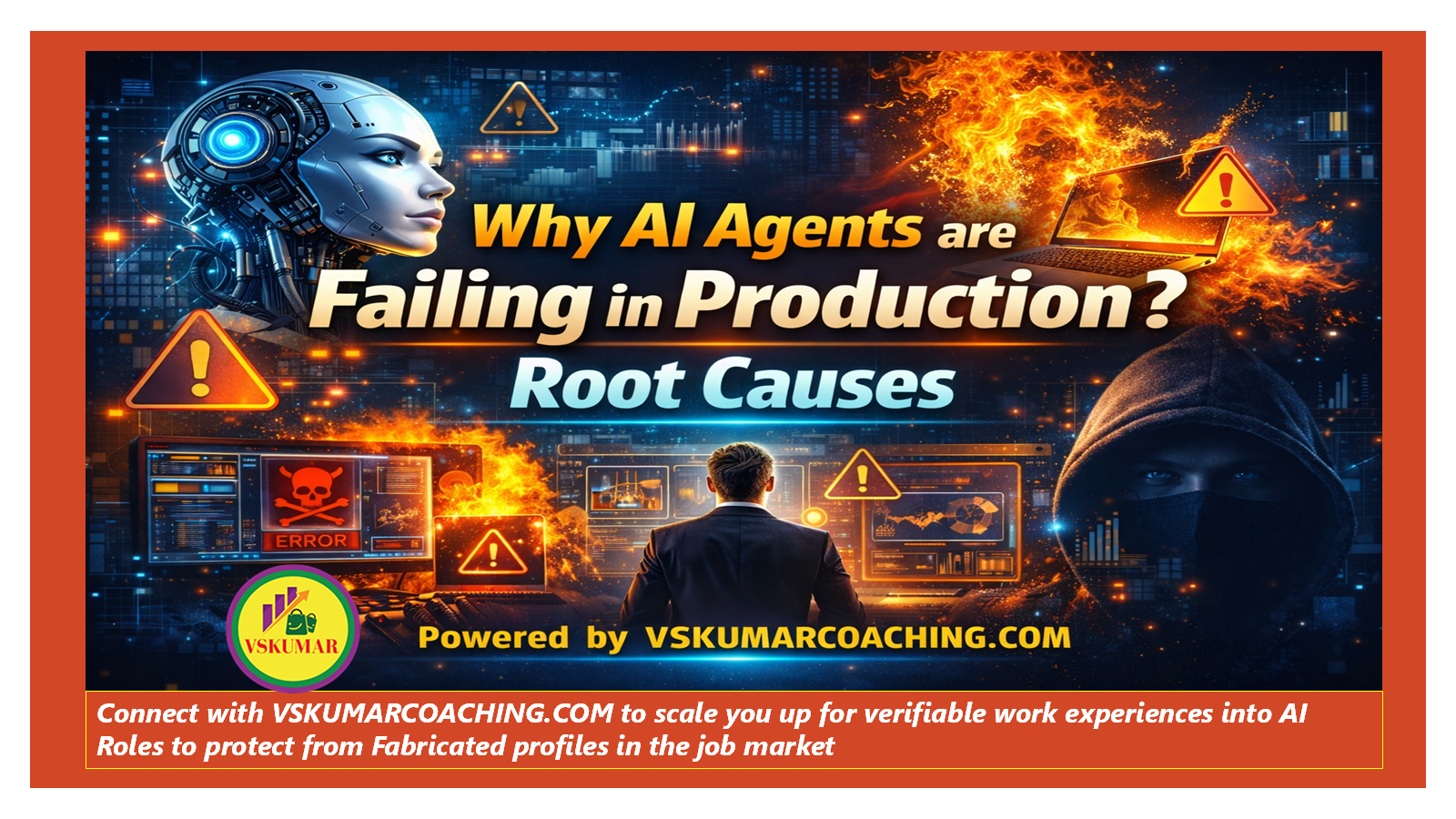

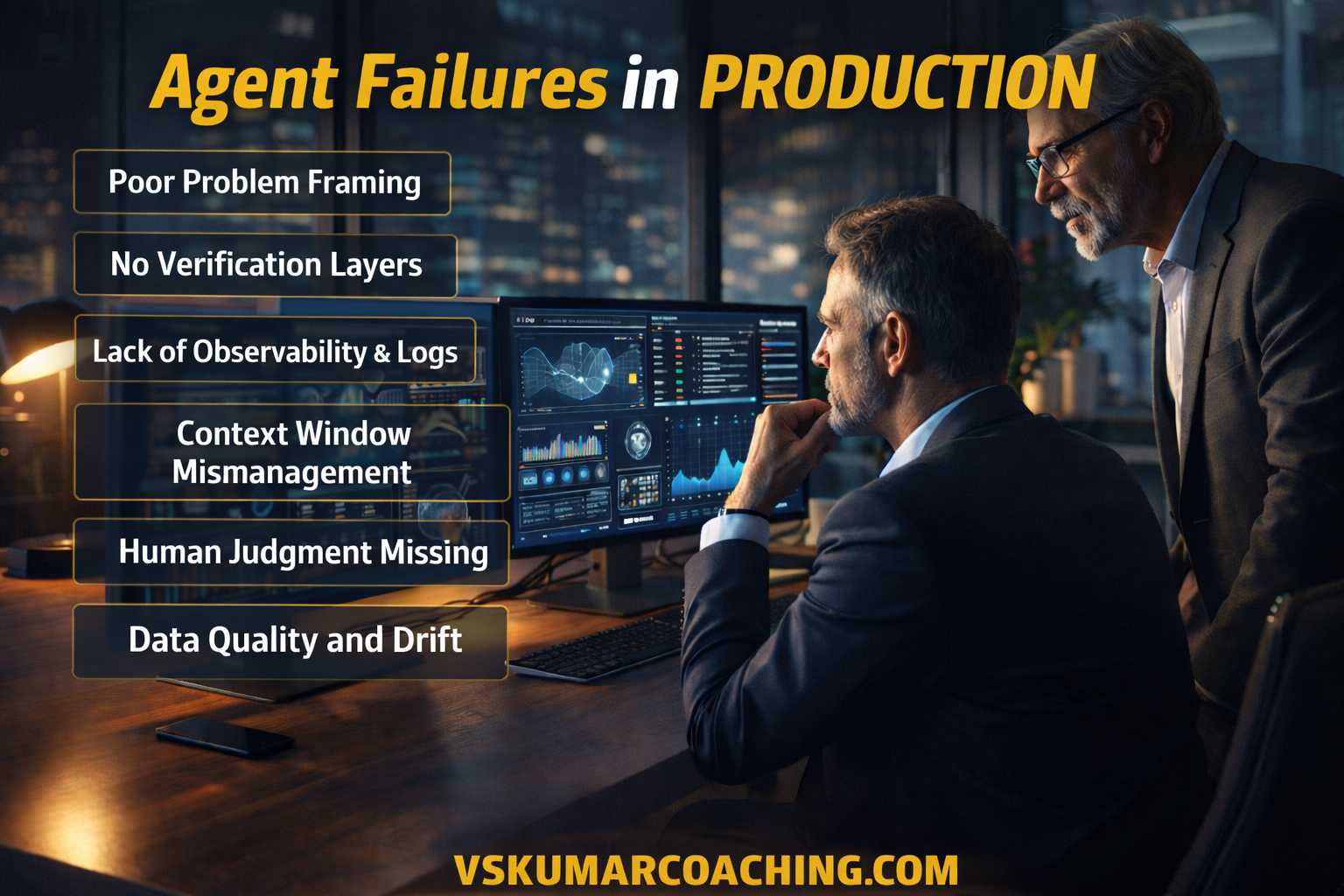
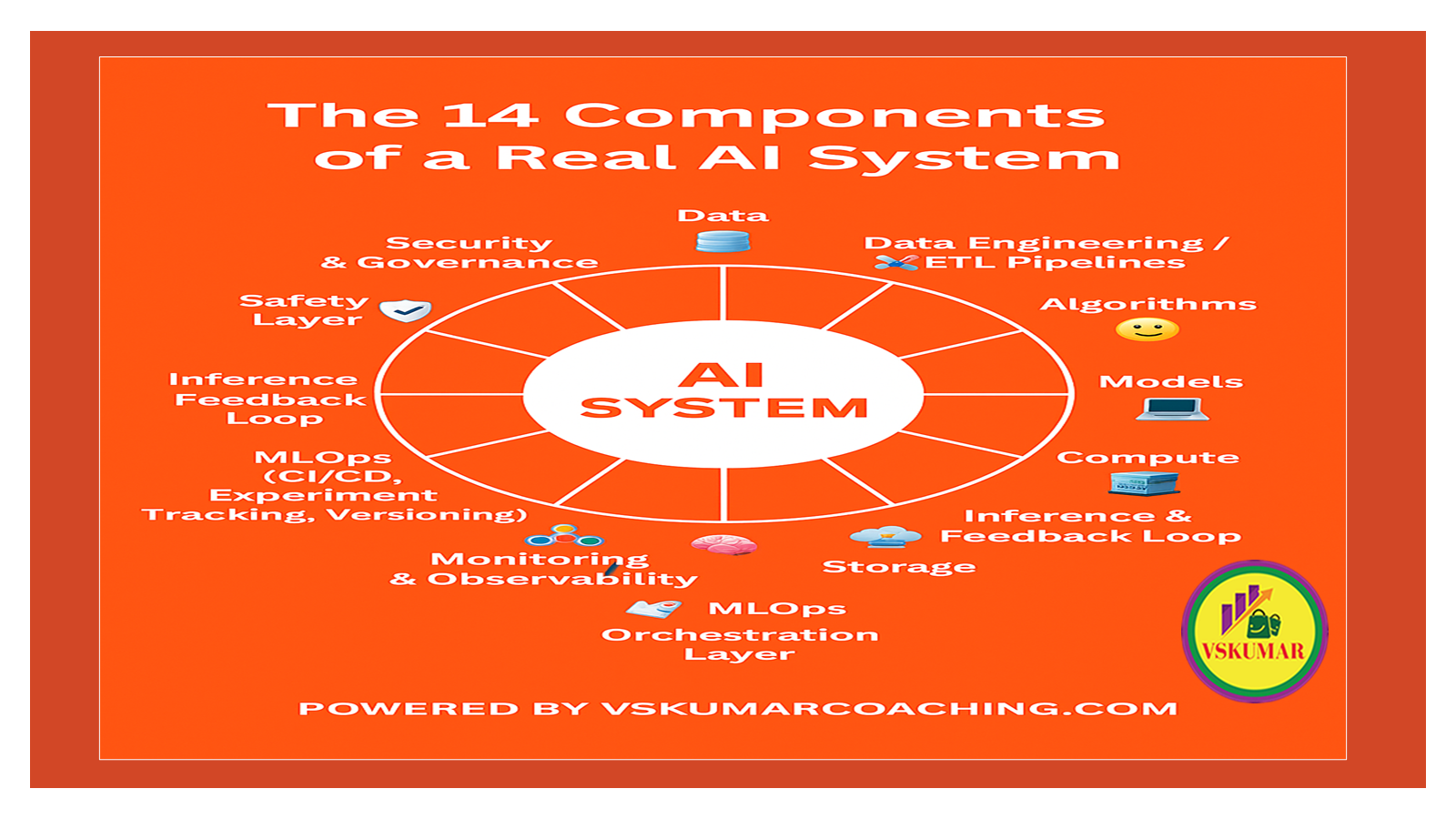
 Building Cloud/DevOps/AI/ML/Gen AI Architects