Daily Archives: May 5, 2025

AI Race for IT Professionals: Adapting to the Future

The Information Technology (IT) industry is undergoing one of its most transformative phases, driven by Artificial Intelligence (AI) and automation. IT professionals are no longer just competing based on traditional expertise; they are now part of an AI Race, where adaptability, continuous upskilling, and AI integration define career success.

The Shift from Workforce Expansion to Efficiency

Historically, IT companies focused on scaling their workforce to meet client demands. However, with AI-driven automation, the emphasis has shifted toward efficiency over expansion. Clients now expect the same level of service with fewer resources, demanding highly skilled professionals who can optimize processes, reduce inefficiencies, and innovate with AI solutions.

Generative AI (GenAI) is at the core of this transformation. While contract sizes are shrinking, revenue per Full-Time Equivalent (FTE) is increasing, indicating that AI-powered professionals are more valuable than ever. The challenge is clear—IT professionals must either adapt to AI or risk falling behind.

What Skilled IT Professionals Need to Win the AI Race

As companies evolve their service models, the demand for AI-savvy experts is rising across various roles:

  • Artificial Intelligence & Machine Learning Specialists – Professionals who can develop AI models, automate tasks, and optimize workflows.
  • Cloud Computing & DevOps Engineers – Experts who build scalable cloud infrastructures, ensuring seamless AI integrations.
  • Cybersecurity Experts – Specialists safeguarding AI-powered digital environments from cyber threats.
  • Data Scientists & Analysts – Professionals who leverage AI-driven data insights for business intelligence.
  • Software Architects & Full-Stack Developers – Engineers designing future-proof applications that integrate AI capabilities.
  • Process Automation & Robotic Process Automation (RPA) Specialists – Experts streamlining IT operations through automation.
  • AI Ethics & Compliance Analysts – Professionals ensuring responsible AI implementation while adhering to regulations.

The ability to collaborate with AI tools and align with evolving industry standards is now a fundamental skill set for IT professionals.

Why IT Companies Are Seeking Multi-Skilled Talent

With efficiency taking center stage, IT firms are searching for professionals who can wear multiple hats—handling cross-functional roles that blend AI, cloud computing, security, and automation. Recruiters now face the challenge of finding genuine and qualified candidates who can meet these increasing demands.

This shift means that IT professionals must adopt an agile mindset, continuously upskill, and embrace AI as a core aspect of their expertise.

How IT Professionals Can Stay Competitive in the AI Race

To stay ahead, IT professionals should focus on:

  • Mastering AI tools and automation technologies
  • Developing cross-functional expertise across cloud, security, and data
  • Engaging in continuous learning through AI certifications and upskilling programs
  • Adapting to new industry trends and aligning with AI-driven strategies
  • Enhancing problem-solving skills to complement AI-assisted workflows

The Future of IT Services: AI-Powered and Efficiency-Driven

The AI Race is not just a challenge—it is an opportunity for IT professionals to future-proof their careers and become highly valuable assets in the industry. Those who embrace this transformation will thrive in AI-driven environments, while others risk falling behind as automation reshapes IT job roles.

Are you ready to accelerate your career in the AI Race? The future belongs to those who adapt, innovate, and lead with AI expertise.

Certainly! Here are 10 self-assessment questions for IT professionals to evaluate their readiness for the AI Race and their ability to adapt to AI-driven industry changes:

AI Race Self-Assessment for IT Professionals

  1. How familiar are you with AI and Machine Learning (ML) technologies?
    • Have you taken any AI-related courses or worked on AI projects?
  2. Are you actively integrating AI-driven automation into your workflows?
    • Do you leverage AI-powered tools to enhance efficiency and productivity?
  3. How comfortable are you with cloud computing and AI infrastructure?
    • Can you deploy AI models on cloud platforms like AWS, Azure, or Google Cloud?
  4. Are you aware of Generative AI (GenAI) and its impact on IT services?
    • Have you explored how GenAI is reshaping software development and business automation?
  5. Do you possess cross-functional expertise beyond your primary IT specialization?
    • Can you work across AI, cybersecurity, cloud computing, and automation?
  6. How adaptable are you to evolving industry trends and AI-driven disruptions?
    • Are you continuously upskilling to align with the latest advancements in AI?
  7. Are you developing problem-solving and strategic thinking skills to complement AI capabilities?
    • How effectively can you integrate AI solutions into complex business problems?
  8. Do you understand AI ethics, regulatory compliance, and responsible AI development?
    • Can you assess AI risks and ensure ethical AI implementations?
  9. Are you prepared for the changing job landscape where companies expect multi-skilled professionals?
    • Can you confidently manage multiple roles involving AI, cloud, and automation?
  10. Are you actively networking and collaborating with AI experts to stay ahead in the AI Race?
  • Do you participate in AI forums, tech conferences, or professional communities for knowledge sharing?

Score Yourself:

  • 8–10 Yes Answers: You are well-prepared for the AI Race and positioned for success.
  • 5–7 Yes Answers: You have strong potential but need further AI-focused upskilling.
  • 1–4 Yes Answers: It’s time to invest in AI knowledge and training to stay relevant in the evolving IT industry.

For our Cloud/DevOps/AI/ML/ Ge AI digital job tasks Courses, visit URL:
https://kqegdo.courses.store/
The Future of IT Services: How AI is Redefining Workforce Needs

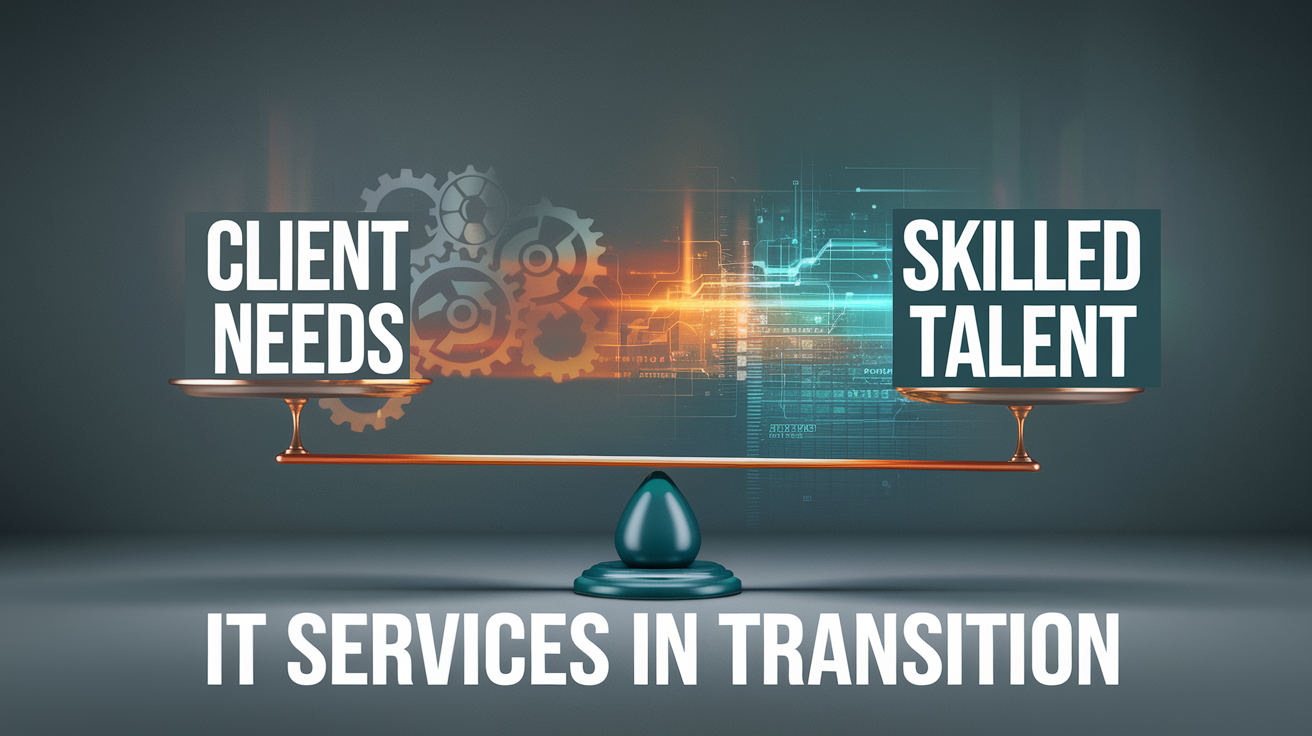
    IT Services in Transition: Meeting Client Expectations with Skilled Talent

    The Information Technology (IT) services industry is undergoing a profound transformation. Instead of expanding their workforce, businesses are now prioritizing efficiency—leveraging Artificial Intelligence (AI), automation, and specialized expertise to achieve the same level of output with fewer resources.

    The Rise of Cost-Efficiency and Demand for Skilled Professionals

    Industry leaders emphasize that cost reduction isn’t just about lowering unit prices. Clients are demanding greater value for the same investment, expecting IT service providers to optimize operations and eliminate inefficiencies. Many businesses now anticipate up to 20% fewer resources to accomplish the same work—a significant shift that challenges traditional service delivery models.

    While unit pricing remains stable, overall deal sizes are shrinking. The focus has shifted towards delivering smarter solutions that enhance productivity, automate repetitive tasks, and reduce reliance on large teams. As a result, companies now require highly skilled professionals who can drive efficiency and innovation.

    Artificial Intelligence and Automation Reshaping IT Workforce Needs

    One of the biggest drivers of this transformation is Generative Artificial Intelligence (GenAI), which is reshaping IT service models. Companies are integrating AI-driven tools to handle tasks that previously required human intervention, leading to a rise in revenue per Full-Time Equivalent (FTE) for vendors that successfully implement AI solutions.

    However, this shift isn’t without its challenges. While efficiency gains are clear, there’s a risk of diminishing profit margins unless IT providers truly optimize operations and align their services with AI-driven advancements. With these evolving service models, clients seek professionals skilled in AI implementation, automation, and process optimization to maintain operational excellence.

    What Skilled Resources Are Clients Expecting From IT Service Providers?

    As businesses accelerate their digital transformation, the demand for specialized talent is evolving. IT service providers must prioritize hiring and developing professionals with expertise in high-impact technologies such as:

    • Artificial Intelligence (AI) & Machine Learning (ML) Specialists – Experts capable of building AI-driven automation solutions that enhance efficiency.
    • Cloud Computing & Development Operations (DevOps) Engineers – Professionals skilled in cloud infrastructure, containerization, and deployment automation.
    • Cybersecurity Experts – Specialists who ensure data integrity and protection as businesses transition toward AI-powered digital frameworks.
    • Data Scientists & Analysts – Individuals who leverage big data and predictive analytics to drive informed business decisions.
    • Software Architects & Full-Stack Developers – Professionals who design scalable applications that align with AI-driven workflows.
    • Process Automation & Robotic Process Automation (RPA) Specialists – Experts in workflow automation to reduce repetitive tasks and enhance operational efficiency.
    • AI Ethics & Compliance Analysts – Emerging roles focused on ensuring responsible AI development and regulatory compliance.

    The ability to work alongside AI-driven tools and adapt to evolving industry standards is becoming a critical skill set for IT professionals.

    A Decline in High-Value Client Accounts and the Shift Towards Skilled Talent

    The impact of AI-driven efficiency is already visible in client portfolios, with many IT firms experiencing a reduction in large, high-value contracts. Since clients now require fewer resources to achieve the same results, businesses are seeing a decrease in multi-million-dollar service deals—a trend that could significantly affect revenue models if providers don’t adapt quickly.

    In response, IT vendors are expected to bring in highly skilled professionals who can navigate AI-driven environments effectively. The shift is not just about reducing workforce size, but about enhancing the expertise of those who remain.

    Where Do IT Service Providers Go From Here?

    Meeting Client Expectations

    To remain competitive, IT service companies must shift their strategies beyond traditional service delivery. Some key growth opportunities include:

    • Expanding into new geographic markets to tap into emerging economies and business landscapes.
    • Diversifying service offerings to meet evolving client needs and stay ahead of technology trends.
    • Investing in AI-driven solutions that create sustainable efficiency without sacrificing quality.
    • Building automation frameworks to ensure seamless transitions for clients moving away from legacy systems.
    • Developing specialized training programs to ensure employees keep pace with evolving client expectations for AI and automation expertise.

    The Future of IT Services: Skilled Professionals Driving AI Innovation

    The next phase of IT services is not about expanding teams—it’s about working smarter with skilled talent. AI, automation, and efficiency-driven service models will define the industry’s future. For IT providers that embrace this shift proactively, there’s immense potential to maintain profitability, sustain growth, and lead in innovation.

    This era of transformation is accelerating, and only those who adapt swiftly with the right skills will remain at the forefront of the IT revolution.

    For references:

    Smaller deals to hit IT firms due to AI effect